


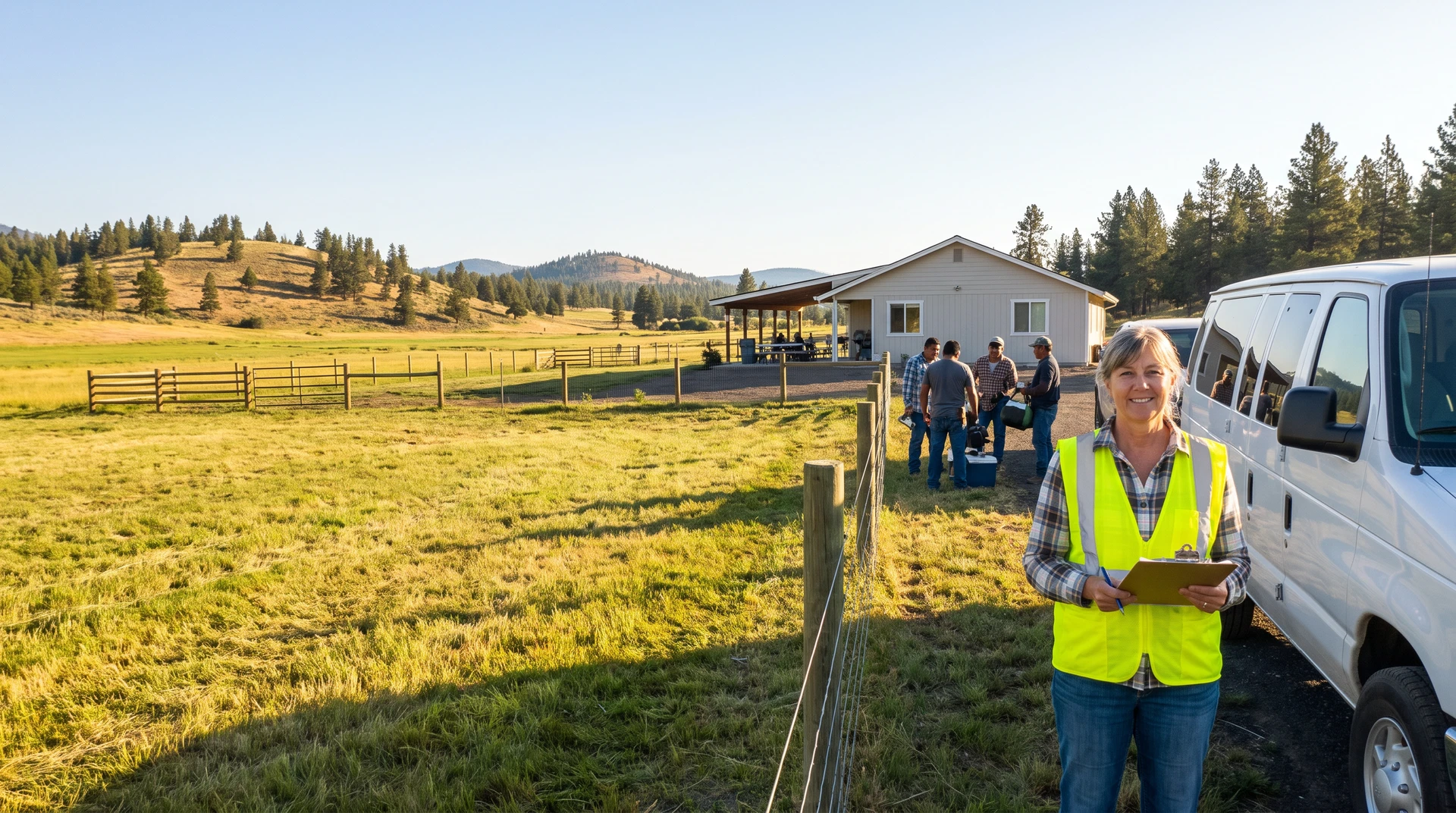

Before harvest, a Central Oregon farm or ranch can become several things at once: a worksite, a housing provider, a transportation coordinator, and the party trying to keep people, equipment, and schedules moving through a short season. That makes seasonal crew planning more than a hiring task. It is also the right moment to compare the actual operation with your farm and ranch insurance program, safety plans, contracts, and recordkeeping.
This educational guide is not legal, labor, immigration, safety, housing, licensing, tax, or coverage advice. It cannot determine whether a worker is an employee, whether a rule applies, who is legally responsible for an injury, or how an insurer will handle a claim. Policy terms, endorsements, insured locations, limits, exclusions, deductibles, contracts, payroll facts, the housing arrangement, and the cause of loss all matter. The goal is to help Oregon farm employers organize the right questions before crew members move in or the first shift begins.
Why a Seasonal Crew Can Change the Insurance Conversation
The issue is not simply the number of workers. It is the set of facts created by the season: where people live, who owns or leases the lodging, who hires and supervises them, how they travel, whether they cross multiple worksites, who maintains the building and grounds, and what happens when heat, smoke, a vehicle incident, a maintenance problem, or an injury interrupts the plan. Oregon OSHA's agricultural resources specifically address housing, seasonal-worker orientation, heat, smoke, field sanitation, chemical safety, and rural medical-emergency planning.[1] [2]
| Before-harvest file | Organize the facts | Ask the review question |
|---|---|---|
| Housing and occupancy | Addresses, structures, ownership or lease details, capacity, occupants, units, furnishings, utilities, move-in dates, maintenance contacts, and emergency access. | Does the insurance discussion accurately describe each structure, occupancy arrangement, location, value, and exposure? |
| Employer and crew roles | Who recruits, hires, pays, directs, trains, records time, assigns housing, and handles discipline or complaints. | Which labor, payroll, workers’ compensation, classification, joint-employment, or contractor questions need qualified advice? |
| Transportation | Drivers, vans, pickups, trailers, passenger counts, routes, permits, vehicle ownership, maintenance, loading, and incident reporting. | Which policy and limits address the actual vehicles, drivers, passenger use, and work travel? |
| Safety and emergency planning | Heat, smoke, sanitation, pesticides, water, first aid, communications, language needs, rural response routes, and meeting records. | Do operational plans match current Oregon safety guidance and the operation described to the insurer? |
| Contracts and proof | Staffing agreements, housing agreements, certificates, requested endorsements, inspection records, maintenance logs, and contact lists. | Do the written requirements coordinate with real operations and the actual policies rather than assumptions? |
1. Identify the Housing Operator Before You Discuss the Building
A bunkhouse, mobile unit, ranch house, leased motel block, or employee cottage can involve more than one party. The farm may own the property but use a staffing firm; a labor contractor may recruit or house workers; a property owner may lease a building to the farm; or several related entities may share the same location. Oregon OSHA describes agricultural labor housing rules as applying where living areas or other housing are provided by someone who recruits workers to work on an agricultural establishment, with stated registration requirements and exceptions.[1]
Start with a simple role map. Name the entity that owns the property, the party that provides or operates housing, the employer shown on payroll records, the party responsible for repairs, the emergency contact, the transportation provider, and the person authorized to report a claim. That map does not determine legal responsibility, but it can reveal missing information before an insurer, regulator, employee, or attorney needs it.
2. Review Property, Premises, and Business-Continuity Questions Separately
A housing structure can raise property questions about replacement cost, electrical systems, appliances, water, furnishings owned by the operation, fire, smoke, vandalism, wind, and other causes of loss. It can also raise premises-liability questions involving a walkway, stairs, railings, visitors, cooking areas, maintenance activity, or a condition at the location. Those are different conversations, and no article can tell you what a particular farm policy, commercial property form, landlord endorsement, or liability policy does.
Ask for a policy-specific review of all locations and structures instead of assuming a dwelling or converted outbuilding is included because it sits on the farm. Pair that review with the broader operation: our Central Oregon agricultural insurance guide outlines other property, equipment, vehicle, and liability facts that often belong in a seasonal planning file.
Build the Farm Labor File Before the First Worker Arrives
Bring housing addresses, worker and contractor roles, vehicle details, safety plans, maintenance records, contracts, certificates, and current policy declarations. Prineville Insurance can help you organize the insurance questions to take to the insurers you work with.
3. Seasonal Crews Mean Payroll, Labor, and Employment Questions—Not Just Insurance Questions
Insurance should be coordinated with, not substituted for, a sound payroll and labor review. Oregon BOLI explains that agricultural overtime rules can differ by work performed and notes that workers handling another farmer's crop can create different overtime treatment. It also notes that joint-employment questions can arise when a labor contractor provides a crew.[3] The U.S. Department of Labor describes the Migrant and Seasonal Agricultural Worker Protection Act as addressing employment standards related to wages, housing, transportation, disclosures, and recordkeeping; it also addresses contractor registration.[4]
Those sources do not decide any reader's facts. Before harvest, ask qualified labor counsel, payroll advisers, and the appropriate agencies to review the people side of the operation: who employs each worker, who gives day-to-day direction, whether time is recorded accurately, whether travel or waiting time has implications, who provides lodging, and whether a contractor is recruiting, supplying, housing, or transporting workers. In the insurance discussion, connect those answers to your workers’ compensation and general liability review rather than assuming one policy or contract resolves every issue.
4. Housing Agreements, Staffing Agreements, and Certificates Need to Match the Real Operation
A written housing agreement can clarify the unit, occupancy rules, maintenance reporting, move-in condition, emergency contacts, access, and move-out process. A staffing or labor agreement can clarify scope, supervision, payment, safety duties, transportation, required documentation, and reporting procedures. A certificate can be a useful snapshot of insurance information. None of those documents, alone or together, changes an insurance policy or guarantees a legal, regulatory, or claim outcome.
Be especially careful when the same operation hires a custom operator, uses a labor contractor, and provides housing or rides to a crew. The related custom farming and contract harvesting guide is a helpful companion because it frames the crew, equipment, field-access, certificate, and contract facts that can cross between producers. Have attorney-reviewed wording and the actual insurance requirements compared before signing—not after a loss or employment dispute.
5. Work Transportation and Housing Transportation Are Not the Same Assumption
A passenger van, pickup, personal vehicle, trailer, or contractor-provided vehicle can be used between a housing site, a field, a supply stop, and a remote emergency location. Make a current list of drivers, vehicles, passenger capacity, ownership, maintenance responsibility, routes, loading practices, and who has authorization to use the vehicle. State and federal rules may also be relevant to the facts; ask the appropriate adviser before making a compliance decision.
From the insurance side, vehicle ownership, business use, driver facts, passenger transportation, territory, and the type of loss can all matter. Start with our commercial auto insurance overview and the more farm-specific Oregon farm and ranch trucking guide, then compare those topics with the vehicles and travel your seasonal plan actually uses.
6. Safety Planning Belongs in the Housing-and-Crew File
Oregon OSHA's agriculture resources identify housing living-area and site requirements, field sanitation, safety meetings, hazard communication, seasonal-worker orientation, heat, wildfire smoke, pesticides, and rural medical emergencies as important agricultural safety topics.[2] This is why a housing plan should include more than a key and a bed assignment. A practical file can include a posted emergency address, language-accessible instructions, water and sanitation planning, smoke and heat procedures, maintenance reporting, communication backups, first-aid and medical-response contacts, and a route map for emergency responders.
These are operational controls, not coverage guarantees. Keep them current and share relevant facts with your carrier as needed. If the crew works around wells, pivots, pumps, or remote facilities, our Oregon farm irrigation and remote-property guide provides a related checklist for access, records, and rural-site planning.
7. H-2A and Other Temporary-Work Arrangements Need an Early Review
Oregon's Employment Department describes the H-2A program as a pathway for temporary or seasonal agricultural labor when program conditions are met, and it identifies application, recruitment, housing consultation, and water-testing information.[5] It also notes that Oregon OSHA registration may remain a separate process when required. These are administrative and legal questions, not insurance determinations, so farm employers should work directly with the Oregon Employment Department, Oregon OSHA, qualified immigration and labor counsel, and other appropriate professionals.
For insurance planning, the key point is disclosure: if the occupancy, capacity, transportation, work locations, staffing arrangement, or property use changes for the season, bring the updated facts to your insurance agent. A policy review can identify questions for the insurer; it cannot certify program eligibility or replace agency guidance.
Pre-Harvest Farm Labor Housing and Seasonal Crew Checklist
| Before occupancy or harvest | Confirm or document | Bring to the adviser team |
|---|---|---|
| Map housing and worksites | Housing address, structure/unit details, emergency routes, water and utility contacts, fields, and daily transportation routes. | How are locations, structures, operations, and vehicles described in the policies? |
| Name every responsible party | Owner, employer, housing operator, labor contractor, staffing firm, transport provider, maintenance contact, and supervisor. | Which role, contract, payroll, and workers’ compensation questions need legal or labor review? |
| Review agreements | Housing terms, occupancy expectations, maintenance reporting, safety responsibilities, staffing scope, certificates, and claim-notice contacts. | Do the documents align with actual policy terms and the operation planned for this season? |
| Review vehicle facts | Owned, hired, leased, borrowed, contractor-provided, and personal vehicles; drivers; passenger use; routes; and maintenance logs. | Which auto and liability questions should be presented to the insurer before workers are transported? |
| Prepare safety records | Orientations, emergency contacts, heat and smoke procedures, sanitation, chemical information, incident forms, and inspection/repair logs. | Which operational standards and recordkeeping questions need Oregon OSHA or professional guidance? |
| Plan the loss response | Who calls emergency services, who reports a potential claim, where photos and records are kept, and how temporary housing or transportation would be handled. | What notices, documents, limits, deductibles, or continuity questions should be reviewed now? |
Frequently Asked Questions
Does a farm and ranch policy automatically cover seasonal-worker housing?
Do not assume it does. The answer can depend on the policy form, the structure, its use, occupancy, location, valuation, endorsements, maintenance facts, exclusions, and the event that causes a loss. A bunkhouse, employee cottage, mobile unit, converted space, or leased lodging can each raise different questions. Review the actual declarations, schedules, and policy language with an insurance professional before workers arrive.
If a worker is hurt in employer-provided housing after a shift, is that workers’ compensation or premises liability?
That is fact-specific and should not be decided from a blog. The relationship between the injury, the work, the housing arrangement, the location, and applicable law can matter. Ask qualified legal and workers’ compensation advisers to review the situation. From an insurance standpoint, it is prudent to discuss both employment-related and premises-liability exposures with your agent rather than assuming one policy answers every scenario.
Do Oregon agricultural labor housing rules apply to every farm residence?
Not necessarily. Oregon OSHA describes agricultural labor housing rules and registration requirements, including stated exceptions. Whether a rule, registration, housing standard, or enforcement process applies depends on the facts and current requirements. Identify who provides or controls the housing and consult Oregon OSHA or qualified counsel before occupancy rather than relying on a general description of the property.[1]
Can a labor contractor’s certificate of insurance replace my farm’s own insurance review?
No. A certificate can document information represented by the issuing agent or insurer, but it is not the policy and does not itself amend coverage or decide responsibility. Review the contract, the actual requested coverage requirements, who employs and supervises the crew, who provides transportation or lodging, and your own farm program with qualified advisers.
What should I bring to a pre-harvest farm labor insurance review?
Bring the housing addresses and structure list, occupancy plan, labor or staffing agreements, vehicle and driver list, payroll and job descriptions, safety and emergency plans, existing certificates, maintenance and inspection records, current policy declarations, and questions about changes since the last season. These records help an agent and insurer understand the operation, but they do not create coverage or resolve legal obligations.
The Bottom Line for Oregon Farm Employers Before Harvest
When an operation provides crew lodging, coordinates transportation, or works with seasonal employees and contractors, it should prepare for the complete set of facts—not a generic assumption about a farm policy. Record the housing arrangement, work roles, payroll and contractor questions, vehicle use, safety plan, maintenance history, contracts, certificates, and emergency process. Then ask Prineville Insurance to help organize a policy-specific farm and ranch review with the insurers you work with. The actual policy and insurer determine coverage, while agencies and qualified professional advisers address the legal, labor, housing, and safety requirements.
References
- Oregon Occupational Safety and Health — Agricultural labor housing
- Oregon Occupational Safety and Health — Agriculture resources
- Oregon Bureau of Labor & Industries — Minimum Wage and Overtime in Agriculture
- U.S. Department of Labor — Migrant and Seasonal Agricultural Worker Protection Act
- Oregon Employment Department — Foreign Labor Certification and H-2A overview