



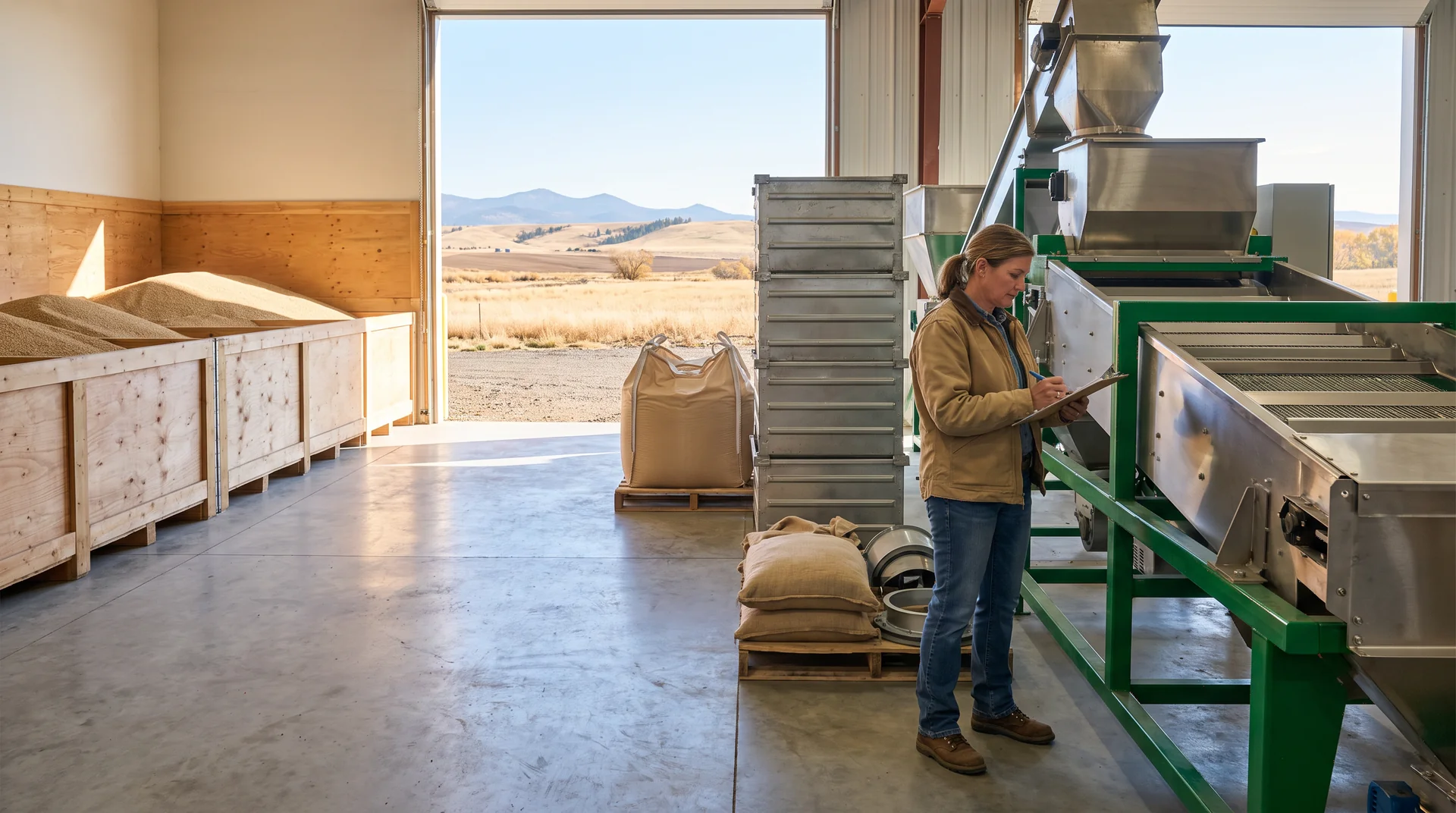

Oregon seed operations can combine crop production, field isolation, conditioning, lot tracking, cleaning equipment, bags or bulk storage, warehouse inventory, customer contracts, transportation, testing, and sale. A family farm that stores its own seed does not present the same insurance questions as a grower that conditions seed for others, stores contract inventory, labels lots for sale, or operates a cleaning line during a compressed season. The site’s Farm & Ranch Insurance resources are a practical starting point for organizing the conversation.
This article is educational information, not insurance, seed-certification, testing, labeling, licensing, contract, legal, tax, safety, environmental, pesticide, warehouse, employment, regulatory, or claim advice. It does not determine whether seed is certified, saleable, correctly labeled, stored properly, eligible for a program, compliant, covered, insured, or subject to a particular contract. The actual crop, contracts, ownership, field and facility facts, storage conditions, policy forms, schedules, limits, valuation, deductibles, exclusions, endorsements, carrier requirements, and qualified professional guidance control.
Start With a Map of the Seed Operation, Not Just the Crop
Oregon State University’s Seed Certification Service describes certification as a process that uses crop-production records and field and laboratory evaluations to support varietal purity and seed quality.[1] ODA separately regulates the sale and labeling of agricultural and vegetable seed sold, offered for sale, or transported in Oregon, and describes seed-company records, sampling, and testing work.[2] Those are important operating facts. They do not themselves create insurance coverage or decide a claim.
Before a renewal, acquisition, new contract, warehouse lease, or expansion, list what the operation actually does: grow seed, condition it, clean it, dry it, test it, store it, bag it, label it, transport it, market it, work with seed owned by another party, or manage treated seed. Identify who owns each lot at each stage. That gives the agency and carrier a more accurate foundation than a generic description such as “farm storage.”
| Operating area | Insurance-review questions | Useful records |
|---|---|---|
| Crop and contract seed | Who owns the seed at harvest, who bears loss or quality risk, and do production agreements impose insurance, certificate, or reporting terms? | Production and storage agreements, field records, lot IDs, purchase orders, invoices, certificates, testing records, and delivery terms. |
| Cleaning and conditioning | What cleaners, separators, conveyors, dryers, scales, baggers, forklifts, dust controls, tools, and computer systems are used? Is any equipment leased, financed, borrowed, or used for third parties? | Equipment schedule, serial numbers, invoices, lease/loan records, maintenance logs, photos, service contracts, and replacement estimates. |
| Warehouse and stored seed | Is seed inside a building, in a bin, in bulk, in bags, at another location, in a rented warehouse, or in transit? Are there customer-owned lots or seed held under contract? | Warehouse map, location list, lot/quantity reports, ownership records, storage agreements, access controls, photos, and inventory valuation methodology. |
| People, vehicles, and mobile work | Who is an employee, family member, contractor, seasonal worker, truck driver, or visitor? Do company vehicles haul seed, bags, samples, parts, or customer property? | Role descriptions, payroll, contractor agreements, driver lists, vehicle schedules, job descriptions, training records, and incident procedures. |
| Continuity and downtime | What happens if a fire, theft, weather event, equipment breakdown, power interruption, or covered property event stops conditioning or access to inventory during a contract deadline? | Seasonal calendar, sales and expense reports, payroll, loan/rent obligations, alternative facility options, customer contacts, and recovery plan. |
Buildings, Seed Inventory, and Conditioning Equipment Need an Accurate Schedule
Oregon DFR says business property can include a building, inventory, equipment, machinery, documents, computers, signs, fences, and outdoor property. It also distinguishes actual-cash-value and replacement-cost valuation.[8] For a seed operation, that is a prompt to identify the true value of cleaners, gravity tables, conveyors, dryers, scales, baggers, forklifts, bins, climate-control systems, tools, computers, seed inventory, packaging materials, and the warehouse itself. It is not a promise that each item is covered.
Use a commercial property insurance review to discuss locations, ownership, indoor versus outdoor storage, leased equipment, duplicate values, detached structures, flood or wildfire exposure, spoilage concerns, utility dependence, and the difference between inventory value, production cost, contract value, and replacement cost. Do not assume the value shown in a farm record, production contract, or lender document matches the policy’s valuation method.
Seed Owned by Someone Else Requires a Separate Conversation
Contract seed, seed held for a customer, seed received for conditioning, samples, consignments, returned lots, or inventory awaiting shipment can be very different from seed wholly owned by the farm. Clarify custody, access, quality specifications, storage location, transport, testing, packaging, release, and the point at which title or responsibility changes. Ask what the contract requires—not just what the parties expect.
Oregon DFR explains that commercial general liability can address certain third-party injury and property-damage claims, while standard liability does not automatically address employees or automobile claims.[9] Property of others, contract assumptions, product allegations, completed work, care-custody-control questions, and economic loss can require more targeted policy review. Discuss the exact contract-seed relationship and related documents through a general liability insurance conversation before the operation accepts or moves the lot.
Bring the Whole Seed Workflow to the Review
Prineville Insurance can help organize a policy-specific seed-operation review around crop contracts, lot ownership, conditioning equipment, farm storage, third-party seed, workers, vehicles, warehouse values, continuity, and current policy terms.
Cleaning, Conditioning, Quality, and Treated Seed Are Operational Facts to Disclose
OSU’s seed-cleaning resource shows that cleaning and conditioning methods vary with the seed’s shape, size, texture, and fragility. It describes screens, air separation, threshing, manual work, and drying as examples of seed-specific processes.[5] A cleaning line may generate questions about machinery, belts, motors, electrical systems, dust, maintenance, fire protection, employee exposure, and a shutdown during a critical window. Be specific with the insurer about every process, especially if the business conditions seed for other growers.
Some seed operations also work with treated seed. Oregon’s treated-seed rule contains specific treatment and labeling provisions.[11] The insurance discussion is separate: identify whether seed treatment occurs, what materials are used, who handles them, where they are stored, who supplies them, and how the operation manages those activities. Do not assume a policy replaces pesticide, labeling, worker-protection, storage, or disposal duties, and do not assume a regulatory record determines coverage.
Records Support the Operation, but They Do Not Substitute for a Policy Review
ODA says seed dealers and seed conditioners must retain records for each lot, including total-disposition records for three years and a seed sample for one year.[4] It also describes retail and wholesale seed dealer license categories.[3] Those rules may be highly relevant to an operation, but the facts and authority should be verified directly with ODA for the business’s role. They do not determine whether a policy covers a lot, a quality allegation, property in storage, a building, a machine, or an interruption.
Alongside the records required by the appropriate program, maintain insurance-ready records: updated inventory reports, warehouse maps, photos, contracts, lot ownership information, bills of lading, equipment serial numbers, receipts, lease agreements, lender requirements, maintenance logs, emergency contacts, backups of test and production data, and a record of the policy forms and endorsements. A business owners policy may suit some smaller operations, but it is not a universal answer for a seed-growing or conditioning business. The location, inventory, contracts, machinery, work performed, revenue, and carrier appetite control.
Dust, Storage Structures, Workers, and Emergency Planning Need Their Own Analysis
Oregon OSHA’s grain-handling directive describes fire, explosion, dust, and storage-entry hazards in grain-handling facilities, while also stating that its grain-handling standard does not apply to farm storage or feedlots.[7] That distinction matters. A seed or farm-storage business should not assume a rule automatically applies—or does not apply—because the operation sounds similar. Have qualified safety, fire, and regulatory professionals evaluate the actual site, equipment, storage structure, employee work, and materials.
Oregon OSHA’s agriculture resources include hazard communication, chemical storage, respiratory protection, pesticide PPE, and general agricultural safety materials.[6] Use them as operational prompts. Then discuss employee injury exposure through a workers’ compensation insurance review, while keeping the insurance conversation separate from a safety or compliance decision. Training, maintenance, housekeeping, inspections, incident planning, and appropriate professional advice can be important, but none guarantee coverage, underwriting approval, certification, compliance, or a claim result.
Seed Movement, Service Vehicles, and Off-Site Work Create More Than One Exposure
Seed may move among fields, warehouses, test labs, customers, buyers, contract growers, conditioning plants, and carriers. List every owned, leased, borrowed, hired, or employee-used vehicle; trailers; forklifts; portable equipment; loads; drivers; routes; and customer-property arrangement. A commercial auto insurance discussion should include the exact use, titles, drivers, loads, trailer facts, and any business transportation agreements.
The site’s tools, equipment, and inventory in company vehicles guide can help frame questions about portable equipment and loose contents, while the Oregon farm-shop insurance guide is useful if the operation repairs, fabricates, or services its own cleaning equipment. Neither resource replaces a review of seed in transit, company vehicles, customer property, schedules, coverage limits, exclusions, endorsements, or contract obligations.
Downtime Can Be a Contract, Labor, and Market Problem as Well as a Property Problem
A fire, theft, equipment event, weather loss, power interruption, or other covered property loss can limit access to seed, cleaning capacity, warehouse space, shipping documents, and payroll during a deadline-sensitive period. Oregon DFR says business interruption or continuation coverage may address fixed costs and lost profits after a covered event creates an extended shutdown, subject to the terms of the actual policy.[10] It may be part of a property policy or package product.
Bring seasonal sales records, customer commitments, production and warehouse capacity, fixed costs, payroll, loan obligations, alternate cleaning or storage options, potential rerouting plans, and data-backup procedures to the discussion. Farms with irrigation-dependent seed crops should also coordinate questions with the site’s Oregon irrigation, wells, water systems, and remote-property guide. For operations with meaningful assets or contractual requirements, a commercial umbrella insurance review may also be appropriate; underlying limits and the actual policy terms control.
What to Bring to a Seed Production and Storage Insurance Review
Bring current declarations and endorsements; all production, conditioning, storage, and marketing agreements; a current lot and inventory report; warehouse and field locations; seed ownership and custody information; equipment, building, bin, vehicle, and trailer schedules; serial numbers and invoices; lab, testing, and recordkeeping contacts; treatment and chemical information if relevant; employee and contractor roles; safety and maintenance records; photos; revenue and expense reports; seasonal deadlines; backup plans; certificates; and questions about property of others, transit, fire, machinery, data, business income, valuation, limits, deductibles, endorsements, and exclusions.
The objective is an accurate description of the seed business as it exists today. Good records, safety practices, and clear contracts can improve the quality of the conversation, but they do not guarantee that every loss, obligation, contract, quality dispute, regulatory issue, or claim will be covered or resolved in a particular way.
Frequently Asked Questions
Is seed inventory automatically covered by a farm or ranch policy?
Do not assume it is. Seed may be owned by the farm, held under a production agreement, in a warehouse, in transit, treated, awaiting cleaning, stored for someone else, or subject to special quality, lot, contract, or valuation questions. The building, inventory, machinery, location, ownership interest, policy form, schedules, limits, valuation method, exclusions, endorsements, deductibles, and carrier requirements all matter. Request a policy-specific review before relying on a general description of coverage.
Does seed certification guarantee the seed or the business is insured?
No. Oregon Seed Certification Service describes a certification process involving production records and field and laboratory evaluations. That process and insurance serve different purposes. Certification, testing, labeling, quality-control, contracts, records, and regulatory duties do not create insurance coverage, decide a claim, or substitute for a policy review. Ask the relevant program and insurer separate questions about the exact operation.
If we clean or condition seed for another grower, is that the same as working only with our own crop?
Not necessarily. Conditioning, cleaning, storing, testing, packaging, transporting, or handling seed that belongs to another party can introduce property-of-others, contract, care-custody-control, product, completed-work, transit, and record questions. Describe the ownership, work scope, location, handling steps, quality expectations, contracts, and delivery terms to the carrier before accepting the work. Do not assume a customer contract or work order changes policy terms.
Do Oregon seed dealer records and labels replace insurance documentation?
No. ODA describes separate record, labeling, licensing, and testing responsibilities for certain seed businesses. Those records can be valuable operational evidence, but they do not establish coverage, prove compliance, replace a complete property schedule, or decide a loss. Keep the records required by the appropriate authority and separately organize inventories, receipts, contracts, photos, serial numbers, valuations, and insurance documents for the policy review.
Will business-income coverage pay every cost if a seed warehouse or cleaning line is shut down?
Not automatically. Oregon DFR explains that business interruption or continuation insurance may address certain fixed costs and lost profits after a covered event creates an extended shutdown. The actual response depends on the covered cause of loss, policy wording, waiting period, limits, restoration period, records, exclusions, endorsements, and facts. Review seasonal commitments, contract deadlines, alternative facilities, labor, transport, and financial records before a loss occurs.
References
- Oregon State University — Oregon Seed Certification Service: Certification Information
- Oregon Department of Agriculture — Seed Regulatory Program
- Oregon Department of Agriculture — Seed Licenses
- Oregon Department of Agriculture — Seed Records
- Oregon State University Malheur Experiment Station — Seed Cleaning and Conditioning
- Oregon OSHA — Agriculture
- Oregon OSHA — Grain Handling Facilities Directive
- Oregon Division of Financial Regulation — Property Insurance
- Oregon Division of Financial Regulation — Liability Insurance
- Oregon Division of Financial Regulation — Business Interruption Insurance
- OAR 603-056-0431 — Chemically Treated Seed


