



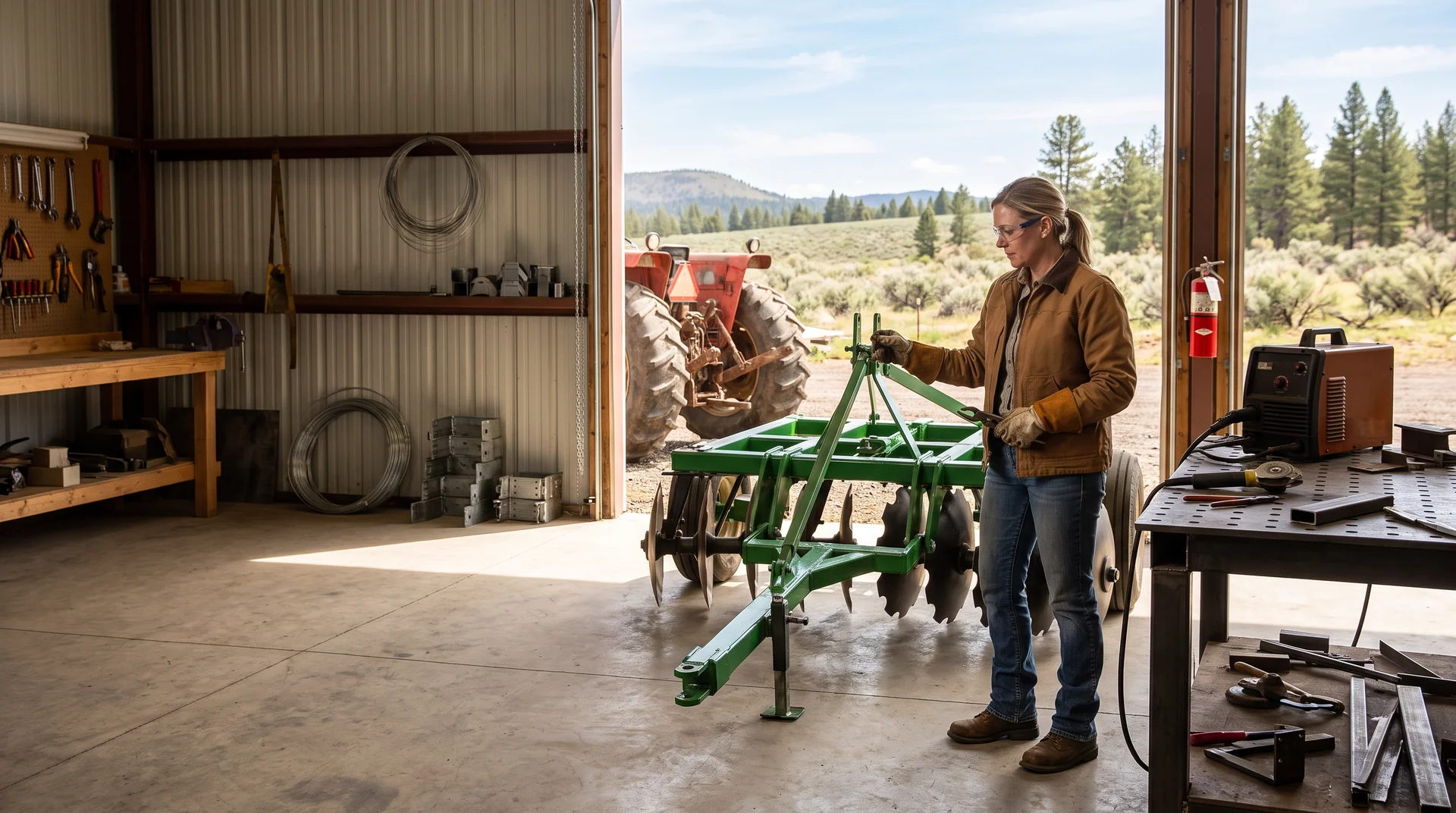

A working shop is often the heart of an Oregon farm or ranch. It may keep tractors, pivots, hay equipment, stock trailers, pumps, gates, and implements in service through an intense season. Once the same shop also welds for a neighbor, stores a customer’s equipment, fabricates a replacement part, sends a repair crew off the property, or bills separately for labor, the insurance questions can become more detailed.
This article is educational information, not insurance, safety, fire-code, environmental, employment, worker-classification, workers’ compensation, welding, hazardous-material, permit, contract, legal, tax, regulatory, or claim advice. It does not decide whether a shop needs a permit, whether a contract is enforceable, whether property is covered, whether a worker is correctly classified, whether a safety practice meets a requirement, or how a claim will be resolved. The actual work, location, agreements, policy forms, schedules, endorsements, limits, deductibles, exclusions, carrier underwriting, agency rules, and qualified professional guidance control.
Start With a Clear Map of What the Shop Does
“Farm shop” can describe very different operations. Some shops only service equipment owned by the farm. Others build cattle panels, make repairs for neighboring ranches, weld on customer trailers, install fabricated parts, keep customer machinery overnight, send staff to a job site, or use a service truck. Before renewal or expansion, write down the work the shop performs—not just the building’s name—and use the site’s Farm & Ranch Insurance resources as a starting point for a more specific conversation.
Oregon OSHA identifies welding as hot work because common procedures involve an electric arc or flame. It notes fire and burn risks, compressed-gas and explosion risks, and health hazards from fumes and gases when ventilation or training is inadequate.[1] Those are operating and safety considerations. They are not proof that a claim, coverage, permit, or insurance application will turn out a particular way.
| Farm-shop activity | Questions to organize | Useful records |
|---|---|---|
| Owned-equipment maintenance | Which tractors, loaders, implements, trailers, welders, generators, diagnostic tools, and portable tools are owned, leased, financed, or borrowed? | Asset schedule, serial numbers, receipts, photos, leases, loan documents, maintenance logs, and replacement-cost estimates. |
| Customer repair or fabrication | Do you work on, modify, fabricate, install, test, store, transport, or return customer-owned equipment or parts? | Written authorizations, estimates, work orders, photos at intake and release, job notes, invoices, contracts, customer contacts, and delivery records. |
| Hot work and fire | Where does cutting, grinding, welding, torch work, or work around fuel, hay, solvents, gases, dust, wood, or combustibles occur? | Pre-work checks, training, equipment inspection records, fire extinguisher records, fire-watch documentation when applicable, and local-authority correspondence. |
| People and mobile work | Who is an employee, family member, hired helper, contractor, delivery driver, or customer? Does work leave the ranch in a pickup, service truck, trailer, or mobile welding rig? | Role descriptions, payroll, contracts, certificates, driver list, vehicle schedule, job-site protocols, and incident-report process. |
| Downtime and continuity | What happens if fire, theft, wind, a covered equipment event, or loss of the shop stops essential repairs during planting, irrigation, calving, or harvest? | Revenue and expense records, seasonal calendar, payroll, lender obligations, vendor contacts, rental options, and alternate-shop plan. |
Tools, Machinery, Buildings, and Outdoor Property Need a Real Inventory
Oregon DFR says business property can include a building, equipment, machinery, supplies, inventory, computers, documents, signs, fences, and outdoor property. It also explains the difference between actual cash value and replacement cost.[4] For a farm shop, that is a useful inventory prompt—not a promise that every welder, plasma cutter, air compressor, loader attachment, diagnostic tablet, tool trailer, steel rack, fabricated gate, or spare part is insured.
Photograph the building and shop layout, record serial numbers, retain invoices, identify borrowed or leased items, and update values after an upgrade. Review those records through a commercial property insurance discussion. Be candid about tools that travel off site, equipment stored outdoors, mobile welding units, work on a different parcel, or a shop that is used for both the ranch and customer work. Covered-property definitions, scheduled values, valuation method, sublimits, cause of loss, exclusions, and endorsements matter.
Customer Equipment Is a Different Conversation From Your Own Tractor
A customer’s baler, trailer, gate, hydraulic component, pump, feeder, or implement may enter the shop for a repair and leave after a weld, fabrication, installation, or adjustment. That creates practical questions about custody, access, storage, test operation, keys, delivery, contracts, and workmanship. It also creates an insurance question that should be described to the carrier before the work is accepted—not after a loss.
General liability can address certain third-party bodily injury and property-damage claims, but Oregon DFR identifies important areas that standard general liability does not address automatically, including employee injury and automobile operation.[5] Property of others, work performed, care-custody-control issues, completed-work allegations, professional advice, and contract assumptions can require a policy-specific review. Ask the insurer which forms, endorsements, exclusions, limits, deductibles, and reporting requirements apply to the exact customer-equipment arrangement. Do not rely on a repair ticket or informal waiver as a substitute for that conversation.
Describe the Shop Before You Need the Coverage
Prineville Insurance can help organize a policy-specific farm-shop review around welding, repair work, customer equipment, tools, employees, service vehicles, fire controls, and continuity planning for your Oregon operation.
Welding, Cutting, Grinding, and Fire Controls Are Operational Facts to Disclose
Oregon Fire Code Chapter 35 addresses welding, cutting, open torches, and other hot work. It discusses approved or authorized work areas, responsible persons, permits where required, trained operators, combustible controls, pre-work checks, and fire watches.[2] It also identifies conditions and local fire-authority decisions that can matter. A farm shop should not assume that a practice used years ago remains correct after a remodel, a new welding area, a new fuel-storage arrangement, drought conditions, or a change in the type of customer work performed.
Keep the safety conversation separate from the insurance promise. Ask the appropriate Oregon OSHA resource, fire authority, and qualified safety professional about the specific activity. Then make sure the insurance professional understands the actual work: welding, torch cutting, grinding, fabrication, mobile work, fuel proximity, hay or wood storage, flammable-liquid use, gas cylinders, fire extinguishers, dust, electrical upgrades, employee roles, and customer access. A safety procedure does not guarantee a claim result, and a policy does not certify code compliance.
Workers, Hired Help, Subcontractors, and Customers Change the Exposure
A rural repair shop can involve family members, seasonal staff, employees, independent contractors, welders, mechanics, electricians, delivery drivers, technicians, equipment owners, and customers waiting on-site. Describe who does what and who directs the work. Use the site’s workers’ compensation insurance resource to organize questions about employee injury exposure, while obtaining qualified employment and legal advice on worker classification.
If a contractor helps with welding, installation, electrical work, or a specialized repair, retain the agreement and discuss certificate requirements before work begins. The site’s Oregon subcontractors, freelancers, and 1099 workers insurance guide can help frame a pre-work conversation. It does not decide classification, licensing, contract enforceability, or coverage. Workers’ compensation, general liability, professional work, auto, and property exposures should not be assumed to move together simply because the job is performed in a farm shop.
Service Trucks, Tool Trailers, and Mobile Welding Need Their Own Review
The moment tools, parts, equipment, employees, or customer property travel down the road, a new group of questions appears. Is the vehicle owned by the farm, personally titled, leased, or borrowed? Who drives it? Is it pulling a tool trailer, transporting a welder, hauling customer equipment, or delivering fabricated parts? What is attached to the truck, and what is loose in the bed or trailer?
Review the drivers, titles, usage, trailers, tools, load, routes, contracts, and client-property facts with a commercial auto insurance discussion. For the contents of a company vehicle, the site’s tools, equipment, and inventory in company vehicles guide is a useful companion. Neither article replaces a review of owned autos, hired and non-owned auto issues, scheduled equipment, property of others, endorsements, limits, or exclusions.
Used Oil, Fluids, Solvents, and Shop Waste Are Not Just Housekeeping
An on-farm repair operation may accumulate used engine oil, hydraulic fluid, greases, gear oil, coolants, parts-cleaning materials, batteries, filters, rags, paints, and containers. Oregon’s used-oil rules define used oil broadly and address storage, mixing, releases, and disposal. They require, among other things, used-oil containers and tanks to be closed, covered, or under cover to prevent rainwater contact.[3] The details of any operation’s materials and obligations are fact-specific.
Create a list of every material used or stored in the shop, container type, storage location, supplier, spill-response process, transporter, recycler, and disposal method. Confirm regulatory and environmental questions with Oregon DEQ, the local fire authority, and other qualified advisers. Then disclose the storage and operations accurately to the insurer. An environmental procedure does not automatically produce insurance coverage, and an insurance policy does not replace waste-management or reporting obligations.
Fire, Theft, and Downtime Can Stop More Than the Shop
A shop fire, theft, wind event, equipment failure, or other covered property event can interrupt haying, irrigation repairs, cattle handling, harvest, custom work, or scheduled customer jobs. Oregon DFR says business-interruption or continuation insurance may address certain fixed costs and lost profit if a covered event creates an extended shutdown; it may be part of a property policy or package product.[6] Whether a specific loss triggers coverage depends on the policy, covered cause of loss, restoration period, records, limits, exclusions, and facts.
Bring revenue history, payroll, loans, rent, repair backlog, customer commitments, seasonal deadlines, alternative repair vendors, rental-equipment options, and a continuity plan to your insurance review. A business owners policy may be worth discussing for some operations, but it is not a one-size-fits-all answer for a ranch shop. Operations with meaningful assets or contractual requirements may also warrant a commercial umbrella insurance conversation; underlying limits, operations, carrier requirements, and policy language control.
What to Bring to a Farm-Shop Insurance Review
Bring current declarations and endorsements; a site map and shop photos; asset, tool, machinery, vehicle, and trailer lists; serial numbers and receipts; building values and recent improvements; customer work orders and contracts; sample estimates and invoices; certificates; employee and contractor role descriptions; safety, training, and incident records; welding and fire-control information; material and waste inventory; spill-response information; revenue and expense records; and questions about customer property, work performed, tools, mobile work, fires, employees, contracts, downtime, limits, deductibles, valuation, endorsements, and exclusions.
The goal is not to force a ranch shop into a generic insurance description. It is to give the carrier and agency an accurate view of the work, people, property, and customer relationships in the operation today. Good records and sound practices may improve the quality of that discussion, but they do not guarantee coverage, underwriting approval, legal compliance, eligibility, or any claim outcome.
Frequently Asked Questions
Is a farm-maintenance shop automatically covered under a farm or ranch policy?
Do not assume it is. A farm shop’s building, attached improvements, portable tools, welding equipment, machinery, customer equipment, inventory, business activity, fire protection, location, and policy terms can all affect the analysis. The answer may also change when the shop begins repairing, welding, fabricating, installing, storing, or transporting property for someone else. Review the exact operation, schedules, limits, valuation, deductibles, exclusions, endorsements, and carrier requirements before relying on a general description of coverage.
Does general liability automatically cover a customer’s tractor or implement while it is in my shop?
Not automatically. Oregon DFR explains that commercial general liability can address certain third-party bodily injury and property damage, but a specific customer-equipment loss depends on the facts, the property interest, work performed, the policy wording, exclusions, endorsements, limits, deductibles, and applicable forms. Tell the agent whether customer machinery is repaired, modified, welded, stored overnight, test-driven, hauled, or left at your premises, and request a policy-specific explanation before accepting the work.
Can a waiver or repair ticket replace insurance?
No. A written authorization, estimate, invoice, limitation-of-liability clause, or waiver can be an important business record, but it does not itself create insurance coverage, decide legal enforceability, settle a claim, or replace safe work practices. Have contracts and customer-facing forms reviewed by qualified legal counsel, and give the insurer a clear picture of the work, the property, and the customer relationship.
Does a welding safety program guarantee a claim will be paid or a permit is not needed?
No. Oregon OSHA identifies welding as hot work with fire, burn, explosion, fume, gas, and ventilation concerns. Oregon fire-code requirements can also depend on the work area, fuel sources, combustibles, local authority, and the work performed. Safety records, fire-watch procedures, training, permits, and maintenance practices can support better operations, but they do not guarantee coverage, code compliance, eligibility, or a claim outcome.
Are used oil, hydraulic fluid, coolant, and shop solvents only an environmental issue?
No. They can be operational, safety, property, contractual, regulatory, and insurance-review questions at the same time. Oregon’s used-oil rules address storage, mixing, discharge, and disposal. Confirm your particular materials, containers, spill-response plan, transport, recycling, disposal, and any air- or water-quality requirements with Oregon DEQ and local authorities. Do not assume an insurance policy replaces those duties or automatically responds to an environmental issue.
References
- Oregon Occupational Safety and Health — Welding
- Oregon Fire Code 2025, Chapter 35 — Welding and Other Hot Work
- Oregon Administrative Rules, DEQ Division 111 — Used Oil Management
- Oregon Division of Financial Regulation — Property Insurance
- Oregon Division of Financial Regulation — Liability Insurance
- Oregon Division of Financial Regulation — Business Interruption Insurance
- SAIF — Farm Shop Safety: Improving Your Odds


