



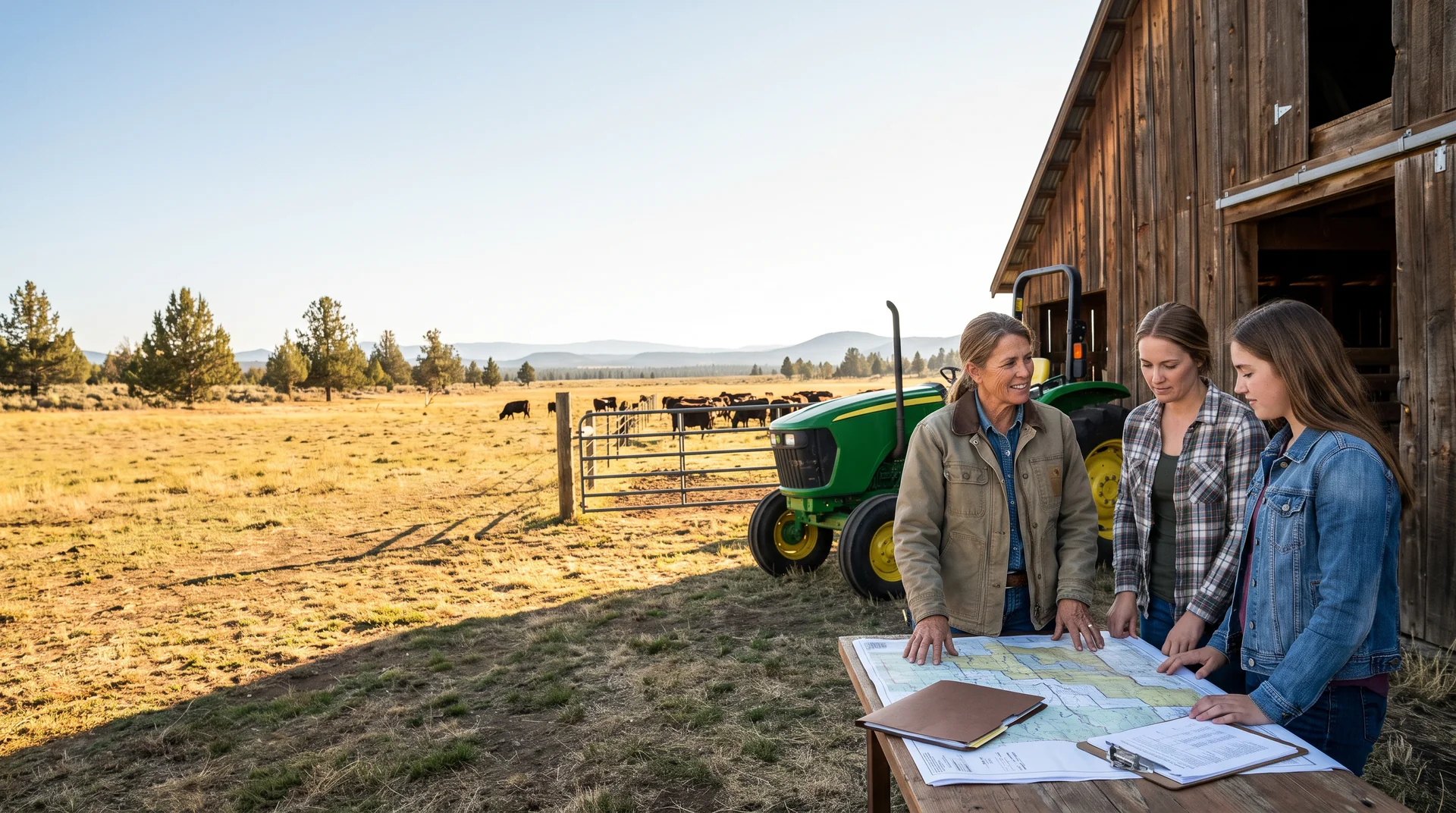

A farm or ranch transition is rarely one event. A parent may begin stepping back from daily decisions, an adult child may take on purchasing or payroll, a successor may lease ground before buying an ownership interest, a family may move equipment into a business entity, or an estate may need an interim operating plan after a death or disability. Each step can change the questions that belong in a policy review. Start with the site's farm and ranch insurance resources, then make the review match the way land, livestock, equipment, people, and contracts are actually used.
This article is educational information, not insurance, legal, tax, accounting, estate-planning, probate, valuation, business-entity, employment, investment, title, or claim advice. It does not decide who owns an asset, has authority to sign, is an insured, qualifies for a tax treatment, must be listed on a policy, satisfies a lender, or has coverage for a loss. Policies, declarations, endorsements, applications, entity documents, leases, wills, trusts, court orders, titles, loan documents, carrier requirements, and the facts of a loss control.
Succession, Estate Planning, and Insurance Are Connected—but They Are Not the Same Thing
Oregon State University's farm-succession materials describe a process that connects family expectations, business health, entity organization, estate planning, and periodic updates.[1] That is a useful frame for an insurance conversation because a policy has to keep pace with the operation. The legal owner of a parcel, the manager who makes day-to-day decisions, the person driving a pickup, the entity that employs a hand, and the individual named on a policy may not be the same person.
A transition plan can be deliberate and gradual, or it can begin after an unplanned death, injury, retirement, divorce, lender request, wildfire, equipment loss, or family disagreement. In either case, the insurance question is not simply, “Has the farm been passed down?” It is, “What changed in ownership, operations, authority, property, employment, locations, contracts, and income—and do the actual insurance documents reflect those facts?” For a companion overview of continuity planning across all kinds of Oregon businesses, see the site's Oregon business succession planning insurance guide.
| Transition question | Insurance review questions | Documents to organize |
|---|---|---|
| Management shifts before ownership does | Who now signs contracts, hires staff, operates equipment, drives vehicles, orders feed, or manages customer work? Is the operational reality clear to the insurer? | Management plan, employee and driver list, authorization records, job descriptions, certificates, applications, and current policy declarations. |
| Land, livestock, or equipment moves to a different owner or entity | Which name owns each asset? Which entity uses it? Are locations, scheduled items, values, loss payees, lenders, and lease responsibilities current? | Deeds or leases, entity documents, asset schedule, serial numbers, livestock records, invoices, valuation information, lender notices, and photos. |
| A successor joins the farm or buys an interest | Will the successor be an employee, manager, owner, tenant, contractor, operator, driver, or all of the above? What does each policy say about those roles? | Operating agreement, purchase or gift documents, employment records, agreements, training records, vehicle list, and insurance correspondence. |
| An estate or trust holds property during a transition | Who has authority to manage property, collect income, insure buildings, pay premiums, operate vehicles, care for livestock, and report a loss? What notification does the carrier need? | Trust or estate documents, contact list, property records, policy declarations, premium notices, lender information, inventory, and continuity contacts. |
| A family sells, leases, or winds down part of the operation | Does the farm still have the same exposures after a field, building, herd, shop, vehicle, or business line changes? Are vacant, seasonal, leased, or off-premises exposures addressed? | Closing or lease records, cancellation or change documents, updated schedules, building status, equipment disposition records, and contract requirements. |
Begin With an Asset-and-Use Map, Not a Stack of Assumptions
Farm transitions can create a gap between the spreadsheet and the working ranch. A parcel may be owned by one generation but farmed by another. A herd may be individually owned, owned by an entity, or subject to a lease or financing arrangement. The tractor may be inherited, leased, borrowed, or held for a customer. A pickup might be personally titled but used for business work. The first practical step is a current map of each asset and its use.
List every operating location; owned and leased ground; houses, barns, shops, grain or seed storage, and corrals; livestock and individual high-value animals; machinery, attachments, tools, and irrigation equipment; pickups, trailers, and farm vehicles; inventory and feed; employees and family operators; contracts and certificates; lenders and loss payees; and who is responsible for daily care, maintenance, transport, and reporting. Oregon DFR notes that business property can include owned or leased buildings, inventory, machinery, equipment, valuable papers, signs, fences, and outdoor property.[5] That does not mean every item is covered or valued as expected; it means the schedule and use deserve a current, document-based conversation about commercial property insurance.
This is also an opportunity to separate broad livestock questions from the particular transition. A registered bull, bred heifer, horse, or specialized herd record can have different documentation needs from ordinary farm property. The site's Oregon cattle mortality insurance guide helps frame record, value, and mortality questions. It cannot determine whether a particular transfer, estate, schedule, or loss qualifies under a policy.
Ownership, Management, and the Named Insured May Need Separate Conversations
A family may use a sole proprietorship, LLC, partnership, trust, estate, corporation, or a mix of arrangements. Oregon State University's example succession framework describes separate operating, land-holding, and asset-holding entities connected by leases and contracts, including possible livestock, equipment, and transportation entities.[2] It is an educational example, not a one-size-fits-all structure. Your attorney, accountant, lender, and tax professional should address the legal and tax choices; your insurance review should use the resulting documents and real operating facts.
Bring names exactly as they appear in the documents. Ask which individuals and entities are named on the policy, which own or lease property, which operate the farm, which hold loans, which employ workers, and which are parties to contracts. Ask about mailing and claims contacts, authorized representatives, loss payees, additional insured requirements, schedules, locations, and certificates. Do not assume that a business card, a family title, an LLC membership interest, a trust designation, or authority under an estate document is automatically reflected in a policy.
Make the Insurance Review Follow the Transition Timeline
Prineville Insurance can help organize a policy-specific discussion around the farm's transition documents, operating roles, property schedule, livestock records, vehicle use, employee information, contracts, lenders, and questions about limits, deductibles, exclusions, endorsements, and carrier requirements.
Land, Buildings, Equipment, and Livestock: Reconcile the Schedule With the Actual Farm
Asset changes can happen years before a transfer is legally complete. A successor may purchase a tractor, take over a lease, bring a new vehicle into the operation, move cattle onto a different parcel, or use a shop and tools previously controlled by a parent. Update the asset-and-use map after each meaningful change rather than waiting for a once-a-year renewal conversation.
When equipment is rented, leased, borrowed, or moved between entities, add the agreement, serial numbers, attachments, delivery plan, operator information, and return condition to the review packet. The site's farm equipment rental and leasing insurance guide covers practical questions about shared and customer equipment. For cattle, horses, or other livestock moved with a trailer or truck, the site's Oregon livestock hauling guide is a useful companion for driver, trailer, transit, and trip-document questions.
Valuation deserves its own discussion. DFR distinguishes actual cash value from replacement cost in its business property guidance.[5] Land value, tax basis, estate value, market value, replacement cost, business-income value, a lender's requirement, and a policy limit can be different measures for different purposes. An insurance agent should not substitute for legal, tax, appraisal, or accounting advice. The goal is to give every qualified adviser a consistent, current asset list and ask what the actual documents require.
Liability, Employees, Vehicles, and Contracts Can Shift With the Management Role
When management changes, the people doing the work may change too. An adult child may take over daily livestock care; a former owner may remain an occasional operator; a hired manager might make purchases or run a crew; seasonal help may report to a new supervisor. These are operational and employment questions as well as family questions. Oregon DFR explains that general liability addresses certain third-party bodily-injury, property-damage, personal-injury, and advertising-injury claims, while standard liability coverage has important exclusions for auto and workers' compensation matters.[6]
Ask the policies to follow the facts. Confirm the employer of record, payroll, officer or owner roles, hired and family-worker classifications, authorized drivers, vehicle title and use, customer work, custom operations, rental equipment, and required certificates. Use the site's commercial general liability, commercial auto, and workers' compensation pages as starting points for questions—not as a substitute for a policy review. For an operation with substantial assets or contractual requirements, the site's commercial umbrella insurance page may also help organize a discussion about excess-liability questions.
Farm leases, pasture agreements, custom work, equipment rentals, client-animal arrangements, agricultural contracts, and lender documents can ask for particular insurance provisions. Do not guess at the wording. Read the full agreement, identify every legal entity and individual named in it, and ask the contract drafter, counterparty, lender, and insurer how the real documents interact. A certificate alone is not a substitute for that review.
Plan for an Interim Operator and Continuity After a Disruptive Event
A carefully planned retirement can still be disrupted by a health event, unexpected death, wildfire evacuation, injury, or a delay in estate administration. One of the most useful transition records is an operational continuity file: who can make daily decisions; where policy declarations and insurer contacts are kept; how payroll, feed, veterinary care, utility bills, lease payments, loans, and premium notices are handled; who knows gate codes and irrigation controls; and how livestock, equipment, vehicles, customer jobs, and employees are managed in the next 24 hours, 30 days, and season.
DFR describes business interruption or continuation coverage as addressing certain fixed costs and lost profits after a covered shutdown, subject to actual policy requirements.[7] A management change by itself is not a covered loss. Still, mapping out who can keep the farm operating and what records support income, payroll, contracts, and property values can make a later policy conversation more useful. Oregon State University's succession checklist also emphasizes regular review, management timelines, asset inventory, professional advisers, and updated plans as circumstances change.[3]
Estate, Trust, and Tax Questions Need Coordination—Not Insurance Guesswork
Estate and trust transitions can involve legal authority, title, tax returns, income, creditors, beneficiaries, lenders, and property stewardship. Oregon Department of Revenue publishes estate-transfer and fiduciary-income-tax information and explains that an estate or trust can have income-tax responsibilities.[4] That is a reason to coordinate the insurance review with qualified legal and tax advisers, not a reason to make coverage or tax assumptions from a blog post.
Before a planned transfer—or as soon as possible after an unplanned event—collect the policy declarations, entity and estate documents, current property schedules, appraisals or valuation records, leases, loan documents, vehicle titles, equipment lists, livestock records, payroll details, customer agreements, and contact information for the attorney, accountant, lender, and farm decision-makers. Oregon Farm Link similarly recommends licensed professional advice for operation-specific succession questions.[8]
What to Bring to a Farm Succession Insurance Review
Bring the current farm ownership and management chart; a list of every entity, trust, estate, individual owner, and authorized manager; current declarations and endorsements; asset and location schedules; deeds and leases; livestock and equipment records; vehicle and driver lists; payroll and worker information; contracts and certificate requirements; lender and loss-payee details; recent valuations; and a plain-language description of what is changing, when it changes, and who will be responsible afterward.
The objective is not to put a legal label on a family transition. It is to make sure the insurance questions are specific enough to be answered from the real policies and real documents before a loss, contract deadline, or family emergency forces the issue.
Frequently Asked Questions
Should a farm call its insurance agent when an adult child begins managing the operation?
It is a good time to ask for a policy-specific review, especially if management duties, payroll, equipment use, vehicle use, leases, signing authority, ownership interests, business entities, or addresses are changing. A family role, a job title, an operating agreement, and a policy named insured are not interchangeable. The actual policy, endorsement, application, carrier requirements, and transition documents control.
Does putting the farm in an LLC or trust automatically update insurance?
No. Forming or changing an LLC, trust, estate, partnership, or other ownership arrangement does not by itself amend an insurance policy. Ask the insurer and qualified legal and tax advisers to review the actual entity names, ownership, operating role, assets, contracts, lenders, property locations, and coverage documents before relying on any assumption.
What should be reviewed when farm land, livestock, and equipment are owned by different people or entities?
Start with a current asset-and-use map: who owns each asset, which entity operates the farm, who leases land or equipment, who employs workers, which vehicles are used, and which contracts apply. Then ask how the declarations, scheduled property, named insureds, loss payees, drivers, operators, locations, values, liability limits, deductibles, exclusions, and endorsements apply to the actual arrangement.
Can life insurance or other financial arrangements be part of a farm transition plan?
They can be topics for the family’s attorney, accountant, financial professional, lender, and insurance adviser to discuss. The right approach depends on the estate plan, business documents, tax position, family goals, asset values, debt, ownership, health, policy terms, and many other facts. This article does not recommend a particular product, amount, beneficiary, or strategy.
What happens to farm insurance after an owner dies or becomes unable to manage the business?
Do not wait for a loss to find out. Notify the insurer or agent promptly and ask what information is needed. The answer can depend on the policy, timing, entity structure, estate or trust documents, who now operates the farm, occupancy, vehicle and equipment use, payroll, contracts, and carrier underwriting. Legal authority, tax filings, title, and insurance coverage are separate questions that should be coordinated with appropriate advisers.
References
- Oregon State University — Getting Organized: Business Organization and Succession Planning for Oregon Family Farms and Ranches
- Oregon State University — Chapter 4: Organize Your Farm LLCs for Your Business Succession Plan
- Oregon State University — Checklist for Farm Business Succession Planning
- Oregon Department of Revenue — Estate Transfer and Fiduciary Income Taxes
- Oregon Division of Financial Regulation — Property Insurance
- Oregon Division of Financial Regulation — Liability Insurance
- Oregon Division of Financial Regulation — Business Interruption Insurance
- Oregon Farm Link — Family Farm Succession Planning Resources


