



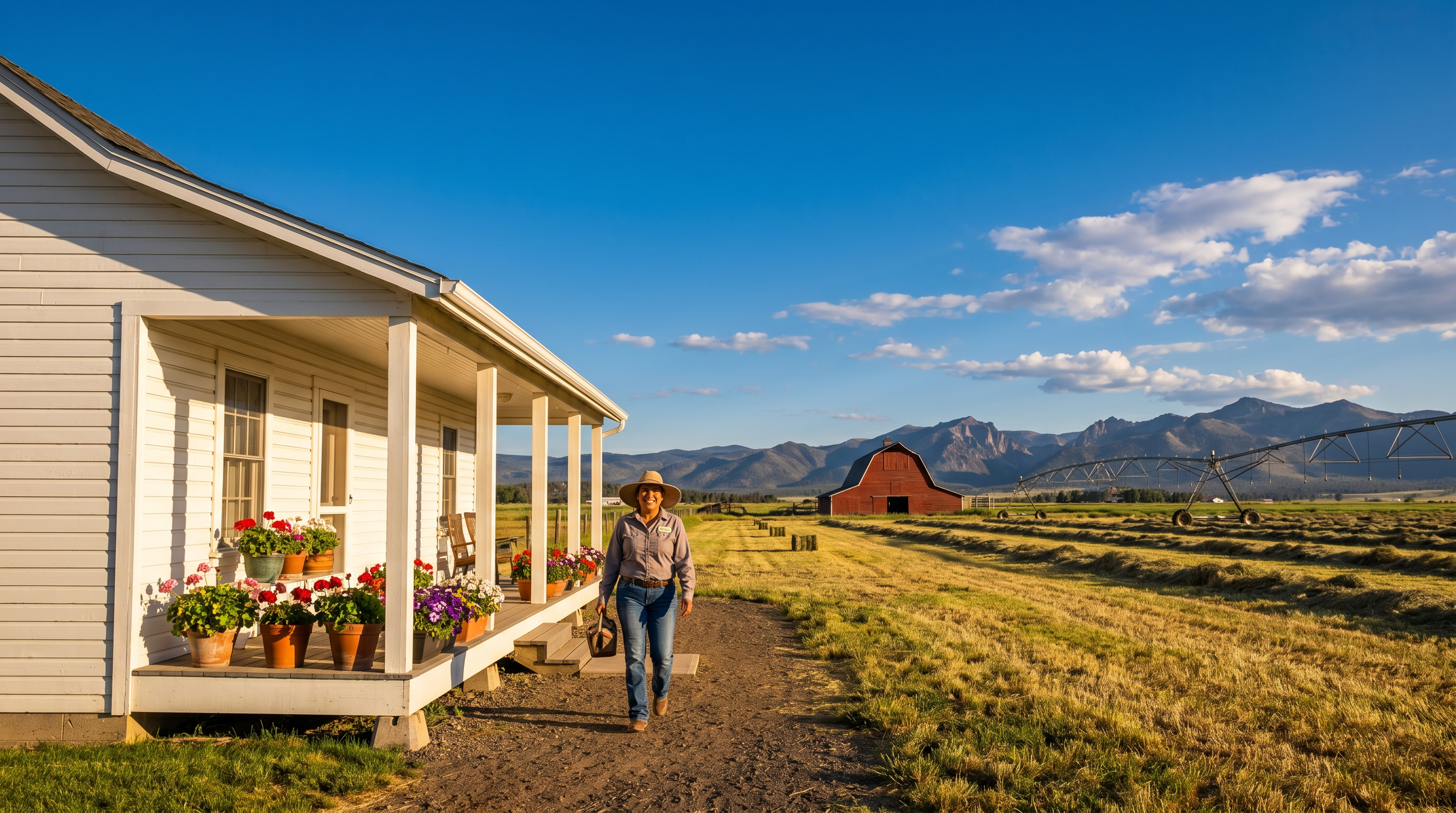
Most Central Oregon farmers and ranchers think of themselves as employers. Fewer think of themselves as landlords. But the moment you provide a bunkhouse, a converted barn apartment, or a farmworker cottage as part of an employee's compensation — whether for a year-round ranch hand, a seasonal hay crew, or an H-2A visa worker — you have stepped into both roles simultaneously. And the legal and insurance implications of that dual role are more complex than most agricultural employers realize.
Oregon's 2025 OSHA agricultural labor housing rule changes have sharpened the stakes considerably. New requirements for carbon monoxide detectors, minimum sleeping space, fire safety equipment, and structural standards apply to any housing provided in connection with employment — including single-family homes occupied by five or fewer workers. At the same time, Oregon courts have increasingly recognized that an employer-landlord can face liability in their landlord capacity even when workers' compensation would normally bar an employee lawsuit. The result is a coverage gap that sits quietly in most farm and ranch insurance programs — until a claim arrives. At Prineville Insurance, we've been helping Central Oregon agricultural operations navigate these risks since 1935, and we want to make sure you understand what you're actually covered for.
Eight Coverages Every Oregon Farm Employer-Landlord Should Have
Employee Housing Property Coverage
Covers bunkhouses, farmworker cottages, converted outbuildings, and other structures used as employee housing for fire, storm, vandalism, and other covered perils. Must be specifically scheduled on your policy.
Premises Liability for Housing
Covers bodily injury and property damage claims arising from the condition of your employee housing — slip-and-fall on icy steps, injuries from structural defects, mold-related health claims, and guest injuries.
Workers' Compensation
Oregon requires workers' comp for agricultural employers with one or more employees. Covers medical expenses and lost wages for work-related injuries. Off-hours housing injuries occupy a legal gray zone — both workers' comp and GL coverage are needed.
Employment Practices Liability (EPLI)
Covers claims of wrongful termination, discrimination, and housing-related retaliation. When housing is tied to employment, termination disputes can become housing disputes — EPLI bridges the gap.
Commercial Umbrella
Extends liability limits above your farm GL and any landlord policy. Employee housing liability claims — especially those involving habitability, fire, or carbon monoxide — can easily exceed standard policy limits.
H-2A Visa Housing Compliance Coverage
Federal H-2A program requires employers to provide housing meeting USDA standards or pay a housing allowance. Coverage for H-2A housing must meet both federal and Oregon OSHA standards — specialized endorsements may be needed.
Farm Liability Extension
Adds employee housing premises to your farm general liability policy. Ensures that the housing location is explicitly covered for third-party bodily injury and property damage claims, not just the main farm operation.
Loss of Rental Income
If employee housing is damaged and uninhabitable, covers the value of housing you can no longer provide — particularly important when housing is part of employee compensation and you must arrange alternative accommodations.
Is Your Employee Housing Properly Covered?
Most farm and ranch policies do not automatically cover employee housing structures or the premises liability that comes with them. Prineville Insurance can review your current program and identify the gaps before a claim does.
1. Oregon OSHA's 2025 Agricultural Housing Rules: What Changed and Why It Matters for Insurance
Oregon OSHA adopted comprehensive amendments to its Agricultural Labor Housing rules (OAR 437-004-1120) effective January 2025. The new rules were controversial — the Oregon Farm Bureau called them "reckless" and warned they would eliminate affordable housing for farmworkers — but they are now the law, and non-compliance carries both regulatory and civil liability consequences.
The key new requirements include carbon monoxide detectors in all sleeping areas, minimum sleeping space per occupant (addressing overcrowding in converted structures), improved fire safety equipment including fire extinguishers at specified locations, enhanced sanitation and ventilation standards, and structural integrity requirements for older buildings. Employers providing housing must register with Oregon OSHA unless the housing is occupied exclusively by farm family members.
From an insurance standpoint, OSHA compliance matters for two reasons. First, a documented OSHA violation at the time of an injury or fire is powerful evidence of negligence in a premises liability lawsuit — it can dramatically increase your exposure. Second, some insurance carriers are beginning to ask about OSHA compliance as part of the underwriting process for farm policies with employee housing. Staying current with the 2025 rules is not just a regulatory obligation; it is a risk management imperative. Talk to your farm and ranch insurance agent about how your current housing program aligns with the new standards.
2. The Dual Employer-Landlord Problem: Two Hats, Two Liability Exposures
When you provide housing to employees as part of their compensation, you simultaneously hold two distinct legal roles: employer and landlord. Most agricultural employers understand their employer obligations — workers' compensation, wage and hour compliance, OSHA safety standards. Fewer appreciate the separate and parallel set of obligations that come with the landlord role.
As a landlord, you owe your tenants — who happen to also be your employees — a duty to maintain the premises in a habitable and reasonably safe condition. If an employee is injured because of a broken stairwell, faulty wiring, inadequate heating, or mold in the walls, they may have a premises liability claim against you in your capacity as a landlord, separate from any workers' compensation claim. Oregon courts have recognized what is sometimes called the "dual capacity doctrine" — the principle that an employer-landlord can be sued as a landlord even when workers' compensation would normally bar an employee lawsuit against their employer.
The practical consequence is that a single incident in employee housing can generate both a workers' compensation claim and a premises liability lawsuit. Your workers' comp policy handles the first; your general liability policy — if it specifically covers the employee housing premises — handles the second. If your GL policy does not list the employee housing location as a covered premises, you may be facing that lawsuit without coverage. This is the gap that most farm and ranch policies leave open, and it is why a farm liability extension or a separate landlord policy for employee housing is not optional for any operation with on-site worker housing.
3. What Does Employee Housing Insurance Cost in Oregon?
Costs vary based on the number of housing units, the number of occupants, the age and condition of the structures, and the overall farm operation size. Here are typical ranges for Central Oregon agricultural employers:
| Coverage Type | What It Covers | Typical Annual Cost |
|---|---|---|
| Employee Housing Property | Fire, storm, vandalism for bunkhouses and cottages | $400–$1,500+ per structure |
| Farm Premises Liability Extension | Bodily injury/property damage at housing location | $300–$800 added to farm GL |
| Workers' Compensation | Medical + lost wages for work-related injuries | Varies by payroll and classification |
| Employment Practices Liability | Wrongful termination, discrimination, housing disputes | $800–$2,500/year for small farms |
| Commercial Umbrella | Excess limits above farm GL and landlord policy | $500–$1,500/year for $1M additional |
| Loss of Rental Income | Value of housing when uninhabitable after covered loss | Add-on to property policy |
| H-2A Housing Compliance | Federal and state standards for guest worker housing | Varies by program size |
| Farm & Ranch Package | Bundled property, liability, workers' comp, housing | Varies by operation size |
4. Workers' Comp and the Off-Hours Housing Gray Zone
Oregon requires workers' compensation coverage for agricultural employers with one or more employees — a stricter standard than many states, which exempt small farms or seasonal workers. This means that virtually every farm and ranch in Crook and Jefferson Counties that employs anyone is required to carry workers' comp. That is the straightforward part.
The complicated part is what happens when an employee is injured in employer-provided housing during off-hours. Oregon workers' compensation covers injuries that "arise out of and in the course of employment." An injury that occurs in the bunkhouse at 10 p.m. on a Saturday — a slip on an icy porch step, a fall from a bunk bed, a burn from a faulty space heater — may or may not meet that standard. Oregon courts have ruled both ways depending on the specific circumstances, the nature of the housing arrangement, and whether the housing was provided primarily for the employer's benefit or the employee's convenience.
If workers' comp does not apply, the injured worker's next avenue is a premises liability claim against you as the landlord. This is why having both workers' comp and a general liability policy that explicitly covers your employee housing premises is essential — not one or the other. The workers' comp and premises liability policies work together to close the gap. If you are unsure whether your current workers' compensation policy and farm GL policy together cover this scenario, a policy review with your agent is the right first step.
5. Property Coverage Gaps: The Bunkhouse That Isn't on the Policy
Here is a scenario that plays out more often than it should: a rancher's bunkhouse burns down in a winter fire. The rancher files a claim under their farm and ranch policy. The adjuster reviews the declarations page and finds that the bunkhouse is not listed as a scheduled structure. The claim is denied.
Standard farm and ranch policies cover the owner's dwelling and specifically scheduled outbuildings. Employee housing — whether it is a purpose-built bunkhouse, a converted barn apartment, a mobile home on the property, or a separate cottage — is often not automatically included. If the structure was added after the policy was written, if it was converted from another use, or if it was simply overlooked during the original policy review, it may not be covered.
The same gap applies to the contents of employee housing. Your farm policy covers your property — not your employees' personal belongings. If a fire destroys the bunkhouse and takes an employee's tools, clothing, phone, and personal property with it, your policy will not reimburse them. Many agricultural employers address this by requiring employees to carry renters insurance as a condition of occupancy, or by offering to pay a small renters insurance premium as part of the housing benefit. This protects employees and reduces the likelihood of post-loss disputes. Review your farm and ranch policy declarations page and confirm that every employee housing structure is specifically scheduled with an accurate replacement cost value.
Talk to a Central Oregon Agricultural Insurance Specialist
Prineville Insurance has served Central Oregon farms and ranches since 1935. We understand the dual employer-landlord risk and can build a coverage program that closes the gaps — before a claim exposes them.
6. H-2A Visa Workers and Federal Housing Standards
For farms and ranches that participate in the H-2A temporary agricultural worker visa program — a significant and growing segment of Central Oregon's agricultural workforce, particularly in Jefferson County's potato and mint operations and Crook County's hay and cattle operations — federal housing requirements add another layer of compliance obligation.
The H-2A program requires employers to either provide housing that meets the applicable federal and state standards, or pay a housing allowance sufficient for workers to obtain comparable housing. When housing is provided, it must meet USDA housing standards as well as Oregon OSHA's agricultural labor housing rules. The Migrant and Seasonal Agricultural Worker Protection Act (MSPA) adds additional federal requirements for housing provided to migrant workers.
From an insurance perspective, H-2A housing creates heightened exposure. Federal program violations can result in debarment from the program, civil penalties, and evidence of negligence in a liability claim. The housing typically accommodates multiple workers in close quarters, increasing the potential severity of a fire or habitability claim. Some insurance carriers offer specialized endorsements for H-2A housing that address these specific risks. If your operation participates in the H-2A program, discuss this specifically with your agent — standard farm policy language may not adequately address the federal compliance dimension. See also our guide to building a comprehensive ranch insurance program for Central Oregon operations.
7. The Written Housing Agreement: Your First Line of Defense
Before any employee moves into employer-provided housing, a written housing agreement should be in place. This document serves multiple purposes: it establishes the terms of occupancy, documents the value of housing as compensation (which has payroll and tax implications), sets out the conditions under which the employee must vacate, and creates a record that can be critical in any subsequent dispute.
The agreement should address: the specific housing unit and its condition at move-in, the value of housing as compensation (typically documented as a dollar amount per month), the employee's obligations regarding maintenance and cleanliness, the process for reporting maintenance issues, the conditions under which occupancy ends (including what happens when employment ends), and any rules regarding guests, pets, or subletting.
A well-drafted housing agreement does not eliminate liability — but it establishes the framework for managing it. It also demonstrates to a court or insurer that you took the landlord role seriously and operated the housing in a professional manner. Oregon landlord-tenant law applies to employer-provided housing in many circumstances, and you should consult with an attorney familiar with agricultural employment law when drafting or updating your housing agreements. Your employment practices liability insurance carrier may also have resources to help.
Employee Housing Insurance Checklist for Oregon Farm and Ranch Employers
- Schedule every employee housing structure on your farm and ranch policy with current replacement cost values
- Add a farm liability extension or separate landlord policy to cover the employee housing premises for GL claims
- Verify your workers' compensation policy covers all agricultural employees, including seasonal and H-2A workers
- Review Oregon OSHA's 2025 agricultural housing rules and confirm your housing meets the new CO detector, fire safety, and space requirements
- Require or provide renters insurance for employees to cover their personal property — your policy does not cover it
- Use a written housing agreement that documents the value of housing as compensation and the conditions of occupancy
- Consider employment practices liability (EPLI) coverage if housing is tied to employment — termination disputes can become housing disputes
- If you participate in the H-2A program, ask your agent about specialized endorsements for federal compliance exposure
- Review your commercial umbrella limits — employee housing liability claims can exceed standard farm GL limits
- Conduct an annual walk-through of all employee housing with OSHA compliance in mind — document the inspection and any repairs made
8. Wildfire Risk and Employee Housing in Central Oregon
Employee housing on Central Oregon farms and ranches faces the same wildfire exposure as any other rural structure — but with additional complexity. If a wildfire destroys employee housing, you face not only the property loss but also the obligation to provide alternative housing for employees who are mid-season and cannot simply find their own accommodations. For H-2A workers, this obligation may be a federal program requirement.
Loss of rental income coverage — which pays the value of housing you can no longer provide when it is damaged or destroyed — is particularly important for agricultural employers. If housing is part of an employee's compensation package, losing that housing mid-season can disrupt your entire operation. Review your wildfire insurance coverage to confirm that employee housing structures are included and that loss of rental income is part of the program. See also our guide to farm insurance and water rights in Central Oregon for a broader look at agricultural risk management in the region.
Frequently Asked Questions: Employee Housing Insurance in Oregon
Related Insurance Resources
Two Hats, One Insurance Program — Built for Oregon Farms and Ranches
When you provide housing to employees, you take on the responsibilities of both employer and landlord. Prineville Insurance has served Central Oregon's agricultural community since 1935. We understand the dual liability exposure, the 2025 OSHA rule changes, and the coverage gaps that most farm policies leave open — and we'll build a program that closes them.



