



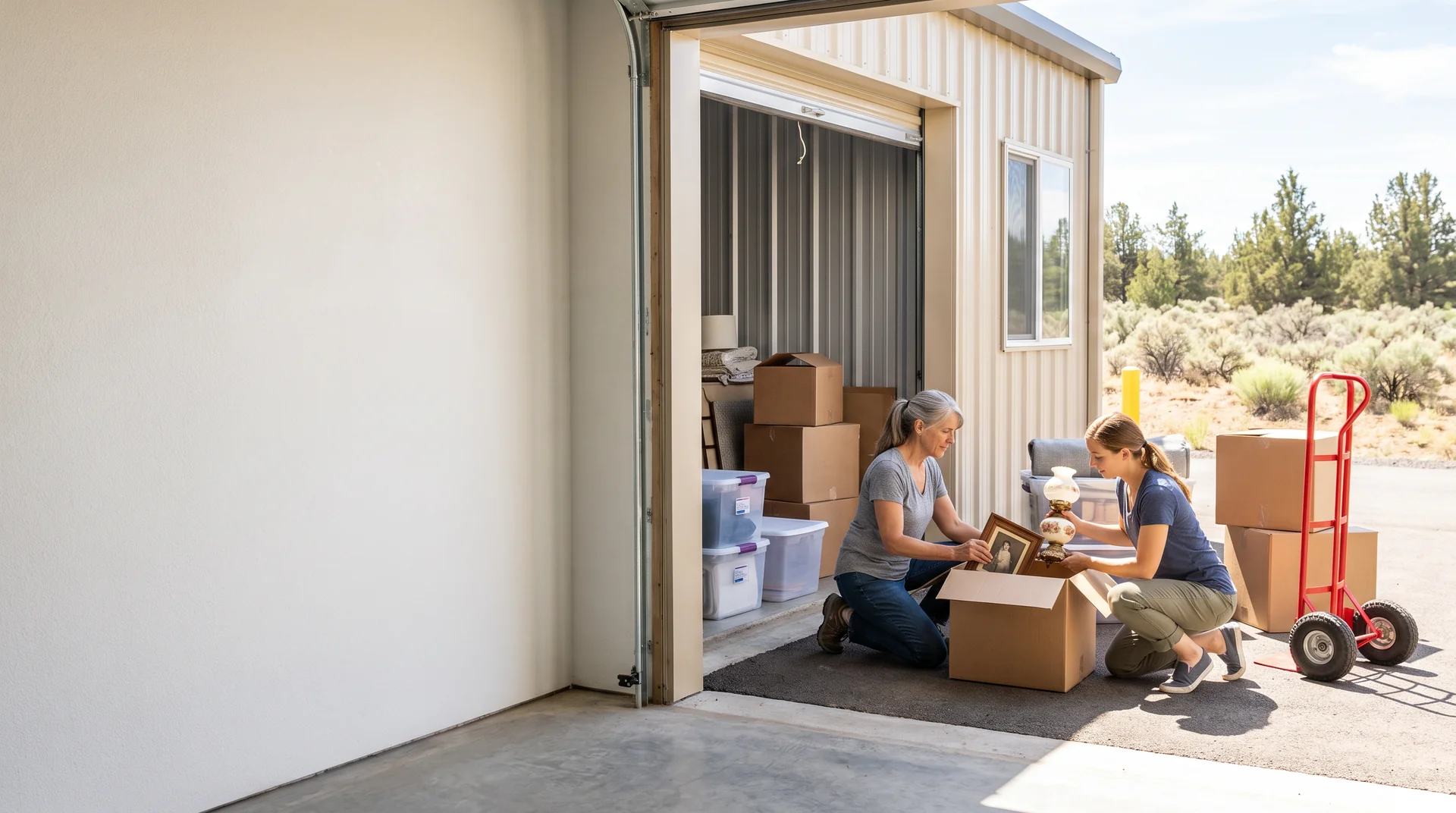

A move, downsizing plan, storage-unit lease, or estate cleanout can put the same family belongings in several different places within a few days: the old home, a moving truck, a temporary rental, a vehicle, a storage facility, a relative’s garage, or a new address. That change in location, custody, occupancy, and value is a good reason to review personal-property protection before boxes start moving. The site’s home insurance resources can help begin the conversation, but the exact policy and facts control.
This article is educational information, not insurance, legal, probate, estate-administration, tax, moving-company, storage-facility, contract, safety, valuation, or claim advice. It does not decide who owns or controls property, who may move or dispose of estate belongings, whether a mover is responsible, whether a home is vacant or unoccupied, whether a loss is covered, or how a claim will be resolved. Your policy forms, declarations, limits, deductibles, exclusions, endorsements, dates, locations, ownership, custody, contracts, and qualified professional guidance control.
Map the Transition Before You Pack the First Box
The same sofa, jewelry box, tool chest, photo album, computer, or heirloom can present different review questions depending on where it is and who has it. A transition map does not create coverage. It gives the agency and carrier a more accurate way to evaluate the household’s actual situation.
| Transition location or event | Questions to bring to a policy review | Useful documentation |
|---|---|---|
| Old home during move-out | Who occupies the home, what remains inside, when does the existing policy change or end, and is a renovation or sale planned? | Move timeline, closing or lease dates, photos of remaining contents, utility plan, policy declarations, and contact information. |
| Mover, rental truck, or trailer | Who is transporting the items, what mover valuation or liability option was selected, and what do personal, auto, rental-truck, and credit-card documents actually say? | Written estimate, mover certificate information, bill of lading, inventory, declared-value selection, rental agreement, photos, and delivery receipt. |
| Storage unit or another person’s property | Who owns the items, how long will they remain, what security or protection plan is offered, and what coverage does the actual personal policy provide away from home? | Storage agreement, unit location, access list, inventory, photographs, receipts, appraisals, policy forms, and key or access records. |
| Estate cleanout or inherited belongings | Who has authority to move, donate, sell, store, or insure property, and what existing policy or estate documentation is still in force? | Qualified representative’s instructions, inventory, photos, appraisals, policy information, item ownership details, donation or sale records, and storage records. |
| New home or smaller residence | When does coverage begin, what belongings are changing, is the location rented or owned, and are there new liability, vehicle, wildfire, or high-value-property questions? | New address, move-in date, lease or closing records, room-by-room inventory, updated replacement estimates, and updated vehicle garaging information. |
Build an Inventory Before Items Leave Their Usual Home
Oregon’s Division of Financial Regulation says a home inventory is photos and a list of what you own, with receipts, appraisals, and model numbers as useful additions for valuable belongings.[1] It recommends room-by-room photos, including drawers and closets, plus serial-number photos for larger or more expensive furniture, tools, and electronics. That practice is especially useful when a household is sorting items among a new home, storage, donation, sale, family members, or an estate.
Start with the property that is easy to lose track of during a transition: jewelry, watches, collectibles, art, firearms, cameras, computers, tools, musical instruments, specialized mobility equipment, photo albums, antiques, and boxes that will be stored rather than unpacked right away. The site’s Oregon home inventory checklist gives a deeper item-documentation framework. An inventory is evidence and a planning tool; it does not set a policy limit, prove ownership, guarantee a covered loss, or replace a coverage review.
A Mover’s Bill of Lading and Your Insurance Policy Are Different Things
For a move that starts and ends within Oregon, ODOT regulates household-goods mover rates and services and tells consumers to use a certified mover, get a signed written estimate, participate in the mover’s inventory, understand the bill of lading, and review loss-and-damage protection choices before signing.[3] ODOT also cautions that goods declared below their actual value may not be fully protected and directs consumers who are unsure to check their homeowners policy or call their insurance agent.[3]
That is an important distinction: a mover’s estimate, released or declared value, liability statement, bill of lading, and optional protection are not automatically the same as your homeowners, renters, scheduled-property, umbrella, auto, rental-truck, or storage coverage. Ask each provider what document applies to which property, at what time, and under what conditions. Keep copies of every document, photograph property condition before loading, and inspect property before signing a delivery receipt. Those actions can help organize a loss discussion, but they do not promise a particular recovery.
Bring the Transition Timeline to the Review
Prineville Insurance can help organize a policy-specific review around old and new addresses, moving dates, temporary storage, major valuables, vehicles, the mover or rental agreement, existing policies, and questions about limits, exclusions, valuation, deductibles, and endorsements.
Storage Units Add Location, Access, and Valuation Questions
A storage facility can be a sensible operational choice during a downsizing plan or estate cleanout. It also separates belongings from the address listed on a policy. NAIC recommends asking an insurer what coverage applies to property in storage and notes that a floater or inland-marine policy may be needed in some circumstances.[4] That is a prompt to ask questions, not a statement that any particular policy will apply.
Read the storage agreement and any facility protection-plan materials on their own terms. Then ask about the personal policy: What property is being stored? Who owns it? Is it listed or scheduled? Is it held for an estate or another person? Which causes of loss, off-premises limits, deductibles, valuation methods, exclusions, and time-related conditions may apply? Keep an inventory outside the unit, photograph the unit before it is locked, and retain access records. Do not assume a storage-unit agreement replaces a policy review.
Downsizing and Estate Cleanouts Need a Custody-and-Authority Checklist
Downsizing often means a smaller home, shared family storage, gifts, donations, sales, temporary lodging, or a move to a retirement community. An estate cleanout can add another layer: inherited belongings, a decedent’s existing policy, family members helping, a house that is no longer occupied, and property moving before an estate question is resolved. The insurance facts can change quickly, but an article cannot determine legal authority or ownership.
Before property is moved or dispersed, separate the insurance question from the authority question. Ask the appropriate qualified representative who has authority to act. Then gather policy declarations, estate or ownership records, photographs, appraisals, item lists, storage agreements, mover paperwork, and contact information. For a home that will be remodeled before sale or reuse, also see the site’s Oregon home renovation insurance checklist. A renovation plan, vacant-home condition, storage agreement, and existing policy are separate facts that should be disclosed and reviewed together.
Do Not Treat an Empty House as an Ordinary Occupied Home
NAIC advises consumers who have moved out not to drop insurance without speaking to the insurer and explains that vacancy or unoccupancy clauses can apply when a home is no longer lived in or its furniture has been removed.[4] The point is not that every insurer uses the same definition, time period, or outcome. It is that a move-out date, remaining furniture, appliances, utilities, maintenance, planned sale, renovation, and occupancy facts can be underwriting and coverage-review triggers.
If the old home will become a second home, a rental, or a property visited only seasonally, build that future use into the conversation early. The site’s Oregon cabin, second-home, and vacation-property guide provides related questions about seasonal use, vacancy, wildfire, and rentals. Central Oregon households should also bring local wildfire exposure, access, maintenance, and defensible-space questions to a wildfire insurance conversation; actual carrier requirements and policy terms control.
Update Vehicles, Renters Coverage, Life Details, and Liability Protection Too
Moving changes more than the address on a declarations page. NAIC recommends discussing the new address, vehicle garaging, commuting, personal property in a vehicle, rental trucks, and trailers before a relocation.[4] The new location may be a rental, a smaller owned home, an adult child’s home, a seasonal residence, or temporary lodging. Review your exact use of vehicles and trailers through auto insurance, and review the new household arrangement through renters insurance if applicable.
Major transitions can also be a good time to review beneficiary information, household roles, and family obligations with a life insurance conversation. If the household has meaningful assets, frequent visitors, a new residence, a rental, or changing liability concerns, discuss whether an umbrella insurance review is appropriate. None of these reviews guarantees eligibility, coverage, or a claim result, but each can help make the application and policy discussion more accurate.
What to Bring to a Moving, Storage, or Estate-Transition Insurance Review
Bring current policy declarations and endorsements; old, temporary, and new addresses; the moving timeline; mover certificate information; estimates and bill of lading; rental-truck or trailer documents; storage agreement and protection-plan materials; an inventory with photos, serial numbers, receipts, and appraisals; high-value-property details; vehicle garaging changes; a list of people with access; existing estate or ownership information; move-in, sale, or lease dates; and questions about coverage away from home, property of others, valuation, limits, deductibles, exclusions, endorsements, storage, vacancy, and claim reporting.
Oregon DFR and NAIC both emphasize inventory documentation, while ODOT emphasizes informed consumer choices and mover paperwork.[1] [3] [4] Treat those records as a way to prepare for a more accurate conversation—not as a substitute for reading the policy, verifying the mover or facility, or obtaining qualified advice for estate and authority questions.
Frequently Asked Questions
Does a homeowners or renters policy automatically cover my belongings while I move?
Do not assume it does. Property may be in the old home, a vehicle, a rental truck, a mover’s custody, temporary lodging, a storage unit, or the new residence. The type of policy, covered cause of loss, limits, deductibles, location, ownership, valuation method, exclusions, endorsements, contract terms, and carrier requirements all matter. Ask for a policy-specific review before the move begins.
Is a storage facility’s protection plan the same as my personal insurance?
Not necessarily. A storage contract, a facility protection plan, and a home, renters, scheduled-property, floater, or other insurance policy are separate documents. Each can have different conditions, limits, exclusions, valuation methods, deductibles, deadlines, and definitions. Read the exact documents and ask how they work together rather than assuming one replaces another.
If I am clearing a parent’s home or handling inherited belongings, who should insure the property?
That depends on the facts, including ownership, authority, location, possession, policy status, and estate documents. This article does not determine who can sell, move, donate, store, dispose of, or insure estate property. Before an estate cleanout, ask the estate’s qualified legal representative and insurer who should report the loss, maintain the policy, document property, and request a coverage review.
Should I cancel the old home policy as soon as the furniture is out?
Not without a conversation. NAIC notes that a vacant or unoccupied home may trigger policy conditions and advises consumers to speak with their insurer before they leave a property. The old home may still contain appliances, fixtures, systems, personal property, or renovation exposure. The actual policy and the exact occupancy facts control.
What should I document before a move, storage placement, or estate cleanout?
Oregon DFR recommends photos, descriptions, approximate age and purchase price, and serial-number photos for large or expensive items; receipts and appraisals can also help with valuable property. Keep the inventory separately from the items, along with moving estimates, bills of lading, storage agreements, policy declarations, and contact information. Documentation supports a conversation and possible claim process, but it does not guarantee coverage or a claim outcome.
References
- Oregon Division of Financial Regulation — Create a Home Inventory
- Oregon Division of Financial Regulation — Home Insurance
- Oregon Department of Transportation — Household Goods Moving
- National Association of Insurance Commissioners — Moving Places, Changing Spaces
- National Association of Insurance Commissioners — Home Inventory
- FEMA / National Flood Insurance Program — Document Your Belongings


