



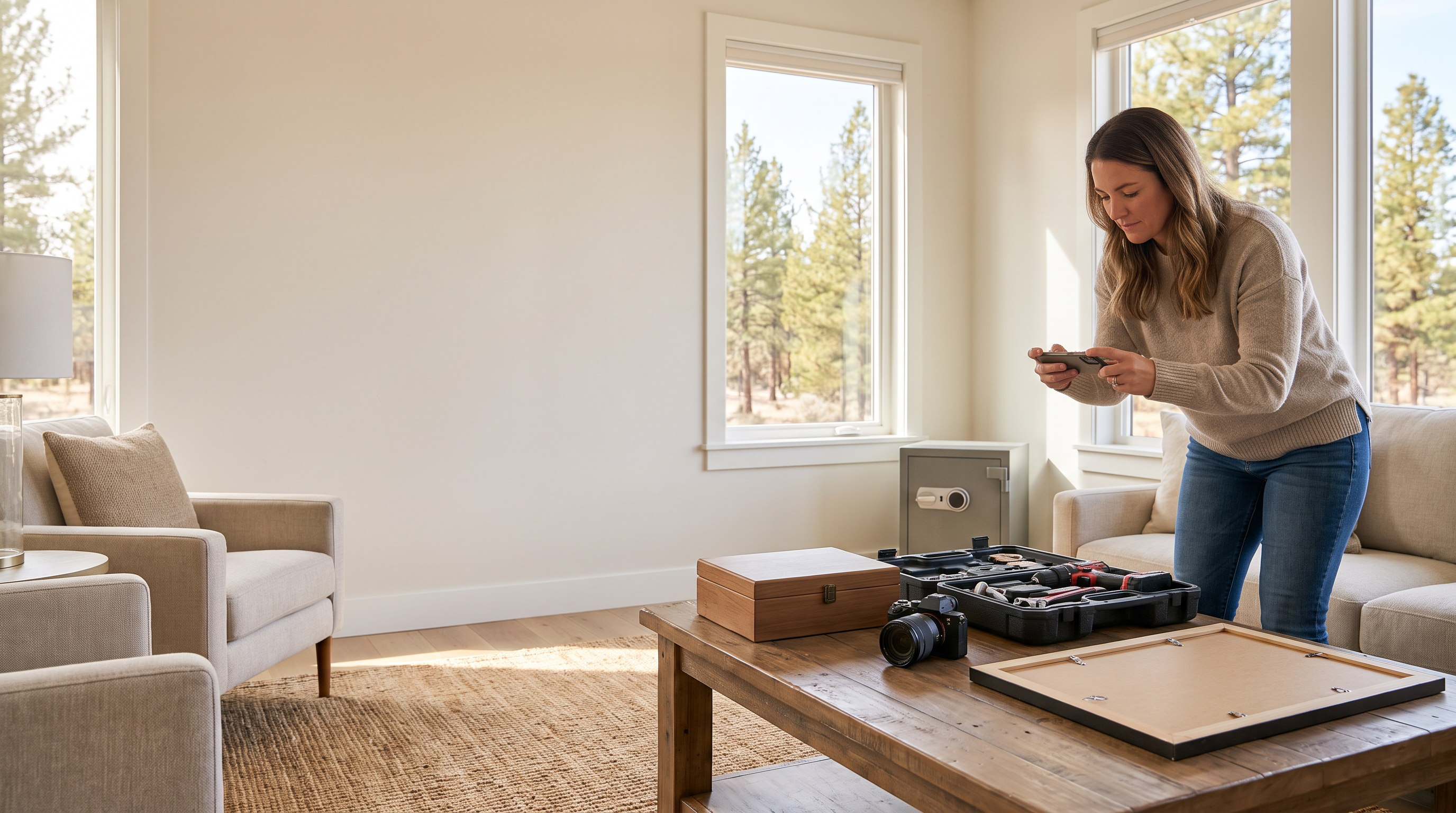

After a wildfire, a burst pipe, a break-in, smoke damage, or another major loss, it can be hard to remember the contents of a workshop, closet, garage, guest room, or kitchen cabinet—much less the age, model, receipt, or special value of each item. A thoughtful home inventory helps a Prineville, Bend, Redmond, Madras, Sisters, or La Pine household keep a clearer record before a difficult day. It is also a useful starting point for a policy-specific home insurance review.
This is an educational organization guide, not insurance, legal, appraisal, tax, security, or claims advice. A list, photo, video, receipt, or appraisal can help document property, but it does not create coverage, prove ownership in every circumstance, establish a settlement value, remove a deductible, or guarantee a claim result. Policy forms, endorsements, limits, sublimits, exclusions, valuation methods, the cause of loss, the location of the property, and the facts of a claim all matter. Use the checklist to prepare better questions for your insurer or insurance professional.
Why an Oregon Home Inventory Is More Than a List
Oregon’s Division of Financial Regulation (DFR) describes a home inventory in practical terms: photos plus a list of what you own, with receipts, appraisals, or model numbers for higher-value property.[1] The regulator recommends taking photos of each room, including artwork, cabinets, drawers, and closets; it specifically calls out serial-number photos for large or expensive furniture, tools, and electronics. In other words, the goal is not a perfect spreadsheet on day one. The goal is a usable record that is easier to retrieve than memory after a disruption.
An inventory can serve three jobs at once. It helps a household remember personal property after a loss, makes the annual insurance conversation more concrete, and creates a record of significant purchases or inherited items before receipts get lost. In Central Oregon, include the places that are easiest to overlook: detached garages, sheds, shops, RV storage, outdoor equipment areas, attic storage, and a second home or cabin if applicable. Oregon DFR’s wildfire guidance likewise says to capture rooms, walls, drawers, closets, attics, sheds, and garages before a disaster.[3]
Set Up a Simple, Secure Inventory System First
Choose a system you will actually maintain. A folder of room-by-room photos, a spreadsheet paired with receipt images, a home-inventory app, or a secure cloud drive can all be practical. The NAIC’s home inventory resource notes that an app can group belongings by room or category, capture photos, scan barcodes, and export a record.[4] Technology is optional; consistency is more important.
Create one protected master folder for the inventory, policy declarations, key receipts, appraisals, repair records, and contact information. Keep a second accessible copy outside the primary residence—for example, in a password-protected cloud account and a secure physical location. FEMA recommends placing paper records in a waterproof and fire-resistant box, safe, or deposit box, maintaining secure electronic copies, and retaining key policy and contact information nearby.[5] Use strong passwords, do not post serial numbers or valuation records publicly, and do not include combinations, access codes, or other security-sensitive details in a broadly shared file.
| Record type | Capture now | Keep with the record |
|---|---|---|
| Room overview | Wide photos or a slow narrated video of walls, furniture, open cabinets, closets, drawers, shelving, and storage areas. | Room name, date, and a note about detached or off-site storage. |
| Individual valuables | Close photos, distinguishing marks, make, model, serial number where relevant, condition, and an item description. | Receipt, appraisal, certificate, repair record, provenance, or other support if available. |
| Collections and sets | A group photo plus individual photos for pieces with separate value or identifying features. | A current catalog, purchase records, appraisals, and a note on how the collection is organized. |
| Tools and equipment | The tool chest, shop wall, portable cases, batteries, accessories, and any serial-number labels. | Purchase receipts, warranty records, maintenance records, and information about whether items are personal or business property. |
| Policy review file | Declarations page, endorsements, deductibles, contact information, and questions identified from the inventory. | The current policy—not only a summary or prior renewal document. |
Work Room by Room—Then Open the Storage Spaces
Start at one entrance and move in a consistent direction. Capture a wide view before photographing shelves, electronics, wall art, furniture, cabinets, and closets. Open drawers and cupboards. Photograph what is inside a pantry, linen closet, tool cabinet, hobby room, attic, garage, shed, or shop. Oregon DFR recommends grouping similar items where that makes documentation easier, such as photographing jewelry together and retaining photos of receipts or appraisals.[1]
A short spoken video can add useful context: identify the room, point out items inside a cabinet, and describe any purchase or family history you want to remember. Then pause for still photos of serial-number plates, receipt details, and distinctive marks. The photo or video is only one layer of the record. Pair it with an inventory entry that identifies the item, approximate age, original price if known, and a question for your policy review. DFR advises the same basic details—item, age, approximate original cost, and approximate replacement cost—when a damaged-property list is needed after a wildfire.[3]
Give These Five Categories a Closer Look
Jewelry and fine personal property
Photograph each piece or logical grouping, retain receipts, appraisals, gem reports, and distinctive details, and note whether a piece is inherited, recently purchased, repaired, or kept away from home. DFR cautions that policies may have dollar limits for certain classes of property. Do not assume an appraisal, a receipt, or a list changes the policy; ask about the actual personal-property terms and whether any separate documentation or scheduling conversation is appropriate.
Firearms and secure records
Treat firearms as a sensitive personal-property category. Keep a private, securely stored record of make, model, serial number, condition, and support for value where relevant; do not publish those details or include access information. Oregon DFR lists guns among belongings that may have policy dollar limits. A home inventory is not a firearm-registration record and does not establish insurance coverage. Ask the insurer about the policy language, special limits, endorsements, valuation, and documentation preferences.
Tools, workshop gear, and equipment
Photograph individual higher-value tools, tool chests, batteries, attachments, ladders, compressors, generators, and stored outdoor equipment. Record serial numbers and receipts when practical. If tools are used for paid work, held for a side business, or stored away from the residence, flag that fact for review rather than assuming a homeowners or renters policy treats them like ordinary household belongings. Consider a separate commercial review for business operations.
Collectibles, art, and heirlooms
For art, antiques, coins, sports memorabilia, instruments, hobby collections, and family heirlooms, photograph the entire collection plus item-level identifying details. Preserve provenance, appraisals, certificates, auction records, and repair documentation where available. Values can change, and a family story may not be enough for a claim discussion, so refresh professional valuations only when appropriate for the item and review settlement provisions with a knowledgeable adviser.
Electronics and connected-home equipment
Capture televisions, computers, cameras, consoles, audio equipment, appliances, smart-home devices, battery systems, backup-power equipment, and accessories. Include make, model, serial numbers, purchase date, receipts, and upgrades. The same record can help prompt a conversation about changes in property value or installed systems. Ask policy-specific questions before relying on an existing policy for a new connected-home project.
Turn the Inventory Into a Better Home Insurance Conversation
Bring your current declarations page, questions about valuable property, new purchases, workshop or storage details, and an estimate of what would be difficult to replace. Prineville Insurance can help organize a policy-specific conversation with the insurers you work with.
Compare the Inventory With Your Actual Policy
An inventory can reveal whether the personal-property amount, deductible, settlement approach, and special-category treatment deserve a closer look. Oregon DFR says that homeowner policies may have dollar limits on certain belongings, including silverware, guns, jewelry, watches, furs, and computers.[2] The exact categories, limits, definitions, exclusions, and available options differ by policy and insurer. Do not use a blog post, an old policy, a receipt, or a neighbor’s experience to decide what your coverage does.
Ask whether your personal property is settled on an actual-cash-value or replacement-cost basis, whether a particular item must be scheduled or separately documented, and how property away from the home is treated. DFR explains that replacement-cost and actual-cash-value settlements are different concepts, while FEMA cautions that coverage amounts, deductibles, payment caps, and policy provisions can vary.[2] [5] Keep the answer in writing with the current policy documents, then update your inventory when a significant purchase, renovation, inheritance, or household change occurs.
The kind of residence matters, too. A renters insurance policy focuses on a tenant’s belongings and liability rather than the landlord’s building, while condominium and manufactured-home arrangements can involve their own insurance responsibilities. A cabin, seasonal residence, short-term rental, or rural property with a detached shop may create additional questions about occupancy, storage, and location. Review those facts early, including with our Oregon cabin and second-home guide if seasonal use is involved.
Plan for Central Oregon Weather, Wildfire, and Water
A good home inventory supports more than one loss scenario. Central Oregon households may use it after smoke or wildfire damage, a winter freeze, a water loss, theft, a power event, or damage at a detached garage or shed. It should not replace a broader hazard review. Oregon DFR reminds consumers that flood and earthquake coverage can require separate attention, and FEMA’s guide also emphasizes reviewing relevant hazards rather than assuming one policy handles every cause of loss.[2] [5]
For wildfire readiness, keep the inventory where it can be retrieved after an evacuation, include key receipts and policy documents in a secure financial-and-insurance file, and update it before fire season rather than during an emergency. Review our wildfire insurance resources and the Oregon wildfire non-renewal survival guide for related policy-review and preparedness questions. If your property uses a well, outbuilding, shop, battery backup, or remote storage, list those items and identify which questions belong in the homeowner, specialty-property, or other policy discussion.
A household can also document the physical home and major installed systems. Take exterior photos, photograph additions or significant improvements, retain contractor invoices, and record model and serial information for major appliances or equipment. That record does not set a dwelling limit or establish the cost to rebuild, but it can make the annual review more productive. If you are buying land, adding a shop, building, or placing a manufactured home, our Oregon land and construction planning guide explains additional insurance questions to organize before the project moves forward.
What to Do After a Loss: Preserve, Document, and Ask
Safety comes first. Follow emergency instructions and contact appropriate emergency services when needed. When it is safe to do so, take photos or video of damage, protect property from further damage only within the guidance you receive, keep receipts for emergency expenses or temporary measures, and contact the insurer or agent promptly. Oregon DFR advises policyholders not to dispose of damaged property until the insurer has had an opportunity to inspect it and to ask how long they have to submit the personal-property list.[3]
Use the pre-loss inventory as a working record rather than a final answer. Add damage photos, a claim number, claim-contact information, purchase or replacement receipts, and any questions about item valuation. The FloodSmart guidance similarly recommends documenting major items and valuables with photos, video, and serial numbers and keeping the list with important documents.[6] If there is a question about whether a cause of loss, item, cost, or policy term applies, ask the insurer to explain the relevant policy language. Our Oregon insurance claim process guide offers additional general questions to organize before and during a claim.
A Practical Annual Update Checklist
Put a recurring reminder on the calendar for a time you will remember: before wildfire season, after the holidays, at renewal, or when you file tax records. Oregon DFR recommends updating an inventory every year and after a significant purchase.[1] Refresh the room photos, add new valuables, remove items you no longer own, update receipts or appraisals if appropriate, and confirm that your backup still opens. Then compare the inventory against the current declarations page—not a policy from several years ago.
| When to update | Add or confirm | Policy question to carry forward |
|---|---|---|
| Annual review | Fresh room photos, current device/tool lists, backup access, policy declarations, and contact details. | Have personal-property needs, special-category questions, deductibles, or settlement terms changed? |
| After a major purchase | Receipt, serial number, item photo, model, condition, and supporting documents. | Does this item require any policy-specific discussion, documentation, or endorsement review? |
| After renovation or a new system | Invoices, permits if applicable, before/after photos, and major installed equipment details. | Does the project change the home, other structures, personal property, liability, or valuation conversation? |
| Before wildfire or travel season | Evacuation-ready copy, outdoor/garage/shed photos, updated contact file, and current policy documents. | Are all relevant property, loss-of-use, wildfire, flood, and location questions understood under the current policy? |
| After a move or household change | New address, storage locations, roommates or family changes, and newly acquired property. | Does the residence type, occupancy, property location, or personal-property arrangement need an update? |
Personal property is only one part of a household risk review. If the inventory shows valuable assets, vehicles, a recreational property, a rental, or changing liability concerns, you may also want to discuss whether an umbrella insurance review is appropriate. The answer depends on the household, assets, underlying policies, insurer requirements, and policy terms.
Frequently Asked Questions
Does a home inventory guarantee that my insurance claim will be paid?
No. An inventory can help you remember and document the property you owned, but it does not create coverage, establish value, remove a deductible, or guarantee any claim payment. Coverage depends on the actual policy, endorsements, limits, sublimits, exclusions, valuation provisions, cause of loss, and claim facts. Keep your policy documents with the inventory and ask an insurance professional to review your situation.
What details should I record for jewelry, electronics, tools, and collectibles?
Start with clear photos and a concise description. Where relevant, retain make, model, serial number, approximate purchase date and price, condition, receipts, appraisals, certificates, and distinctive features. For collections, document the individual pieces or the logical groups that matter for valuation. Securely store copies of records outside the home. The documentation that is helpful can vary by item, policy, and insurer.
Should Oregon firearm owners include firearms in a home inventory?
Many owners choose to document their personal property carefully, including serial-number and valuation information where appropriate, but documentation is a private record—not a statement that an item is covered. Oregon DFR notes that policies may have dollar limits for certain belongings, including guns. Store sensitive records securely, avoid publishing details, and ask the insurer about the specific policy’s personal-property limits, endorsements, scheduling requirements, valuation terms, and documentation preferences.
Do renters need a home inventory too?
Yes. A renter may have furniture, clothing, electronics, jewelry, tools, bikes, and other belongings to document even though the landlord owns the building. Renters insurance, policy limits, off-premises provisions, deductibles, special limits, and covered causes of loss vary. An inventory is useful for a policy review and may be helpful after a loss, but it is not a substitute for reading the policy.
Should I send my inventory to my insurer?
Ask first. Some insurers offer their own apps, portals, or procedures, while others may prefer that you retain the record until it is needed for a review or claim. Because an inventory can contain serial numbers, receipts, addresses, and other sensitive information, use a secure method approved by the recipient. Keep your own accessible backup even if you share a copy.
The Bottom Line: Document Before You Need the Record
A useful home inventory is a living record: room photos, close-ups of significant property, receipts and appraisals where relevant, current policy documents, secure backups, and annual updates. It cannot promise coverage or a claim outcome, but it can reduce the burden of reconstructing a household after a loss and make your next home insurance review more informed. Start with one room today, then keep moving until the whole property is documented.
References
- Oregon Division of Financial Regulation — Create a Home Inventory
- Oregon Division of Financial Regulation — Help with Home Insurance
- Oregon Division of Financial Regulation — Wildfire and Insurance
- National Association of Insurance Commissioners — Home Inventory
- Ready.gov / FEMA — Document and Insure Your Property (FEMA P-1097)
- FloodSmart / National Flood Insurance Program — Document Your Belongings


