



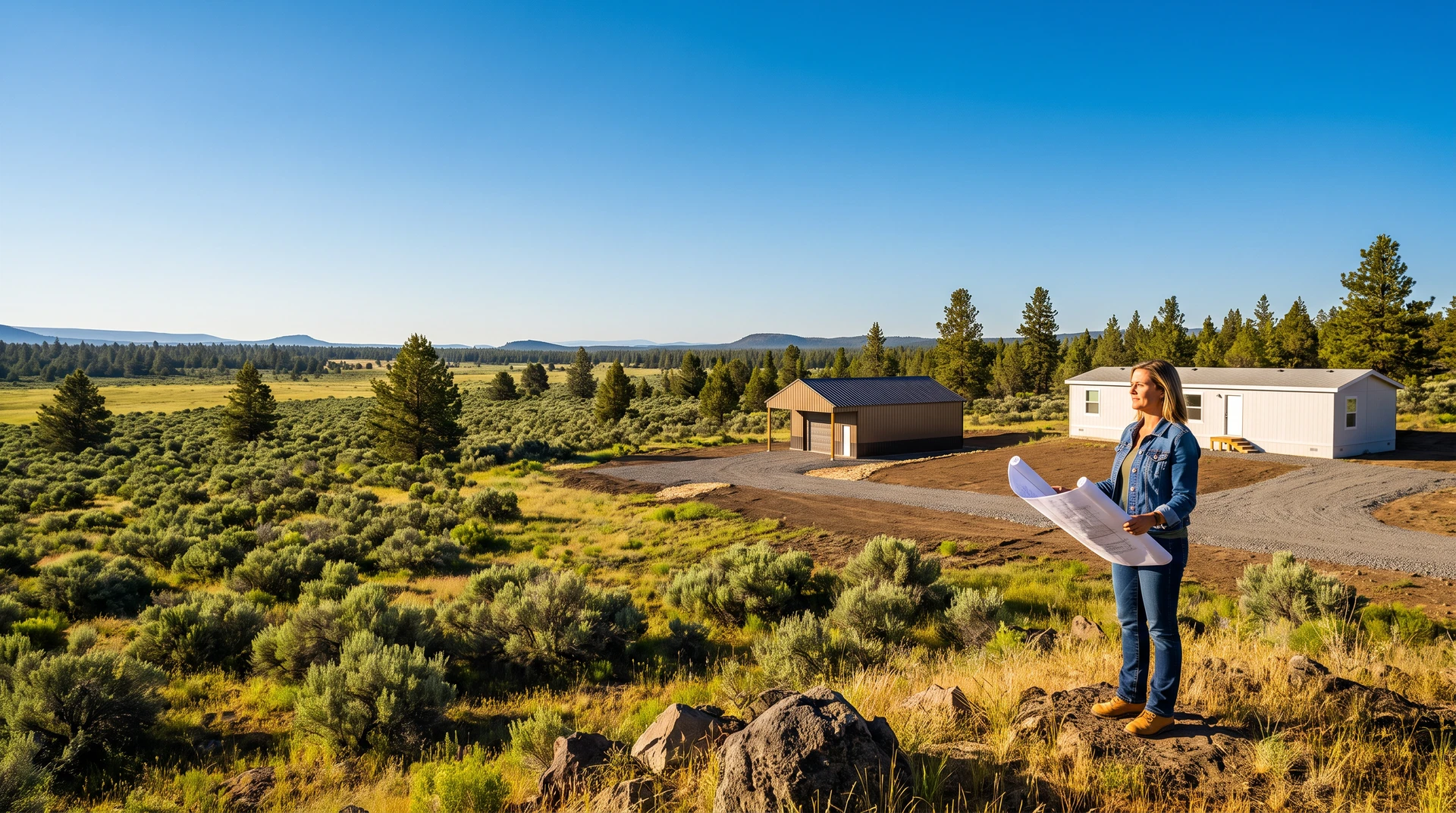

Buying Oregon land can feel like the beginning of a great plan: a homesite outside Prineville, a wooded parcel near Sisters, a shop-ready property outside Bend, or a manufactured home on a rural lot. Yet the insurance conversation should begin before a foundation is poured, a home is delivered, or a contractor starts work. The property's location, access, vegetation, utilities, construction details, use, and timeline can each change the questions worth asking.
This guide is not a promise of coverage or a substitute for local land-use, building, legal, lender, environmental, or tax advice. Its purpose is to help Oregon buyers organize the facts an insurance professional may need. Insurers use their own underwriting rules, and a policy's actual language controls. Oregon's Division of Financial Regulation notes that location, construction type, fire protection, accessibility, property condition, maintenance, claims history, and wildfire exposure can influence eligibility and premium.[1]
Ask These Insurance Questions Before the Purchase Becomes a Project
The best time to identify an insurance issue is during due diligence, not after a contractor has mobilized or a lender requests proof of coverage. Begin with the parcel's intended use, not just its acreage. A quiet future homesite, a place for weekend camping, a contractor's shop, a rental property, an agricultural operation, and a permanent residence may create very different policy questions.
| Before closing or breaking ground | Why the answer matters to a coverage review | Records worth gathering |
|---|---|---|
| What will the land be used for during the first 12–24 months? | Vacant ownership, recreation, construction, storage, a temporary dwelling, business activity, and permanent occupancy may not be evaluated alike. | Purchase agreement, site plan, timeline, lender requirements, intended-use summary. |
| What is already on the parcel? | Fencing, sheds, a well, septic system, mobile structure, shop, barn, access road, trees, or stored equipment may create separate property and liability questions. | Inspection report, photos, prior permits, equipment list, septic and well records. |
| Who will perform and control the construction? | Owner-builders, general contractors, subcontractors, and suppliers can have different contract, jobsite, workers' compensation, liability, and property-risk questions. | Written contract, contractor licenses, certificate requirements, schedule of values. |
| How will the finished shop or outbuilding be used? | A personal hobby shop, home office, vehicle storage, rental space, woodworking studio, welding area, animal structure, or inventory building should be described accurately. | Floor plan, photos, contents estimate, business description, leases or rental agreements. |
| What are the wildfire and emergency-access conditions? | Road access, address visibility, vegetation, slope, fire protection, construction materials, and defensible-space planning can affect both safety and underwriting questions. | Parcel map, driveway photos, fire district information, mitigation plan, hardening specifications. |
| How will water, wastewater, power, and heat work? | Well, septic, propane, generator, solar, battery, and off-grid choices can affect the build timeline, property details, safety planning, and carrier questions. | Utility plans, septic records, equipment specs, installation contracts. |
Vacant Land Is Not Yet a Finished Home—and That Matters
A land purchase can carry real responsibilities before there is a house to insure. Think about gates, visitors, recreational use, trees, fuel storage, debris, road access, ponds, old structures, equipment, or a neighbor's use of the parcel. Do not assume a personal homeowners policy automatically extends to every activity or condition on land away from your residence. Bring the purchase agreement, planned use, and a current photo set into a rural property insurance conversation before relying on a broad assumption.
Oregon buyers who expect to rely on solar, batteries, a well, a septic system, propane, backup power, or a nontraditional utility arrangement should also describe those plans early. Our off-grid home insurance guide is a useful framework for organizing equipment, utilities, occupancy, and access questions. It cannot determine coverage for a specific parcel; the insurer and policy must do that.
During Construction, the Property Is Changing Faster Than a Policy File
Construction creates a moving target. Materials may be stored before installation. Weather can damage unfinished work. Equipment may arrive and leave. Multiple contractors may be on site. A loan agreement may specify insurance evidence, while the contract may allocate responsibilities among the owner, builder, and subcontractors. That is why the construction insurance review should begin with the written contract and a clear timeline—not with a one-word request for “builders risk.”
Use our Oregon builders risk insurance resource to prepare questions about the structure, materials, equipment, site security, project duration, owner-supplied items, contractors, and the transition to permanent occupancy. Builders risk, general liability, workers' compensation, contractor insurance, personal property, and homeowner coverage are different policy conversations. The correct arrangement depends on the contract, project type, lender, insurer, exclusions, limits, and facts of the loss.
A Detached Shop Can Be Personal Space, Business Space, or Both
A new shop is often the feature buyers are most excited about—and the one most likely to be described too simply. “A 40-by-60 shop” does not tell an insurer whether it will hold a personal truck, a collector vehicle, woodworking tools, welding equipment, a home-office desk, contractor inventory, tenant property, livestock supplies, commercial refrigeration, or a retail pickup counter. The finished use matters as much as the square footage.
Ask whether the building is an other structure, a business location, a storage building, a garage, an accessory dwelling, or a mixed-use space under the available policy options. If it will support a home-based operation, start with a straightforward description of the work and compare it with your actual policy. The goal is not to label every workshop “commercial”; it is to avoid leaving out a fact that could matter later. Our hard-to-place home insurance guide may help structure the conversation when a property has unusual features, rural characteristics, or a more complex risk profile.
Manufactured Homes Have Their Own Ownership, Installation, and Insurance Questions
A manufactured home can be a practical and durable path to rural homeownership, but it should not be treated as just another delivery item. Oregon's Building Codes Division maintains distinct forms and processes for ownership changes, movement permits, security interests, and recording a manufactured home as real property.[2] New homes going directly into real property are handled differently from some MHODS ownership transactions.[2] Those are documentation questions, not insurance determinations—but they are important facts to organize before asking for a quote.
Before moving or placing the home, discuss the home's age, construction, condition, permanent foundation or installation details, ownership status, parcel address, occupancy, delivery timing, and any lender requirements. Local requirements also matter. Lane County's published process illustrates how a manufactured-dwelling placement can involve planning, subsurface sanitation, electrical, plumbing, driveway, and other approvals.[3] Contact the local jurisdiction for your actual parcel, because counties and cities may differ. If the property is intended as a seasonal retreat rather than a full-time residence, our Oregon cabin insurance guide can help you identify additional use and vacancy questions to discuss.
Bring the Parcel Facts to the Insurance Conversation Early
A site plan, inspection report, photos, driveway details, building drawings, shop use, construction contract, utility plans, and wildfire-preparedness work can make an insurance review more productive. Prineville Insurance can help you identify questions to ask while you compare available options. Each carrier decides eligibility, terms, limits, deductibles, pricing, and coverage under its own underwriting rules and policy language.
Septic, Well, Access, and Utilities Belong on the Due-Diligence List
A scenic rural parcel may have a building envelope but still require careful planning for wastewater, water, electricity, access, drainage, and emergency response. Oregon DEQ publishes onsite wastewater rules, records, residential permitting materials, and installer information through its Onsite Wastewater Management Program.[4] Review available septic records and confirm the right local contacts before assuming a future building plan, shop, or manufactured-home placement will work as expected.
Emergency access is both a practical safety issue and a useful underwriting detail. The Oregon State Fire Marshal recommends maintaining clearance for fire apparatus, functional gates, and reflective address signs visible from both directions.[6] Document a rural driveway's condition, turnarounds, overhead clearance, road maintenance arrangements, and local fire-protection information. These facts do not guarantee a quote, but they help create a fuller picture of the property.
Build Wildfire Resilience Into the Plan, Not Just the Insurance Application
Oregon Building Codes Division explains that where adopted locally, ORSC Section R327 wildfire-hazard-mitigation standards can apply to new one- and two-family dwellings and certain accessory structures in designated wildfire hazard zones.[5] Its home-hardening guidance also notes that voluntary measures can be followed throughout Oregon, particularly in wildfire-prone areas.[5] Confirm the rules with your local building department instead of assuming the same requirement applies everywhere.
The Oregon State Fire Marshal's framework begins at the home and moves through the immediate 0–5-foot area, 5–30 feet, and 30–100+ feet around structures.[6] OSU Extension similarly emphasizes ongoing maintenance of defensible space and fuels treatment.[7] Use our wildfire home hardening resource, fire mitigation guide, and Oregon wildfire insurance page to organize your questions about materials, vents, roof and gutter maintenance, landscaping, outbuildings, emergency access, and insurance availability. No mitigation step should be presented as a guarantee of coverage, a discount, or protection from every loss.
Match the Coverage Conversation to the Property Timeline
1. Land purchase
Clarify ownership, access, existing structures, visitors, recreation, equipment, vacant-land conditions, and near-term plans.
2. Pre-construction
Review building contract, lender requirements, project budget, builder responsibilities, materials, utilities, shop plans, and wildfire details.
3. Move-in and beyond
Update permanent occupancy, replacement cost, detached structures, personal property, business use, vehicles, animals, rental use, and mitigation records.
Do Not Let Construction Finish Before the Coverage Review Catches Up
When the project is near completion, update the insurance conversation with the real rebuild estimate, finished square footage, roof and siding materials, shop details, utility systems, equipment, personal property, occupancy, and any business or rental use. Oregon DFR notes that replacement cost, construction type, property age, location, and access to fire protection can influence underwriting and premium.[1] It also explains that flood, earthquake, and earth movement are commonly outside standard homeowners coverage, so those exposures deserve separate questions rather than assumptions.[1]
If standard-market options are limited, do not wait until closing day to ask about alternatives. Oregon DFR identifies the Oregon FAIR Plan and the surplus-lines market as potential paths for some properties that cannot obtain standard-market coverage, while noting that the FAIR Plan is a last-resort policy and requires two standard-market declinations.[1] Availability and suitability depend on the property and market; an independent agent can help you organize the next questions.
Frequently Asked Questions
Do I need insurance as soon as I buy vacant land in Oregon?
The answer depends on the parcel, intended use, contracts, lender requirements, public access, equipment, structures, and policy availability. A bare parcel, a recreational property, a future homesite, and land where construction has started may call for different liability and property questions. Ask for a review before relying on a personal policy or assuming the land purchase is automatically included.
Does a homeowners policy cover a house while it is being built?
Do not assume it does. Construction can create different exposures involving materials, theft, weather, jobsite injury allegations, contractors, and the unfinished structure. A builders-risk policy, homeowner policy, endorsement, contractor arrangement, or another solution may be considered depending on the project, contract, lender, insurer, and policy terms. Read the applicable policy before relying on coverage.
Will insurance cover a detached shop, barn, garage, or equipment building?
A detached structure may be subject to separate limits, underwriting questions, construction details, occupancy restrictions, or business-use exclusions. The answer can change if it contains tools, inventory, welding equipment, animals, vehicles, tenants, or a home-based business. Describe the finished use and contents before construction or purchase—not after a loss.
Can a manufactured home be insured like a site-built home?
Some insurers offer manufactured-home policies, while others may evaluate the home’s age, installation, location, foundation, ownership status, condition, wildfire exposure, and other facts differently. Oregon also has distinct ownership and real-property documentation processes. Available coverage, limits, deductibles, and eligibility are carrier- and property-specific.
Should I ask about wildfire insurance before buying rural Oregon land?
Yes. Before closing or starting a build, ask about the property-specific wildfire, road-access, fire-protection, vegetation, construction, and defensible-space questions an insurer may evaluate. Oregon DFR explains that underwriting practices vary by insurer and that location, construction, access to fire protection, property condition, and vegetation can affect eligibility and price. A quote is not guaranteed, so begin the conversation early.
The Bottom Line for Oregon Land Buyers
Land gives you options, but insurance planning works best when it follows the actual property plan. Start early; document the parcel, construction scope, access, utilities, shop use, manufactured-home details, and wildfire preparations; then revisit the coverage questions at each major milestone. A careful review cannot promise a policy or eliminate every risk, but it can prevent a future home, shop, or rural property from being described with yesterday's facts. Use our quote page to start a policy-specific conversation before your next Oregon property decision.
References
- Oregon Division of Financial Regulation — Help with Home Insurance
- Oregon Building Codes Division — Manufactured Home Ownership Forms and Applications
- Lane County — Building & Manufactured Dwelling Placement Permits
- Oregon Department of Environmental Quality — Onsite Wastewater Management Program
- Oregon Building Codes Division — Home Hardening and Wildfire Hazard Mitigation
- Oregon State Fire Marshal — Defensible Space
- Oregon State University Extension — Keeping Your Home and Property Safe from Wildfire


