



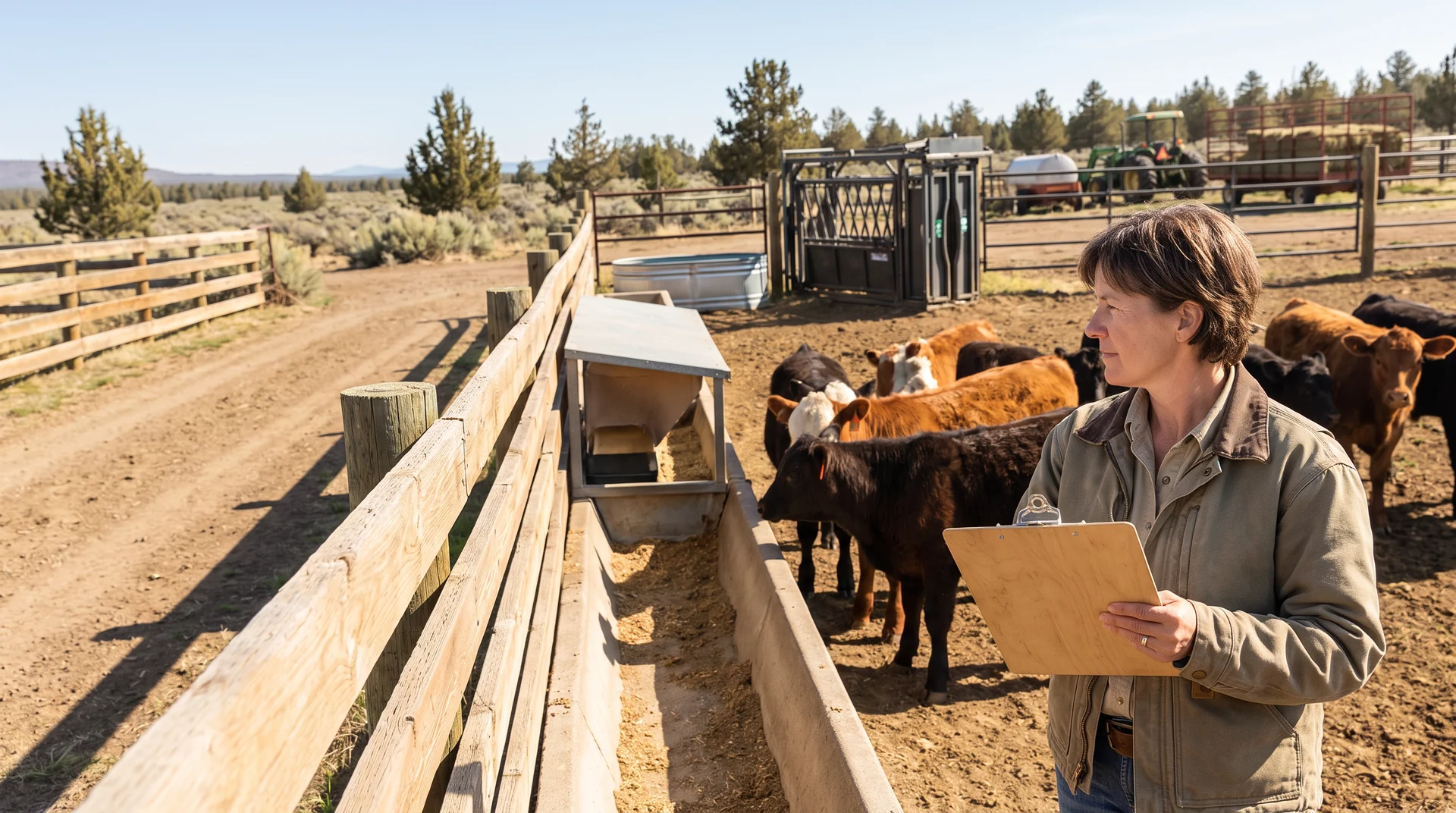

A cattle operation outside Prineville, a backgrounding program near Madras, or a feedlot serving Central Oregon and the broader Northwest may combine cattle receiving, feed, pens, water systems, equipment, employees, visitor traffic, owned livestock, customer livestock, and hauling. Those moving parts deserve a more specific conversation than simply asking for “farm insurance.” A practical review starts with how the cattle operation actually functions day to day.
This guide is educational information, not insurance, environmental, agricultural, animal-health, veterinary, safety, employment, workers’ compensation, tax, contract, permit, land-use, legal, regulatory, or claim advice. It does not decide whether an operation needs a permit, whether cattle are covered, whether a loss is insured, whether an agreement is enforceable, whether a worker is correctly classified, or how a claim will be resolved. Policy language, applications, declarations, endorsements, limits, deductibles, exclusions, carrier underwriting, contracts, operational facts, agency requirements, and qualified professional guidance control.
Start With the Cattle Operation You Actually Run
Oregon State University Extension describes a backgrounding or stocker operation as purchasing weaned calves and feeding or pasturing them until they are ready for sale to a feedlot for finishing.[2] In real life, the operation may also receive cattle from multiple sources, own some cattle and care for others, use custom feed agreements, pasture cattle seasonally, run a dedicated finishing yard, sell feed, lease equipment, arrange hauling, or use a mix of family labor, employees, and contractors. Those differences can change the questions an insurer needs answered.
Before renewal, expansion, or a new cattle purchase, create an operating map. List each site, pen, alley, chute, feed bunk, water source, storage area, feed supplier, equipment unit, vehicle, cattle ownership arrangement, customer agreement, worker role, visitor, and planned change. Use the site’s broader Farm & Ranch Insurance resources as a starting point, then document the facts that make your feedlot or backgrounding operation different from a cow-calf ranch, grazing lease, or crop farm.
| Operating area | Questions to organize | Helpful records |
|---|---|---|
| Cattle and ownership | Which cattle are owned, financed, consigned, purchased for resale, boarded, backgrounded, or held under a customer agreement? What values and responsibilities are documented? | Bills of sale, contracts, invoices, lot lists, brand or identification records, lender requirements, and animal-value documentation. |
| Pens, feed, and water | Where are animals held? What feed, water systems, bunks, troughs, corrals, fences, scales, chute systems, and manure-storage arrangements are used? | Site map, photos, maintenance logs, equipment inventory, serial numbers, receipts, feed records, service agreements, and repair records. |
| People and visitors | Who works cattle, operates equipment, delivers feed, repairs fences, hauls livestock, visits the premises, or performs veterinary and other professional services? | Role list, contracts, payroll records, certificates requested, training logs, emergency contacts, and incident-report process. |
| Vehicles and movement | Who owns or drives pickups, trailers, feed trucks, loaders, ATVs, or other equipment? Are cattle hauled by your business, a customer, or a third party? | Vehicle and equipment schedule, driver roster, ownership documents, contracts, hauling records, maintenance records, and certificates. |
| Income and continuity | What happens if a covered property event disrupts feed delivery, cattle handling, equipment, payroll, site access, or a customer commitment? | Revenue and expense records, payroll, debt obligations, alternate-vendor plans, lease documents, financial statements, and continuity plan. |
Cattle Care and Customer-Cattle Questions Need Clear Facts
The first question is usually not “What is the name of the coverage?” It is “Whose cattle are these, what is the written arrangement, and what does the operation do with them?” Owned cattle, financed livestock, cattle held under a feed agreement, cattle that belong to a customer, newly received calves, and cattle in transit can create different values, responsibilities, contracts, and underwriting questions. A useful cattle and livestock insurance review should begin with the actual ownership and custody picture—not an assumption that every animal at a site is handled the same way.
Keep a current lot list, identify cattle ownership and values, retain contracts, and document receiving, inventory, health, feed, and movement records. Oregon Department of Agriculture notes that new animals, people, shared equipment, vectors, wildlife, and other contacts can introduce disease risk; it encourages access control, isolation of new animals, clean pens, and cleaning and disinfection of equipment.[3] Those practices are operational risk-management topics, not a coverage promise. For a more focused discussion of animal-value questions, see the site’s Oregon cattle mortality insurance guide and ask for a policy-specific explanation of the operation’s own facts.
Feed, Pens, Water, and Equipment Require an Inventory and Valuation Conversation
Feed bunks, portable panels, permanent fencing, gates, chutes, scales, water tanks, wells, pumps, feed grinders, mixers, skid steers, tractors, generators, shop tools, cameras, computers, and stored feed can be vital to cattle care and cash flow. Oregon’s Division of Financial Regulation describes business property as potentially including buildings, equipment, machinery, fences, and outdoor property, and explains that actual-cash-value and replacement-cost approaches are different.[6] That is a useful planning framework, not a statement that any particular item is covered.
Build an equipment schedule with purchase records, serial numbers, current photos, ownership or lease information, location, use, maintenance history, and an honest estimate of replacement cost. Then discuss the schedule through a commercial property insurance lens with the carrier or agent. Include property that may be easy to miss: portable equipment, gates and panels, water infrastructure, office technology, signage, feed inventory, loaned tools, and rented equipment. The policy’s covered-property definitions, valuation, sublimits, deductibles, exclusions, and cause of loss must be reviewed before relying on a generic category.
Build the Insurance Review Around the Cattle Operation You Actually Run
Prineville Insurance can help organize a policy-specific conversation around cattle ownership, feed and pen systems, equipment, workers, hauling, runoff questions, contracts, and continuity planning for your Oregon operation.
Manure, Runoff, Water, and Pollution Questions Do Not Belong on a Checklist Alone
Feedlot and backgrounding operations can face different environmental, site-design, storage, runoff, manure, land-use, and agency questions than an operation where cattle remain on open range. Oregon Department of Agriculture explains that whether a CAFO permit is required depends in part on animal numbers, how long they are confined in a prepared area, and how manure and wastewater are stored.[1] ODA also explains that applicants may need a Land Use Compatibility Statement and that its CAFO process includes timing and nutrient-management information. Do not self-determine the answer from a blog post or an insurance application.
Bring a site map, pen design, drainage details, manure and wastewater handling information, planned construction or expansion, water-source facts, agency correspondence, and contracts to the appropriate Oregon agency and qualified advisers. Then explain the actual operation to the insurance professional. Liability coverage may address certain third-party bodily injury or damage to others’ property, but Oregon DFR notes that standard liability coverage does not resolve every auto, employee, professional, or other exposure.[5] A policy may have exclusions, endorsements, conditions, or limits that materially affect a pollution, owned-property, runoff, contract, or regulatory scenario. Never treat a permit, nutrient plan, inspection, or safety record as proof of insurance coverage.
Crew Safety, Contract Labor, and Visitors Belong in the Same Conversation
Working cattle, using chutes, handling feed, moving equipment, repairing fence, operating a loader, working in heat, using chemicals, and responding to rural emergencies have real people implications. Oregon OSHA’s agriculture resources include materials on heat safety, safety committees, hazard communication, respiratory protection, agricultural chemical storage, equipment, and emergency planning.[4] Insurance does not replace a safety program, training, required records, or an employer’s responsibilities.
Keep role descriptions, safety records, contracts, certificates, emergency contacts, equipment training, incident reports, and clear access rules. Discuss employees and hired help through a workers’ compensation insurance review, while seeking qualified employment and legal guidance for worker classification. General liability can also be relevant for certain third-party premises and operations claims, but Oregon DFR says it does not address employee injuries.[5] A visitor, delivery driver, veterinarian, feed supplier, contractor, or customer can bring a different factual and contractual question than a payroll employee.
Hauling, Pickups, Trailers, and Off-Site Cattle Movement Are Separate Risks
An operation may use pickups, gooseneck trailers, livestock trailers, feed trucks, trailers borrowed from family, third-party haulers, or customer-provided transportation. Do not assume the farm, ranch, general-liability, trailer, or auto portion of a program handles every vehicle and livestock movement situation the same way. Ownership, driver, trailer, gross weight, cargo, interstate travel, for-hire activity, business use, contracts, certificates, and the route taken can all matter.
Use the site’s commercial auto insurance page and its Oregon livestock hauling insurance guide to frame questions about the actual vehicles, drivers, trailers, and cattle movement. Those resources do not decide registration, motor-carrier, livestock-health, permit, coverage, or claim requirements. Confirm operating and regulatory questions with Oregon agencies and qualified advisers, then disclose the complete transportation picture to the insurer.
Income, Extra Expense, and Higher Liability Limits Need Real Numbers
A covered property event can interrupt feed delivery, cattle handling, water systems, staff access, equipment use, payroll, scheduled cattle movement, or a customer commitment. Oregon DFR says business interruption or continuation insurance may address certain fixed costs and profits that would have been earned when a covered event produces an extended shutdown; it also notes that coverage can be part of a property policy or package.[7] Whether a specific loss triggers coverage depends on the policy, covered cause of loss, period of restoration, terms, records, limits, exclusions, and facts.
Bring actual numbers: payroll, feed obligations, loans, lease payments, utility costs, customer commitments, equipment rentals, seasonal purchase cycles, alternative feed and water options, and financial statements. Ask whether a business owners policy or related farm/ranch program is designed for the operation that exists today. For operations with larger assets, contractual requirements, or a more substantial liability profile, a commercial umbrella insurance discussion may be relevant; it is not automatic protection and depends on underlying coverage, limits, operations, and carrier requirements.
What to Bring to a Feedlot or Backgrounding Insurance Review
Bring current declarations and endorsements; a site map; cattle ownership and lot records; customer, purchase, and feed agreements; asset, equipment, and vehicle lists; receipts and serial numbers; pen, feed, water, maintenance, and repair records; photos; payroll and role descriptions; contractor and visitor protocols; safety and incident records; hauling arrangements; agency correspondence; permit, land-use, or nutrient-management documents when applicable; revenue and expense records; continuity planning; and questions about limits, deductibles, exclusions, valuation, animal ownership, property, liability, employee injury, vehicle, contract, runoff, and business-income issues.
The purpose is not to force every cattle operation into one insurance package. It is to make sure the cattle, people, equipment, site, agreements, and operating changes are described accurately enough for a meaningful policy review. Good records and strong operations may help the conversation, but they do not guarantee coverage, compliance, eligibility, or a claim outcome.
Frequently Asked Questions
Does every Oregon cattle backgrounding or feedlot operation need a CAFO permit?
Do not assume that it does—or that it does not. Oregon Department of Agriculture explains that CAFO permit applicability depends on facts including animal numbers, time confined in a prepared area, and manure or wastewater storage. A proposed construction, expansion, or operating change can add further questions. Confirm the operation’s specific facts, permit status, nutrient-management responsibilities, land-use requirements, and timing directly with ODA, local authorities, and qualified advisers; an insurance policy does not decide those issues.
Are cattle owned by someone else automatically insured while they are in my pens?
No. Ownership, custody, contracts, the animal type and value, mortality causes, disease or transit circumstances, limits, deductibles, exclusions, endorsements, declarations, the parties named on the policy, and the facts of a loss can all matter. Disclose whether you own the cattle, feed cattle for others, take cattle in for short-term backgrounding, buy and resell livestock, or transport animals. Ask for a policy-specific explanation rather than relying on a handshake, invoice, or generic farm policy description.
Are feed bunks, fences, pens, water systems, and a skid steer automatically covered?
Do not assume so. Oregon DFR lists buildings, equipment, machinery, fences, and outdoor property among business-property categories that may be relevant, but actual coverage depends on the property interest, location, valuation basis, cause of loss, limits, deductibles, exclusions, endorsements, and policy language. Keep current photos, purchase records, serial numbers, repair records, and an asset schedule, then review the specific property with the carrier or agent.
Does general liability take care of employee injuries, hauling accidents, and pollution questions?
Not automatically. Oregon DFR explains that commercial general liability addresses certain third-party bodily-injury and property-damage claims, while employee injuries and auto risks are distinct insurance questions. Environmental, manure, runoff, livestock, contractual, professional, owned-property, and regulatory issues can also require separate factual and policy review. Explain the operation fully and ask which forms, endorsements, exclusions, limits, and underlying policies apply.
Can biosecurity or safety records guarantee a claim will be paid?
No. Oregon Department of Agriculture encourages practices such as isolating new animals, controlling access, cleaning pens, and disinfecting shared equipment to reduce disease-spread risk. Oregon OSHA provides agriculture resources on subjects such as heat, chemical hazards, safety meetings, and respiratory protection. Those operational records can support a well-organized review, but they do not guarantee coverage, compliance, eligibility, or a claim result. The applicable policy and the facts control.
References
- Oregon Department of Agriculture — Confined Animal Feeding Operations (CAFO)
- Oregon State University Extension — Beef production for small farms: An overview
- Oregon Department of Agriculture — Biosecurity
- Oregon OSHA — Agriculture
- Oregon Division of Financial Regulation — Liability Insurance
- Oregon Division of Financial Regulation — Property Insurance
- Oregon Division of Financial Regulation — Business Interruption Insurance


