



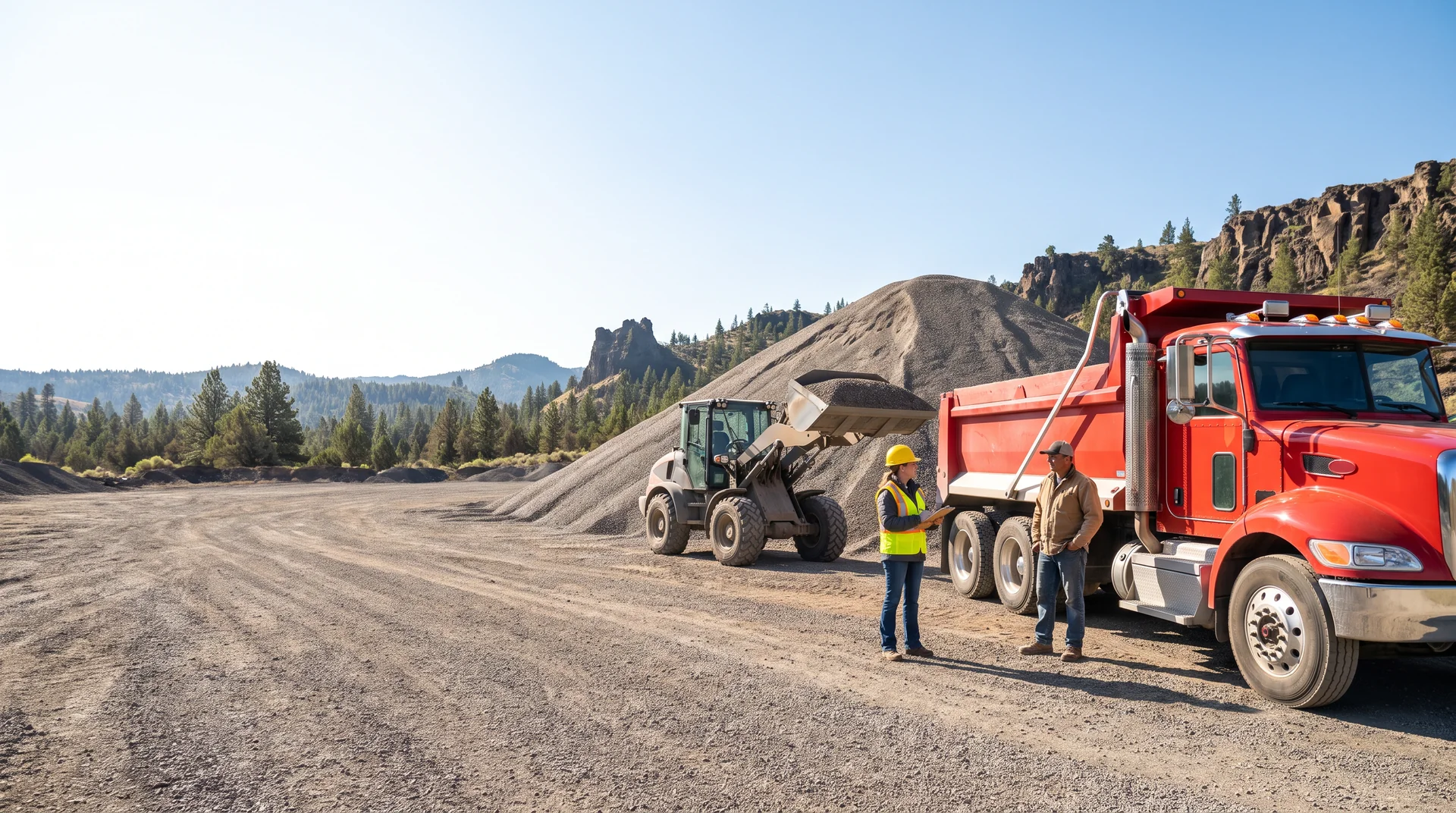

A Central Oregon aggregate delivery can look straightforward from the cab: load at a pit or plant, travel to a road project, ranch, subdivision, or building site, then unload and move to the next dispatch. But the insurance questions can change with the truck, trailer, driver, material, jobsite, customer agreement, subcontractor relationship, and route. Start with the site's commercial trucking insurance resources, then build a policy review around what your dump-truck operation actually does.
This article is educational information, not insurance, transportation, DOT, permit, weight, route, safety, legal, employment-classification, contract, tax, environmental, or claim advice. It does not decide whether a carrier needs a particular account, permit, endorsement, coverage, certificate, limit, classification, or safety procedure. Policies, declarations, endorsements, applications, carrier underwriting, contracts, statutes, regulations, permits, jobsite instructions, and the facts of a loss control.
Why Aggregate Hauling Needs More Than a Generic Vehicle Conversation
A gravel or aggregate operation often combines several exposures at once: a heavy truck and dump body, a trailer or transfer unit, travel on public roads, loading equipment, a live construction or ranch jobsite, employees, owner-operators, customer instructions, and material that is being delivered, spread, staged, or removed. A single incident can raise separate questions about the vehicle, the driver, the load, a contract, a worker injury, third-party property damage, and business interruption.
Oregon DFR explains that commercial-auto questions include who owns or leases the vehicle, who drives it, and the vehicle's primary use.[1] That is useful because a business-owned dump truck, a leased tractor, a personally titled pickup used in the operation, a hired truck, and an owner-operator's vehicle do not necessarily create the same insurance discussion. Ask your agent to review the actual named insured, driver list, vehicles, trailers, business use, limits, deductibles, exclusions, and endorsements with the declarations in hand.
| Operating change | Insurance questions to ask | Records to assemble |
|---|---|---|
| Adding or leasing a dump truck, transfer unit, trailer, or mounted equipment | Who owns or leases it? How is it titled, financed, garaged, dispatched, and used? Is it listed, valued, and matched with the actual drivers and limits? | Purchase or lease papers, VINs, serial numbers, photos, invoices, loan documents, equipment list, and driver list. |
| Hauling a new material or working under a new customer contract | Who owns the load? When does responsibility transfer? What insurance, indemnity, certificate, additional-insured, or reporting terms does the full agreement request? | Full signed agreement, scope, dispatch instructions, certificate request, material description, delivery terms, and customer contacts. |
| Using subcontractors, owner-operators, or borrowed drivers | Who employs and supervises the people involved? Who owns and maintains the truck? Which policy applies to each role, and what do the full contract and policy documents say? | Written agreements, certificates, driver and vehicle information, scope, dispatch protocol, incident-reporting contacts, and payroll or invoice records. |
| Operating on a new jobsite, private road, ranch, pit, or public route | What are the site-control, backing, unloading, overhead, ground-condition, access, and traffic-control expectations? Are routes, weight, permit, and load-securement questions addressed with the right authorities? | Site plan, route instructions, permits if applicable, load details, safety plan, photos, ticket records, and customer instructions. |
| Replacing a vehicle after a crash, theft, fire, or mechanical event | What does the actual policy say about physical damage, temporary replacement, rental or non-owned equipment, attached property, loss-of-use, business income, notice, and claim documentation? | Policy declarations, repair estimate, police or incident report if applicable, maintenance records, photos, bills of lading, scale tickets, dispatch logs, and downtime records. |
Heavy Loads, Public Roads, and the Difference Between an Insurance Review and a Compliance Answer
Hauling gravel, rock, sand, dirt, base material, asphalt, or debris can create different operating facts than a light-duty delivery run. ODOT states that a carrier may need to establish an Oregon account when operating trucks with a combined weight over 26,000 pounds or when hauling for hire at 26,000 pounds or less, subject to exemptions.[4] ODOT also explains that oversize or overweight movement can require a permit before movement in Oregon.[5]
Those are not do-it-yourself instructions and they do not answer what applies to your truck, route, material, weight, account, exemption, or customer job. They are a reason to coordinate the operation with ODOT and qualified transportation advisers and to make the insurance discussion specific. Bring the truck configuration, trailers, intended loaded weight, routes, dispatch process, agreements, and permit questions to the appropriate people. Keep the insurance conversation equally specific: vehicle schedules, driver lists, operating territory, attached equipment, deductibles, and limits should match the real operation rather than a generic description.
ODOT also points commercial carriers to federal cargo-load-securement requirements.[6] For aggregate haulers, that is a practical prompt to review the actual body, tailgate, tarp or cover system, material, route, loading procedure, unloading area, and customer requirements with the people responsible for safety and compliance. It is not a promise that a particular procedure satisfies every law, contract, or insurance condition.
Jobsite Risks Do Not Stop at the Edge of the Road
The claim questions change the moment the truck arrives on site. A driver may encounter soft or uneven ground, an excavator or loader, pedestrians, overhead utilities, tight backing areas, temporary traffic patterns, a customer's equipment, a steep driveway, and a scheduled unload in a small space. Oregon OSHA's vehicle resources include material on vehicle safety, tarping and fall protection, high-visibility apparel, and positive means of support for vehicles with dump bodies.[7] That makes jobsite procedures a risk-management conversation as well as a safety conversation.
A written plan should identify who gives site directions, who controls the work zone, how backing and unloading areas are set, where workers stand, how drivers report a near miss, and what records are retained after an incident. The purpose is not to create a legal conclusion. It is to reduce assumptions, protect people, and make it easier to provide accurate facts if a carrier, customer, contractor, or regulator asks questions later. Operations that also perform site work can use the site's construction insurance resources as a starting point for a broader discussion.
Vehicle Coverage, Physical Damage, Attached Equipment, and the Things That Travel With the Truck
A dump truck is not just a chassis. The business may rely on a dump body, tarp system, hydraulic equipment, toolboxes, two-way radios, cameras, GPS, chains, tarps, scale tickets, a trailer, loader attachments, or other mobile property. DFR specifically identifies permanently attached items as a commercial-auto discussion point.[1] Ask what is actually scheduled, how it is valued, where it is parked, which drivers use it, and whether recent upgrades have been reported.
The same discipline applies when the company rents, leases, borrows, or allows someone else to use equipment. Contracts can shift responsibilities without changing what a policy says. Read the full agreement, not only the certificate. For a more detailed look at mobile tools and equipment that travel with a business vehicle, see the site's company-vehicle tools, equipment, and inventory guide. For the rental and borrowed-equipment angle, the farm equipment rental and leasing guide offers a related framework for documenting condition, custody, contracts, and operators.
Turn a Complex Hauling Operation Into a Clear Insurance Review
Prineville Insurance can help organize a policy-specific conversation around your trucks, drivers, dump bodies, trailers, dispatch practices, customer contracts, subcontractors, jobsite work, equipment, certificates, and questions about limits, deductibles, exclusions, endorsements, and carrier requirements.
Subcontractors, Owner-Operators, and Customer Contracts Need Their Own File
One aggregate job can involve a general contractor, a pit or plant, a material supplier, a truck owner, a dispatch service, an employee driver, an independent operator, and a property owner. The labels used in conversation do not replace the terms of a contract or the wording of a policy. Before work begins, collect the full scope, entity names, truck and driver details, insurance requests, indemnity language, certificate instructions, jobsite contacts, and incident-reporting process.
Do not decide worker classification or legal responsibility from an insurance blog. Instead, identify the real operational facts and ask the appropriate legal, employment, tax, contract, and insurance advisers to review them. The site's Oregon subcontractor, freelancer, and 1099-worker insurance guide explains why policies, contracts, classifications, and actual work practices need to be reviewed together.
Separate General Liability, Auto, Workers' Compensation, and Umbrella Questions
A common mistake is to treat “liability” as one answer to every truck, jobsite, or employee question. Oregon DFR explains that commercial general liability may address certain third-party bodily injury and property damage but does not protect claims related to operating an automobile or truck or workers' compensation claims.[2] That is why a hauling operation should review the relevant policies separately and then consider how limits, exclusions, deductibles, insureds, contracts, and certificates fit together.
Use the site's commercial general liability, commercial auto, workers' compensation, and commercial umbrella insurance pages as organizing resources. They cannot determine if a particular accident, load, driver, road claim, customer demand, employee injury, or property-damage allegation is covered. The declarations, forms, endorsements, applications, carrier position, and loss facts matter.
Road Claims, Property Damage, and an Incident-Ready Record System
A complaint about a windshield, a driveway, pavement, landscaping, a gate, a customer's equipment, a third-party vehicle, or material on a road can produce a fast request for information. A disciplined record system can help the business respond accurately without inventing facts. Keep dispatch records, delivery tickets, scale records, route and site instructions, time stamps, truck and trailer identifiers, driver information, load description, condition photos where appropriate, maintenance records, contracts, certificates, and incident contacts together.
Report a potential claim according to the actual policy and carrier instructions. Preserve information and cooperate as required, but do not promise payment, admit responsibility, alter records, or make coverage conclusions before the responsible professionals have reviewed the event.
Downtime, Dispatch Interruptions, and Business Continuity
A disabled dump truck can affect more than a repair bill. The business may lose a route, crew time, customer confidence, equipment access, or a scheduled delivery window. DFR describes business interruption or continuation coverage as addressing certain fixed costs and lost profits after a covered shutdown, subject to the actual policy.[3] It does not make ordinary downtime, a missed job, an equipment breakdown, a weather delay, or a route change automatically covered.
Prepare before an incident: identify alternate dispatch contacts, repair resources, vehicle and trailer records, customer-notification roles, rental or replacement questions, payroll and revenue records, and the documents a carrier may request. Review whether the operation has a real continuity plan for its trucks, drivers, contracts, equipment, and customer relationships. For buildings, yards, tools, and other owned business assets, the commercial property insurance page can help organize property-schedule and business-income questions.
What to Bring to an Aggregate Hauling Insurance Review
Bring current policy declarations and endorsements; every entity and owner name; truck, trailer, dump-body, and attached-equipment lists; VINs and serial numbers; garaging and operating territories; driver roster and training records; maintenance and inspection records; current contracts and certificate requirements; sample dispatch, scale-ticket, and bill-of-lading records; material descriptions; jobsite procedures; loss history; lender information; and a plain-language description of what is changing next season. The goal is not to make a blog post decide coverage. It is to give the insurer and your advisers clear facts before a claim, contract deadline, or truck purchase forces the question.
Frequently Asked Questions
Is general liability insurance the same as commercial auto insurance for a dump-truck business?
No. Oregon DFR explains that standard general liability does not protect claims related to operating an automobile or truck; commercial auto addresses a different set of risks. Ask for a policy-specific discussion of the actual trucks, trailers, drivers, routes, contracts, loads, limits, deductibles, exclusions, and endorsements. The full policies—not a blog post or certificate—control.
Does commercial auto automatically cover every dump body, tarp system, toolbox, trailer, and attachment?
Do not assume so. Oregon DFR notes that permanently attached items can be a commercial-auto discussion point. Whether a particular dump body, tarp system, mounted equipment, trailer, tool, attachment, or modification is scheduled, covered, valued, or subject to a condition depends on the policy documents, application, carrier requirements, and loss facts. Bring current photos, invoices, serial numbers, and lease or finance documents to the review.
Are gravel, sand, rock, demolition debris, or customer-owned materials automatically insured while being hauled?
That depends on the policy and the actual business arrangement. Ask how the policy treats the material, who owns it, when responsibility transfers, where it is loaded and unloaded, whether the work is for hire, and what the contract requires. Cargo, debris, a customer’s property, pollution, faulty work, and a road claim can each involve separate policy language or exclusions.
What should a dump-truck operator review before using subcontractors or owner-operators?
Start with the real written agreement and the actual scope. Identify who dispatches, owns the truck, employs the driver, controls the jobsite, carries the load, pays fuel and maintenance, and reports an incident. Then ask the parties and insurers how the contract, certificates, named insureds, additional-insured requests, auto, liability, workers’ compensation, umbrella, and reporting requirements interact. Do not use a certificate alone as a substitute for the policy or contract review.
Can a missed job or truck downtime be treated as business income coverage?
Not automatically. Oregon DFR describes business interruption or continuation coverage as addressing certain fixed costs and lost profits after a covered event shuts down the business, subject to the actual policy. A breakdown, dispatch delay, road closure, maintenance issue, or missed haul is not automatically a covered loss. Ask about the specific trigger, waiting period, limitation, and records the policy requires.
References
- Oregon Division of Financial Regulation — Commercial Auto Insurance
- Oregon Division of Financial Regulation — Liability Insurance
- Oregon Division of Financial Regulation — Business Interruption Insurance
- Oregon Department of Transportation — Motor Carrier Requirements to Operate in Oregon
- Oregon Department of Transportation — Over-Dimension Operations in Oregon
- Oregon Department of Transportation — Load Securement
- Oregon OSHA — Vehicles


