



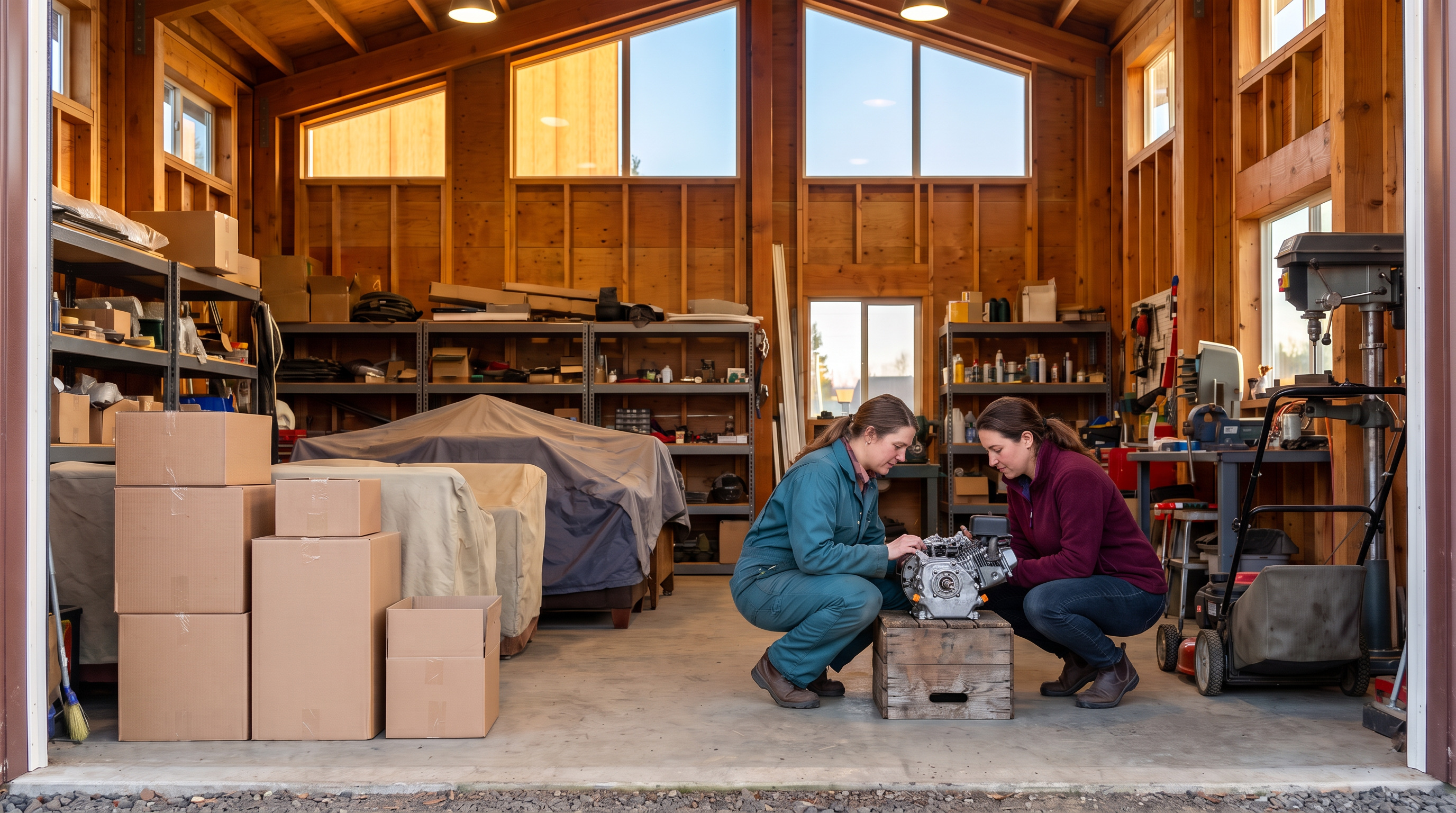

A customer leaves a mower for repair. Someone brings furniture to your shop on consignment. A contractor lends you a machine for the week. Your business now holds valuable property it does not own—and a standard commercial general liability policy is not a reason to assume that property is insured.
The short answer: customer goods, consigned stock, and borrowed equipment deserve a specific coverage review. Common care, custody, or control exclusions can affect liability coverage. Property-of-others provisions and specialized customer-property or inland marine forms address different questions, with different conditions. None of these labels establishes that every loss is covered.[1] [2]
This matters to a small-engine shop in Prineville, a furniture seller in Redmond, a repair business in Bend, or a contractor working around Madras and Powell Butte. The item may be with you for an hour or a season. Its owner, value, location, use, and travel can all change the insurance conversation.
This article is educational, not a coverage determination or legal opinion. The examples are hypothetical. Actual forms, endorsements, insurer acceptance, ownership, contracts, and loss facts control. No policy, certificate, or documentation checklist guarantees claim payment.
1. Care, Custody, or Control: Why Someone Else's Item Is Different
Care, custody, or control is often shortened to CCC. It describes an exposure involving property your business holds, looks after, or controls. Insurer guidance identifies common liability exclusions for this property, including customer vehicles in a repair shop, belongings in storage, and leased equipment. The exact exclusion and circumstances must be reviewed; not every form uses the same language.[1]
A customer slipping in your reception area is a different question from that customer's equipment being damaged while you work on it. Your business may have substantial liability limits and still need specialized protection for entrusted goods. Increasing the limit does not remove an exclusion.
Start by separating your building and owned inventory from the property belonging to others. Review the property-of-others provisions within your commercial property insurance. Ask what property qualifies, which locations and causes of loss apply, and whether its limit is suitable for the goods actually held—not just the items your business owns.[2]
2. Legal Liability and Direct Customer-Property Protection Are Not Identical
A bailee is generally a business or other party entrusted with someone else's property. In insurance discussions, bailee coverage can refer to several arrangements. A legal-liability form can depend on your business being legally responsible for damage. A direct customer-property form can work on another basis, subject to its own requirements. Insurer product names and eligibility distinctions vary.[2] [3] [4]
Imagine a fire affecting customers' goods. The fact that a fire occurred does not alone settle whether you were negligent, legally liable, or insured for the damage. That distinction can matter to the coverage considered. Ask what event triggers payment, who receives it, how defense is handled if applicable, and whether protection is restricted to particular causes of loss.
Do not use “bailee insurance” as a substitute for reading the form. Confirm accepted goods and operations, valuation, deductibles, per-item and total limits, storage locations, pickup/delivery, and restrictions affecting the work itself. Legal responsibility under an agreement or a particular Oregon dispute belongs with qualified counsel; it should not be inferred from possession alone.
3. Repair Shops: Damage During Work and Customer Vehicles Need Separate Questions
A repair shop can hold customer tools, motors, machinery, electronics, or furniture. An item might arrive damaged, be disassembled during work, and wait on a shelf for a part. Describe that full process to the agent, including testing, subcontracted work, and pickup. Coverage for a fire in the storage room should not be assumed to mean coverage for damage caused by a repair procedure.
Ask how the proposed form handles faulty workmanship, testing, property being worked on, parts you install, and damage to other portions of the item. A request to reimburse the customer's repair bill, redo your own work, or satisfy a warranty can differ from a covered physical-loss claim. Clear work authorization helps describe responsibilities but does not create coverage.
Customer motor vehicles create a separate garagekeepers discussion. Where offered, legal-liability, direct-excess, and direct-primary bases are not interchangeable. Vehicle liability, test drives, towing, and property inside the vehicle also need review; a generic bailee policy is not a substitute for an automotive coverage analysis.[2] Our repair-shop insurance page is a useful starting point for describing your actual operations.
4. Storage: Insure the Peak Exposure, Not an Average Quiet Week
Your busiest period may put more customer property in one place than you expect. Seasonal equipment waiting for repairs, furniture stored before delivery, and goods held for several clients can accumulate. Document the maximum likely total value and the highest-value single item. Ask about any per-customer, per-item, or location limit rather than looking only at the policy's headline amount.
Review whether the goods are in a scheduled building, detached shed, outdoor yard, trailer, or another business's warehouse. A lock or alarm may be sensible, but it does not establish insurance for that location. Tell your agent about outdoor storage, overnight vehicles, temporary overflow space, and the length of time items remain with you.
Ask about theft, unexplained disappearance, employee dishonesty, water damage, flood, earthquake, temperature change, deterioration, and mechanical breakdown where relevant. These are review questions—not a claim that every customer-property form excludes or includes each peril. Also establish how losses are valued. A customer's stated value, market value, and the policy's settlement basis may differ.
Bring the Goods List, Agreements, and Actual Policy.
Prineville Insurance can help organize a review of what you hold, where it travels, the largest values at risk, and the coverage basis your business needs. Include representative repair, storage, consignment, and borrowing agreements.
5. Consignment: Ownership, Sale Proceeds, and Physical Goods Are Different
Consigned furniture, art, sporting goods, or equipment may remain customer-owned while displayed for sale. Do not assume it becomes your owned inventory merely because it sits in your store. Identify who owns each item, what the written arrangement says about loss, and when title or responsibility changes. Have the actual policy reviewed for consigned property at the relevant place and value.[2]
Your records should connect each item to its consignor, description, agreed pricing or valuation information, arrival date, and disposition. Photograph existing damage. Identify any maximum time on site and any delivery or pickup obligation. These are practical documentation suggestions, not an assertion of a universal Oregon consignment requirement.
Insurance for a damaged physical item is different from a dispute about commission, unpaid proceeds, missing money, or whether a sale was authorized. Customer-property coverage should not be presented as protection for every financial or contractual problem. Ask an attorney about the agreement and your agent about the insurance it actually calls for.
6. Borrowed or Rented Equipment: Do Not Assume Your Tools Schedule Extends to It
A contractor borrowing a compact machine from a neighbor faces different facts from a shop renting a tool through a formal rental company. Identify the owner, serial number, replacement value, intended use, locations, and transportation. Read the return and damage obligations before accepting the equipment.
Some contractors' equipment or inland marine forms offer protection for leased or borrowed machinery, subject to their provisions. Availability under an insurer's product description does not mean your policy already includes it.[5] Ask whether an item must be scheduled, whether an automatic or blanket limit is sufficient, and whether informal borrowing qualifies.
Damage during operation, theft from a trailer, breakdown, attachments, and transportation require their own questions. A rental damage waiver is not automatically equivalent to insurance. Review it alongside your actual policy and any obligation assumed by contract. The Oregon equipment rental and leasing insurance resource adds context without promising automatic protection for borrowed machinery.
7. Pickup, Delivery, and Offsite Work Can Change the Exposure
A customer's item may be protected differently in your building, at a subcontractor's workshop, in a temporary storage unit, or during a trip. Describe each stage. Inland marine insurance commonly addresses property that moves or is temporarily away from the usual premises, but the particular goods, routes, carriers, loading/unloading, and causes of loss still need to be accepted under the form.[3]
Your commercial auto insurance answers vehicle-related questions; it should not be assumed to cover all the customer goods carried in the vehicle. Review the separate physical-property exposure, including loading, unattended stops, overnight parking, trailers, and customer pickup arrangements.
A move can create several locations at once. Disclose the old shop, new shop, storage space, and transport period before the change. Our Oregon business-moving insurance checklist addresses that transition. For regularly carried items, the tools and equipment in company vehicles guide explains why the vehicle policy and its contents deserve separate reviews.
8. Your Lost Income and Liability After Return Are Separate Questions
A loss to customer goods can interrupt your operation even when your own machinery is intact. Whether your lost income, extra expense, or another financial consequence is insured depends on a separate coverage analysis. Business income insurance is not a general promise to reimburse every customer-property problem; covered-loss triggers, covered property, waiting periods, and exclusions matter.
A repaired item can also cause injury or damage after it leaves the shop. Protection for the customer's item while held by you does not automatically answer later products or completed-operations liability questions. Our Oregon completed operations liability article explains the difference between finished-work liability and a workmanship warranty.
Keep these discussions connected without treating the policies as interchangeable. Your building, customer goods, borrowed machine, vehicle, lost income, and later liability can involve several forms. Ask which policy is intended to respond to each exposure and where a gap or overlap remains.
9. Intake Records, Contracts, and Certificates: Describe the Risk Accurately
Create an intake record identifying the owner, item and serial number where applicable, condition photographs, stated value, reason for holding it, arrival date, and expected return. Keep the signed authorization or agreement with that record. Update it when the item moves to another location or another business. Use an access-controlled system for customer records.
Bring insurance clauses to your agent before signing. A promise to assume all loss, waive rights, or protect a lender can go beyond the coverage you have. Oregon DFR explains that a certificate does not amend, extend, or change coverage. Certificate-holder, additional-insured, loss-payee, and property-owner roles are different; have the relevant policy or endorsement reviewed rather than asking for wording on a certificate alone.[6]
If goods are damaged or missing, address immediate safety needs, protect remaining property where reasonable, preserve records and evidence, and notify your agent or insurer under the policy's requirements. Avoid making unilateral settlement commitments or disposing of disputed items before obtaining appropriate direction. Document the facts without deciding liability or coverage from an initial customer complaint.
Before You Accept the Next Customer's Property
Bring the actual policies and endorsement schedules, an example intake record, your maximum customer-property values, location list, transport arrangements, and representative agreements. Separate owned stock, consigned goods, customer repairs, vehicles, and borrowed equipment. Identify any high-value item or new service that does not fit the old description of your business.
The aim is not to declare every item covered. It is to identify unresolved questions early enough to review insurer-accepted options before your next busy season, rental, storage arrangement, or customer delivery.
Frequently Asked Questions
Does general liability cover customer property in my possession?
Do not assume it does. Common general liability forms contain exclusions affecting property in your care, custody, or control and property on which work is being performed. The actual wording and circumstances matter. Ask about property-of-others provisions, customer-property or bailee coverage, and other specialized forms appropriate to your operation. Holding an item does not automatically determine legal liability or coverage.
What is the difference between bailee legal liability and customer-property coverage?
Some coverage depends on your business being legally liable for damage to goods entrusted to it. Other forms provide direct customer-property protection on a different basis, subject to their terms. Names are not consistent across insurers. Review the insuring agreement, covered property, causes of loss, work-process restrictions, locations, transit, limits, deductibles, and valuation rather than choosing from the label alone.
Are customer vehicles treated like ordinary goods in storage?
Not necessarily. Vehicles held by a repair shop, body shop, or other automotive operation can require a garagekeepers discussion rather than a generic customer-goods recommendation. Legal-liability, direct-excess, and direct-primary arrangements differ where available. Do not assume vehicle liability, garagekeepers, customer contents, test drives, and towing are all covered by one policy.
Does my business property insurance include items on consignment?
Check the actual policy. Consigned stock may remain customer-owned even though it is offered for sale in your store. Establish who owns it, what your agreement requires, and whether the policy accepts consigned property at the relevant location and value. Insurance for physical goods is also different from protection for unpaid sale proceeds, missing money, or a contract dispute.
Is borrowed equipment automatically insured with my own tools?
No automatic conclusion should be made. Tell your agent what is borrowed or rented, its owner, value, intended use, transportation, and return terms. A schedule or endorsement may be needed, and a policy that includes rented equipment may treat an informal loan differently. Damage while operating the equipment, mechanical breakdown, theft, transit, and contractual responsibility require separate review.
Does a certificate of insurance prove a customer's goods are covered?
No. Oregon DFR explains that a certificate is informational and does not amend, extend, or change the policy. A certificate-holder listing does not by itself insure the goods or create additional-insured or loss-payee protection. Have the actual policy and endorsements reviewed against the repair, storage, consignment, or equipment agreement before relying on a certificate.
References
Sources reviewed November 16, 2026. Carrier examples and specialist descriptions explain possible coverage approaches, not your policy or product availability through Prineville Insurance. Actual forms and endorsements control; obtain qualified legal advice for agreements and liability disputes.
- Progressive Commercial — Care, Custody and Control in Business Insurance
- Rough Notes — Property of Others: Commercial Property, Legal Liability and Bailee Forms
- Insurance Information Institute — Understanding Inland Marine Insurance
- Great American Insurance Group — Bailee Insurance and Coverage Options
- Travelers — Contractors Equipment: Owned, Leased and Borrowed Equipment
- Oregon DFR — Certificates Do Not Amend, Extend or Change Coverage


