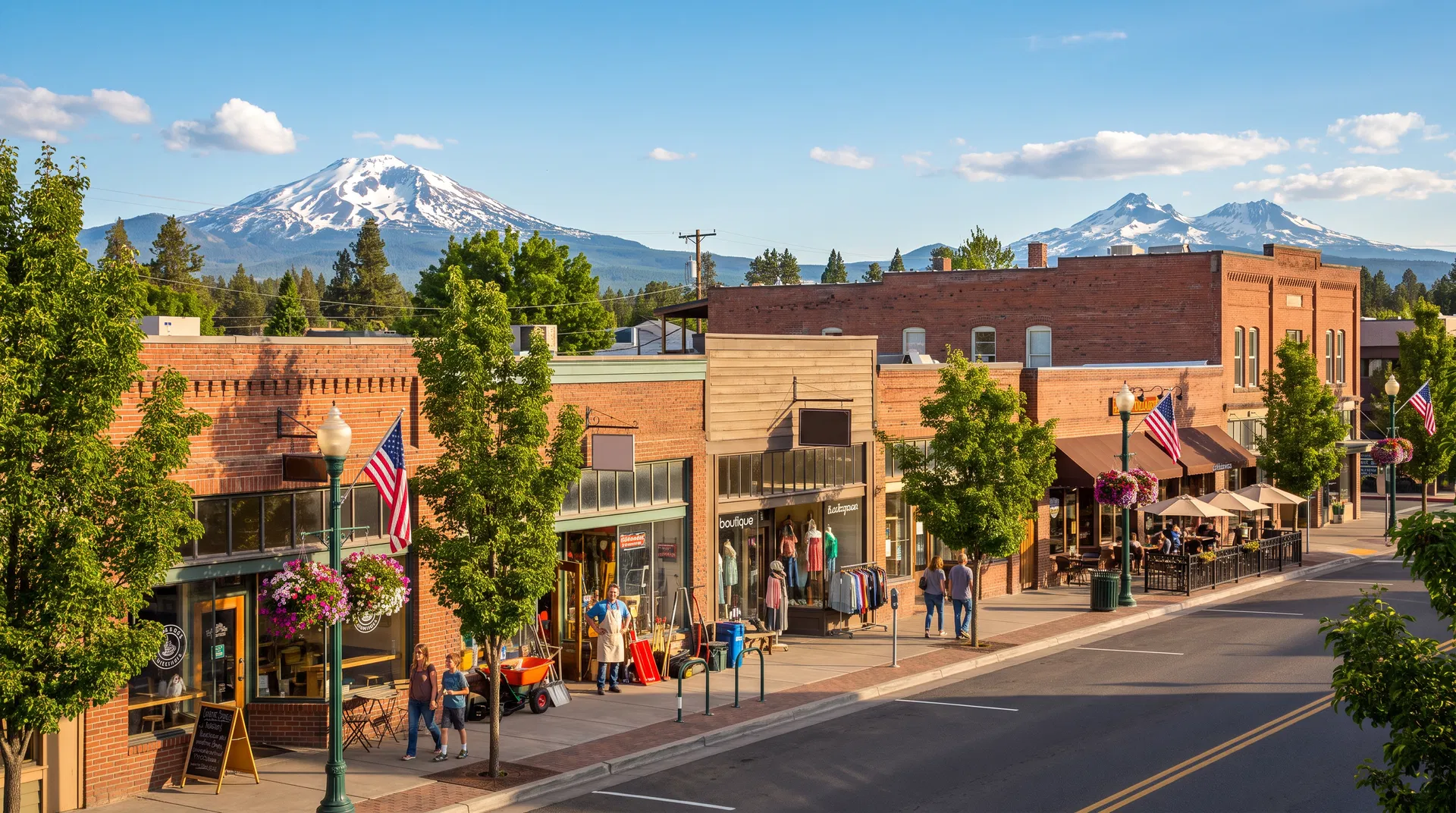
Oregon is home to more than 360,000 small businesses — from the craft breweries and outdoor gear shops of Bend to the agricultural operations of Crook County and the family-owned restaurants of downtown Prineville. Each of these businesses faces a unique combination of risks, and a unique set of insurance needs. Yet many Oregon small business owners are either underinsured, over-paying for coverage they don't need, or carrying the wrong type of policy entirely.
The consequences of being underinsured can be severe. A single uninsured liability claim, a workers' compensation audit finding, or a ransomware attack can threaten the financial survival of a business that took years to build. This guide covers everything a Central Oregon small business owner needs to know about business insurance: the six essential coverages, what's legally required, the Business Owners Policy (BOP), the most common coverage gaps, and how to build a program that actually protects your business.
The 6 Essential Coverages for Oregon Small Businesses
Building a sound business insurance program starts with understanding the six foundational coverages. Some are legally required; others are contractually required by landlords and clients; all of them address real risks that Central Oregon businesses face every day.
The Business Owners Policy (BOP): A Smart Starting Point
For many Central Oregon small businesses, a Business Owners Policy (BOP) is the most cost-effective way to build a foundation. A BOP bundles general liability and commercial property coverage into a single policy at a discounted combined premium — typically 10–20% less than purchasing the coverages separately.
BOPs are generally available to businesses with fewer than 100 employees, annual revenue under $5 million, and a physical location. They work well for retail shops, professional offices, restaurants, service businesses, and most Main Street operations in Prineville, Bend, and Redmond. However, contractors, manufacturers, and higher-risk businesses typically need standalone policies rather than a BOP.
A standard BOP includes general liability and commercial property, but most insurers allow you to add endorsements for business income (interruption), equipment breakdown, hired and non-owned auto, cyber liability, and employment practices liability. Building the right BOP means starting with the base and adding endorsements that match your specific exposures — not buying a generic package and hoping it covers everything.
Workers' Compensation: Oregon's Non-Negotiable Requirement
Oregon law is unambiguous: virtually every employer with one or more employees must carry workers' compensation insurance. This includes full-time, part-time, seasonal, and family member employees. Sole proprietors without employees are exempt, but the moment you hire your first worker — even a part-time teenager working summers — you are legally required to carry coverage.
Oregon operates a competitive workers' comp market, meaning you can purchase coverage from private insurers rather than a state fund. Rates are set by the Workers' Compensation Division and vary by industry classification — a desk job has a dramatically lower rate than a logging operation or construction site. Your annual premium is calculated based on payroll and classification, and insurers conduct annual audits to verify that your actual payroll and classifications match what you reported.
Penalties for non-compliance are severe. Oregon OSHA can assess fines of up to $10,000 per day, and uninsured employers are personally liable for all workers' comp claims — medical bills, wage replacement, and permanent disability benefits — out of pocket. If you have employees, this is not optional coverage.
Cyber Liability: The Coverage Most Central Oregon Businesses Are Missing
Cyber liability has moved from a specialty coverage to an essential one for virtually every Oregon small business. The reason is simple: 43% of cyberattacks target small businesses, and the average cost of a data breach for a small business now exceeds $200,000. Yet most standard BOPs include only a small cyber endorsement that caps out at $25,000–$50,000 — a fraction of a real ransomware loss.
Oregon's Consumer Information Protection Act (OCIPA) requires businesses that collect personal information about Oregon residents to notify affected individuals within 45 days of discovering a breach. If the breach affects 250 or more Oregon residents, the business must also notify the Oregon Attorney General. Non-compliance can result in civil penalties and class action exposure.
A standalone cyber liability policy covers breach notification costs, credit monitoring for affected customers, forensic investigation, ransomware response and extortion payments (with carrier approval), business interruption losses, and third-party liability claims from customers whose data was compromised. For any Central Oregon business that collects customer names, email addresses, payment information, or health data, cyber coverage is no longer optional.
Employment Practices Liability (EPLI): The Gap Most Employers Don't Know They Have
General liability insurance covers third-party claims — injuries to customers and damage to client property. It does not cover claims from your own employees for harassment, discrimination, retaliation, or wrongful termination. Those claims require Employment Practices Liability Insurance (EPLI).
Many small business owners assume EPLI is only for large corporations. In reality, employment claims hit businesses of every size — including family-run operations with two or three employees. A single EPLI claim with defense costs can run six figures even when the business is not at fault. Oregon has some of the strongest employee protection laws in the country, and the state's active plaintiff's bar means employment claims are a real risk for Central Oregon employers.
The 8 Most Common Coverage Gaps Oregon Small Businesses Miss
After decades of working with Central Oregon businesses, Prineville Insurance agents have identified the coverage gaps that most frequently result in uninsured losses. These are the eight gaps that matter most.
What Does Small Business Insurance Cost in Central Oregon?
Business insurance costs vary significantly based on your industry, revenue, number of employees, claims history, and the specific coverages you need. The table below provides general ranges for the most common coverages — your actual premiums will depend on your specific risk profile.
Industry-Specific Coverage Add-Ons for Central Oregon Businesses
Beyond the six essentials, Central Oregon businesses in specific industries should consider targeted coverages that address their unique risks:
- Contractors and Construction — Contractor's tools and equipment, installation floater, contractor's pollution liability, builder's risk. See our contractor insurance guide.
- Restaurants and Food Service — Liquor liability (required if you serve alcohol in Oregon), food spoilage coverage, food contamination and recall coverage, employee dishonesty.
- Retail Businesses — Employee dishonesty and crime coverage, product liability, commercial crime (shoplifting, robbery). See our commercial insurance page.
- Farm and Ranch Operations — Farm property, livestock mortality, farm liability, farm auto, and agritourism liability. See our farm and ranch insurance page.
- Non-Profits — Directors and officers (D&O) liability, volunteer accident coverage, special event insurance. See our non-profit insurance page.
- Technology and Professional Services — Technology E&O, media liability, intellectual property coverage, combined tech cyber liability.
How to Build the Right Insurance Program for Your Central Oregon Business
The right insurance program depends on your industry, revenue, number of employees, physical assets, and specific risk exposures. There is no one-size-fits-all solution — and the cheapest policy is rarely the right one.
Working with an independent agent gives you access to a broader range of coverage options and more competitive pricing than buying direct from a single carrier. An independent agent also serves as your advocate when claims arise — helping you navigate the claims process and ensuring you receive the full benefit of your coverage.
Prineville Insurance works with 50+ commercial carriers and has been building customized insurance programs for Central Oregon small businesses since 1935. Our commercial lines specialists serve businesses throughout Prineville, Bend, Redmond, Sisters, Madras, La Pine, and across Central Oregon. We also offer personal lines coverage for business owners who want to consolidate their insurance with a single trusted agency.
If you're concerned about your current coverage, a free business insurance review is the best place to start. We'll evaluate your existing policies, identify gaps, and compare options across our carrier network — at no cost and no obligation.
Frequently Asked Questions: Oregon Small Business Insurance