



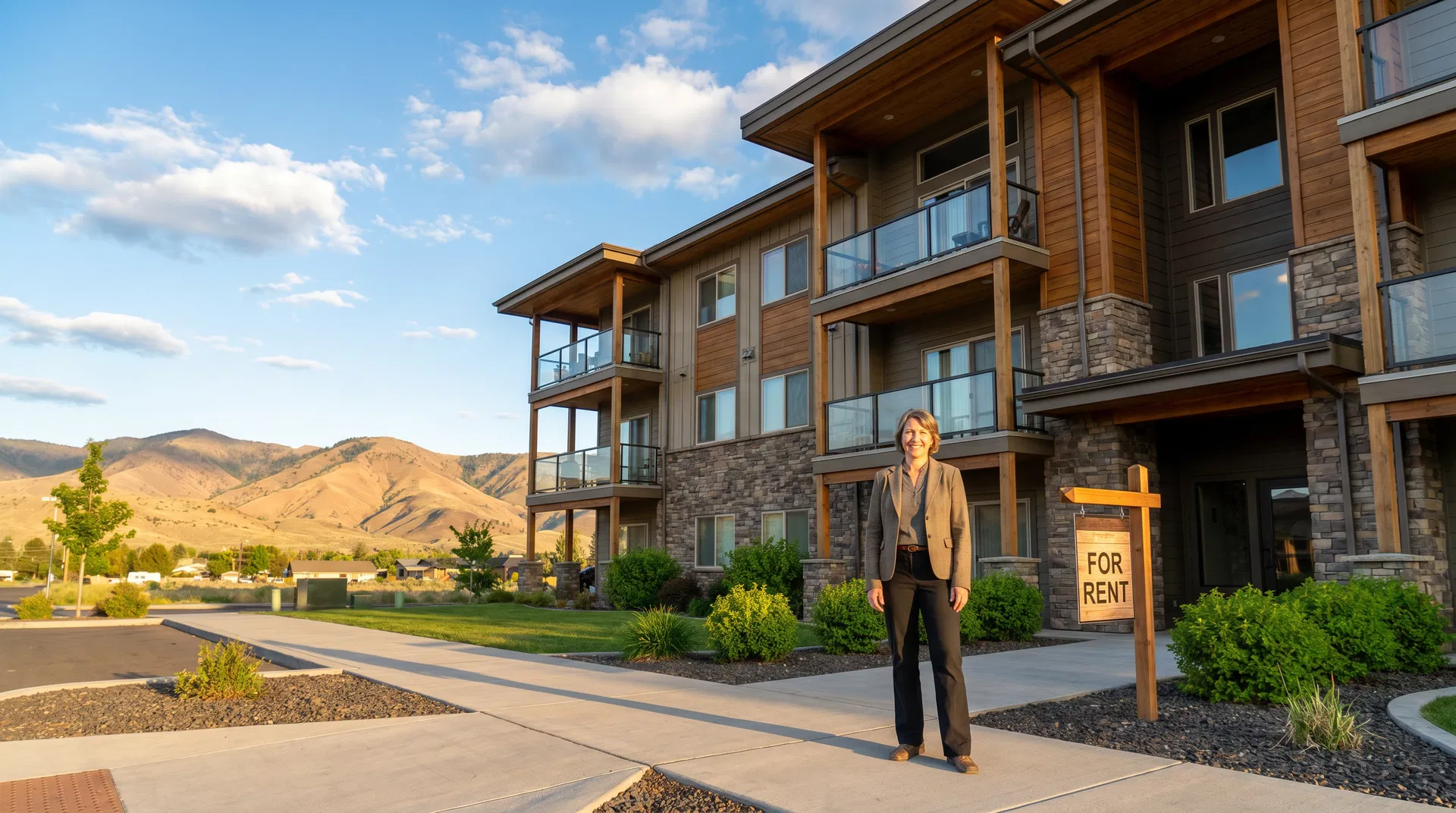

Central Oregon's housing market has created a large and growing class of multi-family property owners — people who own a duplex in Prineville, a triplex in Madras, a small apartment complex in Redmond, or a handful of rental units scattered across Crook and Jefferson counties. Some are experienced investors who built their portfolios intentionally. Many are accidental landlords who inherited a property, bought a second home they couldn't sell, or converted a single-family house into a rental when they moved. What almost all of them have in common is that they are underinsured — often dramatically so.
Multi-family property insurance is not complicated, but it is different from homeowners insurance in ways that matter enormously when a claim occurs. The wrong policy — or the right policy with the wrong limits and missing endorsements — can leave a property owner facing hundreds of thousands of dollars in uninsured losses. This guide covers the key coverage types, the most common gaps, Oregon-specific legal requirements, and what a properly structured multi-family insurance program should look like.
Is Your Rental Property Properly Insured?
Most Central Oregon multi-family property owners discover coverage gaps only after a loss. A free insurance review can identify every gap — wrong policy type, missing endorsements, inadequate limits — before a claim occurs.
Get a Free Property Insurance ReviewThe Homeowners Policy Problem
The most common and most expensive multi-family insurance mistake in Central Oregon is using a homeowners policy to insure a rental property. A standard homeowners policy (HO-3 form) is designed for owner-occupied single-family residences. The policy language typically excludes or severely limits coverage for properties rented to others — and in many cases, a carrier can deny a claim entirely if they discover the property was being rented without disclosure.
The correct policy for a 2-4 unit rental property is a landlord dwelling policy, typically written on the DP-3 (open peril) form. For properties with 5 or more units, a commercial property policy is required. These policies are specifically designed for rental properties — they cover the building structure, landlord-owned appliances and fixtures, loss of rental income, and landlord liability in ways that homeowners policies do not. If you own any rental property and are currently insuring it on a homeowners policy, this is the first thing to fix.
The distinction matters even for owner-occupied multi-family properties. If you live in one unit of a duplex and rent the other, a standard homeowners policy may cover your unit but exclude the rental unit and the rental income. A landlord dwelling policy or a homeowners policy with a specific rental unit endorsement is required to cover both sides of the building properly.
The Eight Most Common Multi-Family Coverage Gaps
After reviewing hundreds of rental property insurance programs across Central Oregon, the same gaps appear repeatedly. Understanding them is the first step to closing them.
Homeowners Policy Used Instead of Landlord Policy
This is the single most common and most expensive multi-family insurance mistake in Central Oregon. A standard homeowners policy (HO-3) is designed for owner-occupied single-family residences. The moment you rent out a unit, you have a rental property — and a homeowners policy will exclude or severely limit coverage for rental activities, rental income loss, and landlord liability. Every multi-family property owner needs a landlord dwelling policy (DP-3) for 2-4 units or a commercial property policy for 5+ units.
Building Ordinance Coverage Absent or Sublimited
Oregon's older apartment buildings — many built in the 1960s and 1970s — do not meet current building codes. After a partial loss, a standard property policy only pays to restore the building to its pre-loss condition. Current codes may require sprinkler systems, ADA accessibility upgrades, seismic retrofitting, or electrical panel replacements that can add tens of thousands of dollars to a repair. Building ordinance coverage (Parts A, B, and C) must be specifically added to your policy and the sublimit must be adequate for your building's age and value.
Loss of Rents Sublimit Set Too Low
Most landlord policies include loss of rents coverage — but the default sublimit is often set at 10-20% of the building value, which may not reflect actual rental income for 12-24 months. After a significant fire or water event affecting multiple units, the timeline from loss to habitability can easily exceed 12 months when permitting, demolition, and construction are factored in. Review your loss of rents sublimit annually and compare it to your actual gross rental income for at least 24 months.
No Flood Insurance in Flood-Prone Areas
Flood damage is excluded from every standard commercial property and landlord dwelling policy. Properties near the Crooked River, Ochoco Creek, Willow Creek, and other Central Oregon waterways may be in FEMA-designated flood zones. Even properties outside designated flood zones can experience flooding from surface water, drain backup, or heavy rain events. A separate NFIP or private flood policy is required for flood coverage — and it typically has a 30-day waiting period before it takes effect.
Inadequate Liability Limits for Multi-Unit Properties
Standard landlord dwelling policies often carry $300,000 to $500,000 in liability limits. For a multi-family property with multiple tenants, visitors, and common areas, this can be insufficient. A single serious slip-and-fall injury, a dog bite by a tenant's pet, or a carbon monoxide incident can generate medical bills, lost wages, and pain and suffering damages that exceed those limits. Multi-family property owners should carry at least $1 million in liability coverage, backed by a commercial umbrella policy.
Tenant Personal Property Not Covered
A landlord's property policy covers the building structure, landlord-owned appliances, and common area contents — not tenants' personal belongings. When a fire, burst pipe, or break-in damages a tenant's furniture, electronics, clothing, and personal items, the landlord's policy will not pay for those losses. This creates disputes, potential legal exposure, and tenant turnover. Under ORS 90.222, Oregon landlords can require tenants to carry renters insurance as a lease condition — a smart risk management tool that protects both parties.
No Commercial Umbrella Policy
Multi-family property owners who rely solely on their primary landlord policy limits are exposed to catastrophic liability losses. A serious injury to a tenant or visitor — a fall down stairs, a carbon monoxide event, a dog bite, or a swimming pool accident — can generate damages far exceeding standard policy limits. A commercial umbrella policy provides an additional $1 million or more in liability coverage above your primary policy at a relatively low annual premium. For owners of multiple rental properties, it is one of the most cost-effective protections available.
Wildfire Risk and Non-Renewal in the WUI
Multi-family properties in Central Oregon's wildland-urban interface (WUI) — the areas where residential development meets forest and rangeland — face increasing wildfire risk and carrier non-renewal pressure. Some insurers are restricting or non-renewing policies in high-risk WUI areas. If your apartment complex or rental property is in a WUI zone, you need to proactively review your coverage, document defensible space measures, and work with an independent agent who has access to surplus lines markets for hard-to-place properties.
Policy Forms: DP-1, DP-2, and DP-3
Landlord dwelling policies come in three forms, and the difference between them is significant. The DP-1 (basic form) covers only named perils — fire, lightning, windstorm, hail, explosion, riot, aircraft, vehicles, smoke, vandalism, and theft. It is the cheapest option and the least protective. The DP-2 (broad form) adds additional named perils including falling objects, weight of ice and snow, accidental discharge of water, and collapse. The DP-3 (special form) is an open-peril policy — it covers all causes of loss except those specifically excluded. For most Central Oregon rental properties, the DP-3 is the appropriate form.
Properties with 5 or more units move out of the dwelling policy world entirely and into commercial property insurance. Commercial property policies offer broader coverage, higher limits, and more flexibility in endorsements — but they also require more detailed underwriting information and typically carry higher premiums. If you own a 6-unit apartment building in Prineville or a 10-unit complex in Madras, you need a commercial property policy, not a landlord dwelling policy.
Building Ordinance and Law Coverage: The Gap That Surprises Everyone
Central Oregon has a significant stock of older apartment buildings — many constructed in the 1960s and 1970s. These buildings were built to the codes of their era, which did not require sprinkler systems, ADA-compliant accessibility features, modern electrical panels, seismic retrofitting, or current energy efficiency standards. A standard property policy only pays to restore a building to its pre-loss condition — not to bring it up to current building codes.
After a partial loss — say, a fire that destroys one wing of a 12-unit complex — the local building department may require the entire building to be brought up to current codes before a certificate of occupancy is issued. This can add tens or even hundreds of thousands of dollars to the repair cost that a standard policy will not cover. Building ordinance or law coverage fills this gap. It has three parts: Part A covers the cost to demolish the undamaged portion of the building if required by code; Part B covers the loss in value of the undamaged portion; and Part C covers the increased cost of construction to meet current codes. All three parts must be included, and the sublimit must be adequate for your building's age and replacement value.
For any multi-family property built before 1990, building ordinance coverage is not optional — it is essential. Ask your agent to review your current sublimit and compare it to the estimated cost of bringing your building up to current codes.
Loss of Rents: How Much Is Enough?
Loss of rents coverage (also called loss of rental income or fair rental value coverage) pays the rental income you lose while a property is uninhabitable after a covered loss. It is one of the most important coverages for multi-family property owners — and one of the most commonly sublimited.
The default sublimit on many landlord dwelling policies is set as a percentage of the building value — often 10% to 20% — which may not reflect actual rental income for 12 to 24 months. After a significant fire or water event affecting multiple units, the timeline from loss to habitability can easily exceed 12 months when permitting, demolition, construction, and final inspections are factored in. For a 6-unit building generating $7,200 per month in gross rent, a 12-month loss of rents exposure is $86,400. A 24-month exposure is $172,800. If your current sublimit is $50,000, you have a significant gap.
Review your loss of rents sublimit annually. It should reflect your actual gross rental income for at least 24 months. For properties in areas with complex permitting or limited contractor availability — which describes much of rural Central Oregon — 24 months is the minimum prudent coverage period.
Questions About Your Rental Property Coverage?
Prineville Insurance specializes in multi-family and rental property insurance across Crook, Jefferson, and Deschutes counties. Call us to review your current coverage and identify any gaps.
Call (541) 447-6372Text Us!ORS 90.222: Can Oregon Landlords Require Renters Insurance?
Yes — with conditions. Under ORS 90.222, Oregon landlords may require tenants to carry renters insurance as a written lease condition. However, the law imposes several requirements and restrictions. The landlord must also carry comparable liability coverage and be able to document it. The required coverage amount cannot exceed $100,000 in liability. Landlords cannot require renters insurance from tenants whose household income is at or below 50% of the area median income. And landlords cannot charge a separate fee for requiring renters insurance.
Despite these restrictions, requiring renters insurance is one of the smartest risk management tools available to multi-family property owners. When a tenant's personal property is damaged — by a fire, a burst pipe, or a break-in — the landlord's policy does not cover it. Without renters insurance, tenants may claim the landlord is responsible for their losses, creating disputes and potential litigation. With renters insurance, the tenant's carrier handles the personal property claim, and the tenant also has liability coverage for incidents they cause — such as a fire started by a candle or a water leak from an overflowing bathtub.
Flood and Earthquake: The Excluded Perils
Two of the most significant property risks in Oregon are excluded from every standard commercial property and landlord dwelling policy: flood and earthquake. These exclusions are not negotiable — they are standard across the industry — but they can be addressed with separate policies.
Flood insurance is available through the National Flood Insurance Program (NFIP) for properties in FEMA-designated flood zones, and through private flood carriers for properties both inside and outside flood zones. Central Oregon has several flood-prone areas — properties near the Crooked River in Crook County, near Ochoco Creek in Prineville, and near the Deschutes River in Redmond and Bend face meaningful flood risk. Even properties outside designated flood zones can experience flooding from surface water, drain backup, or heavy rain events. Private flood insurance is available for these properties at competitive premiums, and unlike NFIP policies, private flood policies can cover loss of rental income.
Earthquake insurance is available as a separate policy or endorsement. Oregon has significant seismic risk — the Cascadia Subduction Zone is one of the most dangerous fault systems in North America, and the Pacific Northwest is overdue for a major subduction zone earthquake. For multi-family property owners, earthquake coverage is worth serious consideration, particularly for older masonry or unreinforced concrete buildings that are highly vulnerable to seismic damage.
Multi-Family Insurance Coverage Comparison
The table below summarizes how different policy types handle the key coverage needs of multi-family property owners.
| Coverage Need | Homeowners (HO-3) | Landlord Dwelling (DP-3) | Commercial Property |
|---|---|---|---|
| Building structure | Yes (owner-occupied) | Yes | Yes |
| Rental unit coverage | Excluded or limited | Yes | Yes |
| Loss of rental income | Not included | Yes (sublimited) | Yes (sublimited) |
| Landlord liability | Limited | Yes | Yes |
| Building ordinance/law | Optional endorsement | Optional endorsement | Optional endorsement |
| Tenant personal property | Not covered | Not covered | Not covered |
| Flood damage | Excluded | Excluded | Excluded |
| Earthquake damage | Excluded | Excluded | Excluded |
| 5+ unit properties | Not appropriate | Not appropriate | Required |
| Commercial umbrella eligible | No | Yes | Yes |
| ORS 90.222 compliance | Does not satisfy | Satisfies | Satisfies |
Liability Coverage and the Commercial Umbrella
Multi-family property owners face significant liability exposure — slip-and-fall injuries in common areas, tenant injuries from maintenance failures, dog bites by tenants' pets, carbon monoxide incidents, and swimming pool accidents. Standard landlord dwelling policies typically carry $300,000 to $500,000 in liability limits. For a property with multiple tenants and visitors, this can be insufficient.
Oregon's landlord-tenant law (ORS Chapter 90) requires landlords to maintain premises in a habitable condition under ORS 90.315. Failure to maintain — a broken stair railing, a faulty smoke detector, a known water leak that causes mold — creates direct liability exposure. A serious injury to a tenant or visitor can generate medical bills, lost wages, and pain and suffering damages that exceed standard policy limits. A commercial umbrella policy provides an additional $1 million or more in liability coverage above your primary policy limits at a relatively low annual premium. For owners of multiple rental properties, it is one of the most cost-effective protections available.
For landlords who also manage their own properties — collecting rent, handling maintenance, and screening tenants — a commercial insurance review should also consider hired and non-owned auto coverage for any driving done in connection with the rental business, and crime/fidelity coverage if any employees or contractors handle rent payments.
Central Oregon Multi-Family Market Context
Crook, Jefferson, and Deschutes counties have experienced significant population growth over the past decade, driving demand for rental housing and increasing the value of multi-family properties. Prineville, Madras, and Redmond have seen new apartment construction alongside a large stock of older rental properties. This combination — growing values, aging building stock, and increasing wildfire and weather risk — makes proper multi-family insurance more important than ever.
Central Oregon's wildfire risk adds a layer of complexity for multi-family property owners in the wildland-urban interface. Some carriers are restricting or non-renewing policies in high-risk WUI areas. If your rental property is in a WUI zone, working with an independent insurance agent who has access to multiple carriers and surplus lines markets is essential. Prineville Insurance has placed multi-family properties across the region, including properties that other agents have struggled to insure.
Whether you own a single duplex in Prineville or a portfolio of apartment buildings across Central Oregon, the right insurance program starts with the right policy type, adequate limits, and the endorsements that fill the gaps that standard policies leave open. A free review with a Prineville Insurance agent takes less than an hour and can identify coverage gaps that would cost far more to discover after a loss.
Frequently Asked Questions
Get a Free Multi-Family Property Insurance Review
Prineville Insurance serves multi-family property owners across Crook, Jefferson, and Deschutes counties. We'll review your current coverage, identify gaps, and compare options from multiple carriers — including surplus lines markets for hard-to-place properties.
Get a Free Insurance Review TodayThis article is for general informational purposes only and does not constitute legal or insurance advice. Oregon insurance laws and policy terms change frequently. Consult a licensed insurance professional for advice specific to your property and situation. Prineville Insurance is licensed in Oregon and serves Crook, Jefferson, Deschutes, and surrounding counties.


