

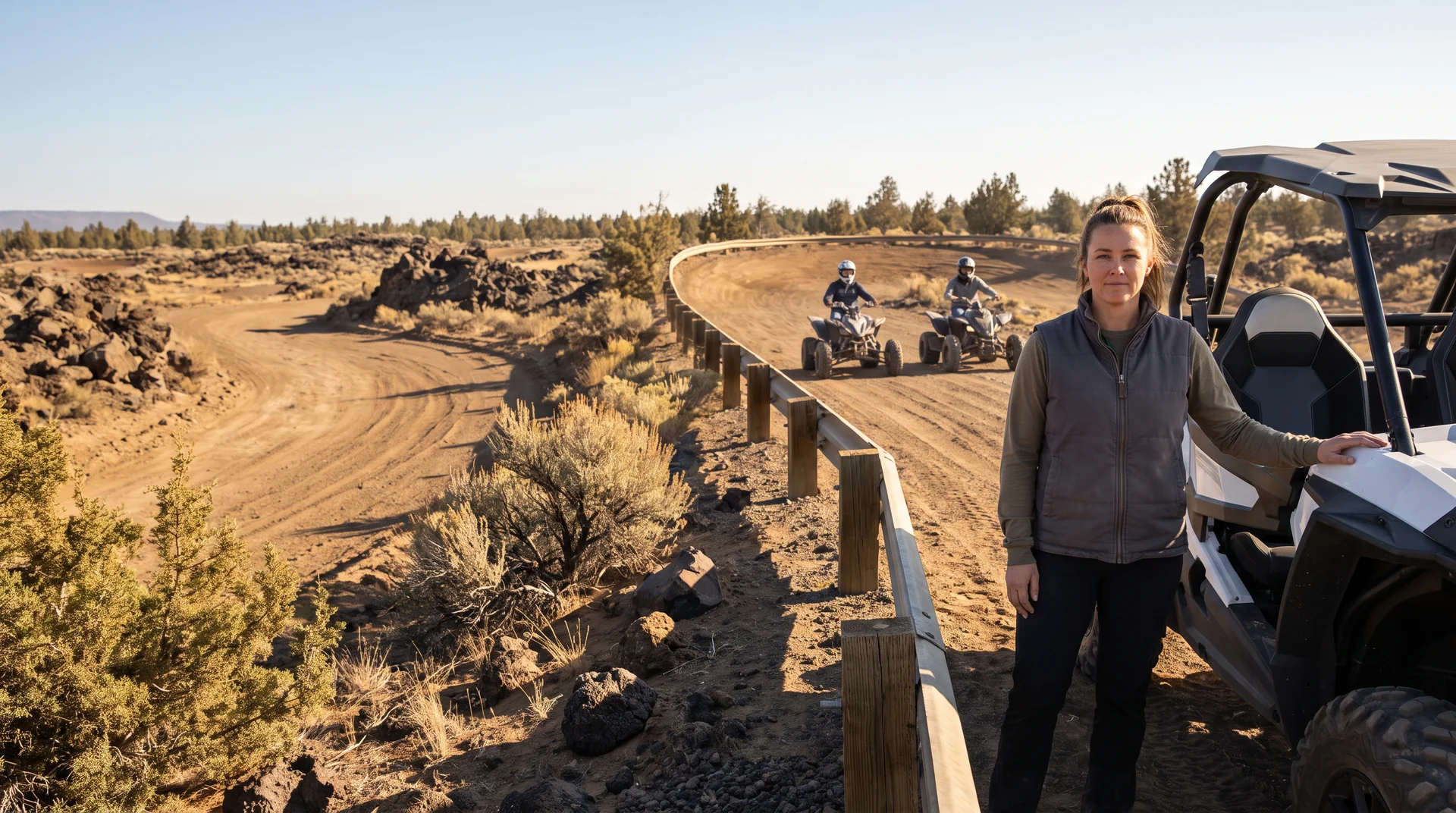

An Oregon off-road operation can be much more than a trail map and a row of machines. A motorsports track, ATV park, riding area, rental program, tour route, or event may combine riders, spectators, staff, independent instructors, vendors, recovery vehicles, trailers, buildings, gates, timing equipment, fuel, terrain, weather, and land-use agreements. Start with the site's outdoor recreation insurance resources, then build the insurance conversation around the activities your operation actually hosts.
This article is educational information, not insurance, legal, safety, permit, employment, event-management, environmental, tax, contract, underwriting, or claim advice. It does not determine whether an operator needs a particular permit, safety procedure, waiver, certificate, limit, endorsement, policy, or coverage. The actual policy, declarations, endorsements, applications, carrier requirements, contracts, landowner or permit terms, applicable rules, and facts of a loss control.
Why an Off-Road Recreation Operation Needs a Detailed Insurance Conversation
The description “ATV park” can hide very different businesses. One operation may own a family riding area. Another may host organized races, rent ATVs and side-by-sides, operate a training course, collect admission, sell food, provide guided rides, lease land, or bring in a promoter for a weekend event. The customer mix, ownership structure, land, equipment, worker roles, contracts, revenue, and vehicle use can all change the questions an insurer needs answered.
Oregon DFR notes that commercial general liability may address certain third-party bodily injury or property-damage allegations, while auto and employee-injury exposures are separate issues.[6] That is why a venue should avoid treating “liability insurance” as one answer for riders, spectators, rental machines, pickups, trailers, employees, vendors, instructors, and property. Ask for a policy-specific review of each exposure and the way the policies, limits, exclusions, deductibles, endorsements, and contracts fit together.
| Operating change | Insurance questions to ask | Records to assemble |
|---|---|---|
| Opening a new track, riding park, trail system, or spectator area | Who owns or controls the land, improvements, structures, fences, parking, trails, and common areas? What do the actual lease, land-use, permit, lender, or event agreements require? | Signed agreements, maps, site and evacuation plans, photos, property schedules, permits if applicable, entity documents, and property-value records. |
| Adding an ATV, UTV, dirt-bike, or side-by-side rental program | Who owns, leases, maintains, dispatches, transports, and operates the units? What do the policy, rental agreement, age and training practices, route, passenger rules, and damage or recovery process say? | Vehicle lists, VINs, titles or leases, invoices, maintenance records, renter agreement, inspection forms, training records, incident contacts, and photos. |
| Hosting a race, demo day, tour, fundraiser, or outside promoter | Who is organizing and controlling the activity? Who supplies workers, barriers, medical or emergency services, food, vendors, equipment, advertising, tickets, and security? What do the full event and venue agreements request? | Event contract, site plan, run-of-show, vendor list, certificate requests, additional-insured language, participant materials, staffing plan, and cancellation terms. |
| Using staff, instructors, guides, mechanics, recovery crews, or contractors | Who employs, trains, supervises, and authorizes each person? Who owns the equipment and who directs the work? Which policies respond to employee injury, vehicle use, tools, and contract obligations? | Written scopes, employee/contractor agreements, certificates, training and authorization records, payroll or invoices, equipment assignments, and reporting procedures. |
| Expanding a seasonal operation or adding cabins, a shop, storage, or a fleet | Are improvements and mobile property listed, valued, and matched to the actual business use? What do property, auto, equipment, interruption, fire, weather, and wildfire provisions say? | Updated building and equipment schedules, receipts, serial numbers, replacement estimates, revenue records, lender documents, inventory, and continuity plan. |
Participants, Spectators, Waivers, and the Real Scope of the Activity
A rider injury and a spectator injury may begin at the same event but produce different facts. Consider a youth lesson, an adult open ride, a race, a guided tour, an equipment demonstration, a spectator viewing area, a pit lane, a parking lot, a food vendor, and a post-event gathering. The venue's responsibilities may depend on who controlled the site, who supplied the machine, what was represented, what was signed, where people were allowed to stand, and what the actual agreements and policies say.
A signed waiver is not a coverage decision and it is not a substitute for a real operational review. Do not promise that a waiver prevents a claim or removes liability. Instead, have qualified counsel review the program and make sure the insurance professional sees the actual participant documents, ticketing flow, signage plans, event description, land agreement, safety program, and incident-reporting process. Related commercial general liability and commercial umbrella insurance discussions can help organize questions about limits and layers, but neither page decides an outcome for a particular allegation.
Rentals, ATVs, UTVs, Trailers, and Recovery Vehicles Are Separate Conversations
Rentals make the operating picture more complex. Oregon Parks and Recreation explains that its ATV Safety Card guidance has public-land and rental-agency context, including a temporary card process tied to a renter's review and signature of the agency checklist.[1] Oregon also describes operating-permit considerations for land open to public ATV use.[2] Those resources do not decide the requirements for every private park or every insurance policy, but they are good reminders to document the vehicle class, location, rider or renter process, landowner rules, fire-season practices, and machine condition.
Keep rented units, guided-tour machines, recovery vehicles, tow units, pickup trucks, trailers, employee-owned vehicles, and vendor equipment distinct in the insurance review. Oregon DFR says commercial-auto questions can depend on ownership or lease status, drivers, and the vehicle's primary use.[9] Bring the entire fleet list, titles or lease documents, VINs, maintenance and inspection records, rental terms, driver rules, garaging locations, and transport routes to the discussion. The site's commercial auto insurance page and company-vehicle tools and equipment guide are useful starting points for organizing those records.
Organize the Whole Operation Before You Request Insurance Terms
Prineville Insurance can help organize a policy-specific conversation around your track or trail operations, public access, rentals, vehicles, property, staff, contractors, event contracts, certificates, wildfire planning, limits, deductibles, exclusions, and endorsements.
Tracks, Trails, Buildings, Barriers, Tools, and Other Property
An off-road property can hold an unusual mix of owned assets: entrance structures, office or shop space, cabins or storage buildings, gates, fencing, barriers, signs, bleachers, lighting, cameras, radios, timing equipment, rental fleet, trailers, tools, fuel systems, maintenance equipment, and outdoor improvements. Oregon DFR describes business property as including buildings, equipment, machinery, computers, signs, fences, inventory, and outdoor property.[7] The relevant question is not whether a blog lists an item; it is whether the property is described, scheduled, valued, and treated correctly under the actual policy.
Update values when you improve a track, add equipment, change a structure, install electrical or water features, acquire a rental fleet, or take on another location. Keep invoices, serial numbers, receipts, photos, maintenance records, replacement estimates, and lender documents. The site's commercial property insurance page can help frame an inventory and valuation discussion, while other outdoor, guest-facing operations offer a related example of mixed property, utilities, and site-access questions.
Employees, Independent Instructors, Mechanics, and Contractors
Oregon OSHA's ATV fact sheet identifies rough terrain, slopes, speed, passengers, unstable loads, and protective equipment as workplace hazards; it also emphasizes authorized-worker instruction and supervision.[4] A venue should not turn that fact sheet into a one-size-fits-all safety plan. It should prompt a review of who is authorized to operate what, how inspections and maintenance are documented, how an incident is reported, and which people are employees, contractors, instructors, guides, mechanics, recovery staff, or vendor workers.
Titles such as “contractor,” “volunteer,” “guide,” or “instructor” do not settle employment, safety, contract, or insurance questions. Start with actual control, equipment ownership, work scope, payment, supervision, training, access, and written agreements. Review the site's workers' compensation resources and the Oregon subcontractor, freelancer, and 1099-worker guide with the right advisers before relying on an informal description of a working relationship.
Event Contracts, Certificates, Public Land, and Venue Requirements
Promoters, landowners, public agencies, lenders, vendors, sponsors, and adjoining venues may each ask for different documents. Oregon's OPRD special-use rule illustrates that a public-land permit can include its own insurance, indemnity, proof-of-insurance, additional-insured, security, cleanup, and operational terms.[10] That does not mean the same terms apply to every private venue, but it is a reminder that an event organizer should read the full agreement rather than treat a certificate as the agreement itself.
Create a separate file for every event: the signed contract, certificate request, entity names, additional-insured wording, site plan, dates, expected attendance, vendors, rider and spectator zones, staffing plan, emergency contacts, cancellation provisions, and incident-reporting instructions. Oregon State University's program is not a statewide rule, but it offers a useful example of how high-risk activities, third-party users, and vendors may face agreement-specific review.[11] The site's sports-event insurance guide provides another way to organize event-specific questions.
Wildfire, Weather, Closures, and Business Continuity
Central Oregon's terrain and weather can change access, visibility, fire restrictions, attendance, operations, and emergency planning. Oregon's ATV guide states that fire-season restrictions can change by landowner and time of year.[3] Use that as a reason to keep current contact information, road and trail updates, equipment and fuel procedures, communications plans, and property records—without assuming that a particular closure or restriction is covered or that a standard procedure fits every property.
DFR describes business-interruption coverage as a potential response to certain fixed costs and lost profits following a covered event, subject to the policy.[8] Ask about actual triggers, waiting periods, exclusions, limits, seasonal revenues, dependent properties, cancellations, smoke, wildfire, weather, and record requirements. The site's Central Oregon wildfire insurance resources can help begin the property and preparedness discussion, but the policy documents decide whether a particular shutdown is insured.
A Practical Annual Review Checklist
Before the busy season, review entity names, ownership, land agreements, operating locations, access roads, maps, improvements, spectator areas, trail and track activities, rental fleet, tow and transport vehicles, trailers, equipment, property values, event calendar, ticketing, instructors, contractors, staff assignments, certificates, loss history, and emergency contacts. Explain any change in plain language. The more accurately the policies and records reflect the real operation, the less likely an important question is discovered after an event, contract deadline, or loss.
Frequently Asked Questions
Does a participant waiver eliminate an Oregon motorsports venue's insurance needs?
No. A waiver is not a substitute for a policy, a venue agreement, safe operations, or legal advice, and this article cannot decide its effect. The wording, signing process, participant, activity, contract, applicable law, policy terms, and facts of an incident all matter. Have qualified legal and insurance advisers review the actual program before relying on a document.
Are rental ATVs and side-by-sides automatically covered by a general liability policy?
Do not assume so. Oregon DFR explains that commercial general liability and commercial auto address different exposures, and the answer may depend on ownership, lease terms, vehicle type, where and how it is used, drivers, policy forms, endorsements, exclusions, limits, and loss facts. Provide the actual rental fleet and agreement to your agent and insurer for a policy-specific review.
Do Oregon ATV permits and safety cards determine a private park's insurance requirements?
Not by themselves. Oregon Parks and Recreation guidance addresses specific public-land operating permits and safety education; public- and private-land operations, rental programs, events, and venue agreements can involve different facts. Confirm requirements with the appropriate landowner, agency, permit issuer, and advisers, then make sure the insurance review reflects the real operation.
Will business-income coverage pay if smoke, weather, a fire restriction, or an event cancellation closes the park?
Not automatically. Oregon DFR describes business-interruption coverage as potentially addressing certain fixed costs and lost profits after a covered shutdown, subject to the policy. A weather event, smoke condition, wildfire restriction, event cancellation, voluntary closure, or road issue requires a review of the actual trigger, waiting period, exclusions, limits, records, and facts of loss.
What should an off-road venue bring to an insurance review?
Bring current declarations and endorsements; entity details; land or facility agreements; maps; trail, track, and spectator layouts; vehicle and equipment lists; rental agreements; event calendars; contracts; certificates; vendor and instructor information; employee and contractor roles; training and inspection records; property values; revenue records; and a clear description of any planned change. That lets the conversation begin with actual facts rather than assumptions.
References
- Oregon Parks and Recreation Department — ATV Safety Card
- Oregon Parks and Recreation Department — ATV Permits
- Oregon Parks and Recreation Department — 2026–2027 Oregon ATV Guide
- Oregon OSHA — All-Terrain Vehicles: Rules for All Workplaces
- Oregon OSHA — Vehicles
- Oregon Division of Financial Regulation — Liability Insurance
- Oregon Division of Financial Regulation — Property Insurance
- Oregon Division of Financial Regulation — Business Interruption Insurance
- Oregon Division of Financial Regulation — Commercial Auto Insurance
- Oregon Administrative Rule 736-016-0020 — Special Use Permit Conditions and Requirements
- Oregon State University — Events and Activities