



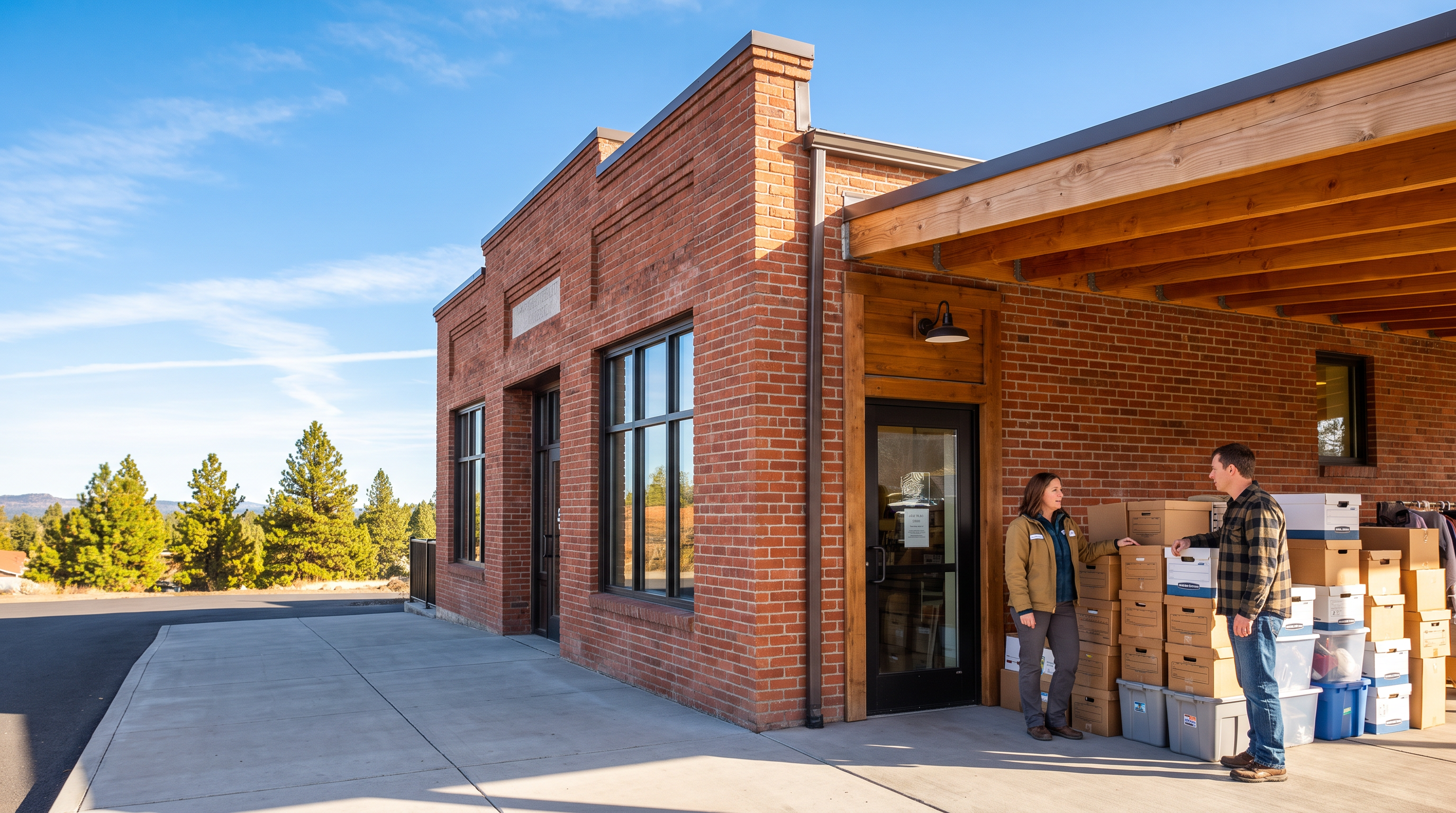

For a nonprofit, a building is often more than a location. A former school can become a community center, a historic downtown building can become a museum or arts hub, and a small storefront can power a thrift store, pantry, shelter, or youth program. In Prineville, Bend, Redmond, Madras, Sisters, La Pine, and across Central Oregon, a strong nonprofit insurance program should describe the property, people, programs, and records the organization actually relies on—not just the street address.
This article is educational information, not insurance, legal, preservation, construction, permitting, accounting, tax, grant, safety, or claim advice. It does not establish who owns a building, whether an improvement is compliant, whether a property is historic, who is responsible under a lease, or whether a claim will be paid. The policy, declarations, endorsements, limits, deductibles, exclusions, ownership, contracts, historic-preservation requirements, local rules, loss documentation, and facts of the event control. Consult qualified insurance, legal, preservation, property-management, safety, and construction professionals before a purchase, lease, remodel, or claim.
Start With the Mission, Then Inventory the Property That Supports It
Oregon’s Division of Financial Regulation (DFR) explains that business property can include a building, inventory, furniture, equipment, supplies, machinery, computers, valuable papers, books, artwork, antiques, signs, fences, outdoor property, and other assets that are owned or leased.[1] That framework is especially useful for nonprofits because the physical assets can support an unusually broad mission: meeting rooms, program supplies, food and clothing donations, resale goods, grant files, donor records, archival materials, stage equipment, kitchen equipment, storage sheds, security systems, accessibility improvements, and public-facing signs.
Create a property schedule that is more specific than “office contents.” Photograph every exterior elevation, program room, storage area, HVAC and electrical equipment, kitchen, donation bay, display area, collection, sign, and off-site storage unit. Keep purchase records, invoices, lease exhibits, donor-intake records, contractor documents, serial numbers, maintenance logs, and updated replacement estimates together in secure storage. This turns a general commercial property insurance discussion into an informed, policy-specific review.
| Nonprofit property area | Questions to organize before a loss | Useful documentation |
|---|---|---|
| Building, additions, and improvements | Who owns the structure and improvements? Is the description current after a remodel, accessibility update, roof project, security upgrade, or leased-space build-out? | Deed or lease, building schedule, photos, plans, permits, contractor invoices, maintenance records, and replacement-cost discussion notes. |
| Historic details, collections, and archives | Are special materials, custom millwork, artifacts, artwork, memorabilia, books, or climate-sensitive collections separately identified and valued? | Detailed inventory, condition photographs, appraisal or specialist records when appropriate, provenance, restoration contacts, and digital backups. |
| Thrift-store and donation inventory | How are donated goods received, sorted, stored, displayed, priced, moved, and tracked? Are any goods owned by another party or subject to a special agreement? | Donation intake procedure, seasonal inventory snapshots, storage map, vendor records, point-of-sale reports, photos, security procedures, and third-party agreements. |
| Community-center programs and public areas | How do visitors, clients, volunteers, vendors, and program participants enter, use, and exit the property? | Inspection routine, room-use agreements, incident procedure, facility reservations, maintenance work orders, and event setup records. |
| Records, technology, and continuity | What must be available to keep services operating after a covered property loss—donor information, grant files, client data, check-in systems, payroll, vendor lists, and communications? | Offline/secure backups, financial statements, daily activity reports, vendor contacts, board call tree, alternate-location plan, and current policy copy. |
Historic Buildings Need Both a Property Plan and a Preservation Plan
A historic property can carry community identity, original materials, specialized repairs, and a restoration timeline that differs from a newer building. Oregon Heritage identifies buildings, structures, historic districts, artifacts, collections, lists, databases, cultural events, and access to cultural assets as resources affected by natural and human-caused disasters.[4] The insurance conversation should recognize that a nonprofit’s loss could affect its programs and also the records, collections, and relationships that connect the organization to the community.
Separate three questions that are often blurred together: **what the property is worth to the organization**, **what it may cost to repair or rebuild with materials of similar kind and quality under the policy**, and **what approvals, review, or preservation process might apply to the work**. DFR describes actual-cash-value and replacement-cost reimbursement concepts, but neither term tells an organization in advance how a specific historic feature or loss will be handled.[1] Oregon SHPO describes project-review pathways that can depend on federal funding, permits, approvals, public ownership, ground disturbance, and project scope.[5] Those are distinct decisions. Do not treat an insurance estimate as a preservation approval, or a preservation requirement as proof of coverage.
Community Centers and Public-Facing Facilities: Property and Premises Are Different Conversations
A community hall, classroom, pantry, cultural center, museum, or program facility may face both building/property exposure and visitor exposure. DFR explains that a business can be held responsible if someone is injured on its premises or by a product it sells, and it distinguishes commercial general liability from workers’ compensation, auto, professional liability, and employment-practices exposures.[3] Property insurance and general liability insurance do different jobs; one should not be assumed to replace the other.
Walk the route a real visitor uses: parking or drop-off, sidewalk, entrance, stairs or ramp, restrooms, program rooms, kitchen, storage, playground or outdoor area, displays, exit route, and evacuation location. Document maintenance, lighting, water or ice response, facility-use agreements, event setup, volunteer training, and incident response. A large asset base or meaningful public traffic may also prompt an umbrella liability insurance conversation, but availability, underlying requirements, exclusions, limits, and fit vary by organization and carrier.
Bring the Property File, Program Calendar, and Current Policies Together
Prineville Insurance can help an Oregon nonprofit organize a policy-specific review of buildings, collections, donated inventory, records, community use, wildfire planning, and service continuity.
Thrift Stores, Donation Rooms, and Storage Areas Need More Than a Simple Retail Description
Nonprofit thrift stores can fund shelter operations, food programs, emergency assistance, youth services, animal welfare, and many other charitable missions. The Nonprofits Insurance Alliance’s industry overview underscores how varied these operations can be, including volunteer-managed resale programs and stores that help fund other services.[7] For an Oregon organization, the key is not to copy another thrift shop’s insurance plan; it is to describe this organization’s donation flow, storage methods, sales activity, staff and volunteer roles, online activity, cash handling, security controls, public access, and seasonal inventory honestly and completely.
“Donated goods” is not a sufficient record on its own. Build intake procedures, identify who determines value for operational purposes, photograph high-value or unusual items where appropriate, map storage areas, track consignments or third-party property, document delivery and pickup procedures, and keep security and loss-prevention records. Separate property questions from misuse or theft questions: cash, employee/volunteer dishonesty, and malicious damage may justify a crime insurance conversation, while customer, donor, staff, and payment-system information can require a separate cyber liability insurance review. Neither is automatically included in a standard property discussion.
Wildfire and Disaster Planning: Preserve People, Records, and the Ability to Continue the Mission
Oregon’s wildfire preparedness guidance recommends learning local alert systems, developing an emergency plan, identifying evacuation routes, building a go-kit, and preserving important papers, computers, hard drives, policy records, and photographs.[6] A nonprofit can adapt that work to its board, employees, volunteers, clients, and facilities: assign decision roles, identify an out-of-area contact, prepare a client and donor communication plan, keep secure off-site backups, pre-arrange alternate locations if appropriate, and know how to account for equipment, program supplies, food, and donations during an evacuation.
Oregon Heritage also directs heritage organizations to disaster planning, response, recovery, and resilience resources for historic properties and collections.[4] Those resources are valuable planning tools, not insurance guarantees. A nonprofit with a Central Oregon location should coordinate a property-specific wildfire insurance and preparedness discussion with local safety guidance, current evacuation plans, maintenance documentation, and a clear understanding of who controls landscaping, access, and building protection under its ownership or lease arrangement. For an additional homeowner-focused perspective that can help boards understand the local market conversation, see the site’s Oregon wildfire non-renewal survival guide—but commercial and nonprofit policies require their own review.
Business Income for a Nonprofit: Translate “Income” Into the Services You Need to Sustain
Oregon DFR says business interruption/continuation insurance can cover certain fixed costs—such as payroll, mortgage or rent, and utilities—and profits based on financial records when a covered event shuts down a business for an extended period.[2] Nonprofits should not read that as a promise to replace every fundraising shortfall, canceled event, grant interruption, or service disruption. The actual policy determines whether a covered event occurred, when any waiting period begins, how long the restoration period lasts, what financial records are required, and which limits or exclusions apply.
The practical pre-loss exercise is to identify which obligations continue while a building is unusable: staff or contractor costs, rent or mortgage, utilities, storage, leased equipment, client communications, grant-reporting obligations, temporary location needs, and the steps required to resume programs. Preserve budgets, revenue and donation history, payroll, board minutes, program attendance, event calendars, donor and grant records, supplier contacts, and daily financial reports. Then review business interruption insurance with the property policy and the organization’s real continuity plan, rather than viewing it as a standalone promise.
What to Bring to a Nonprofit Property Insurance Review
Bring the current policy and declarations; deed or signed lease; landlord or funder insurance requirements; property and improvement schedule; building photos; inventory and collection records; high-value asset documentation; donation and storage procedures; program calendar; board and staff emergency contacts; financial statements; prior-loss information; permits, contractor records, and preservation documentation as applicable; and evidence of safety, security, backup, maintenance, and wildfire-planning practices. If the organization also operates events, food distribution, transportation, counseling, youth services, animal programs, or a thrift store, include the agreements and operations details that make those programs different.
Start with the site’s broader Oregon nonprofit insurance guide, then use the property file to make the next conversation more specific. The point is not to guess coverage or claim outcomes. It is to make sure the nonprofit’s mission, property, programs, records, and risk-management choices are accurately reflected before the next renewal, renovation, wildfire season, or loss.
Frequently Asked Questions
Does nonprofit property insurance automatically cover an old building, historic feature, or community center?
Do not assume it does. Coverage can depend on who owns or leases the property, the policy form, covered causes of loss, building and improvement description, valuation basis, applicable deductibles, endorsements, exclusions, limits, vacancy language, and the facts of the loss. Historic status or community value does not itself establish insurance coverage or the amount payable.
Are donated clothes, food, furniture, and thrift-store goods covered as inventory?
A nonprofit should not make that assumption. Donated goods, resale inventory, food, supplies, consignment or third-party property, and goods in transit can require different documentation and policy-specific questions. Keep intake, valuation, storage, ownership, and loss-prevention records current and ask for a written explanation of how the actual program is described.
Will business income insurance replace lost donations after a nonprofit closes?
Not necessarily. Oregon DFR says business interruption/continuation insurance addresses fixed costs and profits based on financial records when a covered event shuts down the business for an extended period. A nonprofit’s applicable wording, covered-event trigger, waiting period, restoration period, limits, exclusions, financial records, fundraising model, grants, and other conditions all matter. A drop in donations or a canceled program is not automatically covered.
Does a wildfire-preparedness plan guarantee property insurance availability or a claim payment?
No. Preparedness, alerts, evacuation planning, defensible-space work, and documentation are sensible risk-management steps, but they do not guarantee eligibility, pricing, renewal, or coverage. Ask the carrier or agent how the actual property, its condition, protection features, location, and policy terms are evaluated.
Does every historic nonprofit building require Oregon SHPO review before repairs or upgrades?
No. Oregon SHPO explains that project-review pathways depend on facts such as federal funding, permits, approvals, public ownership, ground disturbance, and the work proposed. A private owner without those factors may have a different path, and cities or counties can have their own requirements. Confirm the current requirements with the relevant agency and qualified preservation, permitting, construction, and legal professionals.
Make the Property Record Part of the Mission Plan
A building, archive, pantry, thrift store, community center, outdoor sign, storage room, or donation bay can be essential to a nonprofit’s ability to serve. Updating property records before a loss gives the board and staff a clearer way to review insurance, continuity, preservation, safety, and lease questions with the appropriate professionals.
Prineville Insurance can help Central Oregon nonprofits organize the policy questions around property, donated inventory, public areas, continuity, wildfire readiness, and the broader risk program. Bring the real documents, real photos, real program calendar, and current policy so the discussion fits the organization you operate today.
References
- Oregon Division of Financial Regulation — Property Insurance
- Oregon Division of Financial Regulation — Business Interruption Insurance
- Oregon Division of Financial Regulation — Liability Insurance
- Oregon Heritage — Disaster Preparedness, Recovery & Resilience
- Oregon Heritage / State Historic Preservation Office — Project Review
- Oregon Wildfire Response & Recovery — Before Wildfires: Prepare and Prevent
- Nonprofits Insurance Alliance — Thrift Shops: Insurance Explained
- National Park Service — Disaster Recovery Grants


