



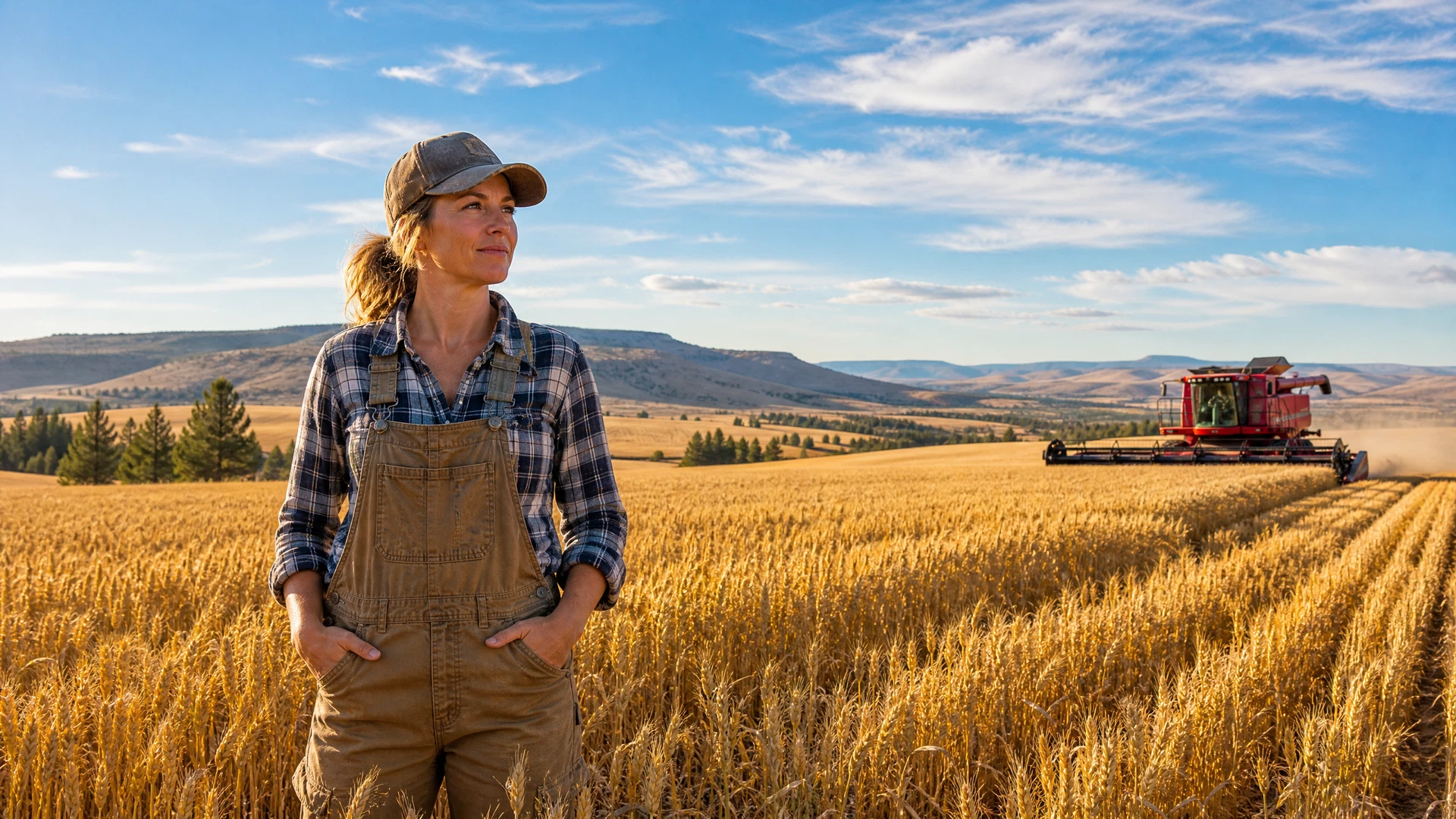

Oregon's agricultural economy is one of the most diverse in the nation — from the wheat fields of the Columbia Plateau to the grass seed farms of the Willamette Valley, the cattle ranches of Eastern Oregon, and the specialty crop operations of the Rogue Valley. Every one of those operations faces a distinct set of risks: drought, wildfire, hail, equipment failure, livestock disease, and commodity price swings that can erase a year's profit in a single season.
Farm and crop insurance is the financial safety net that keeps Oregon's agricultural families farming through the hard years. But the system is more complex than most producers realize — it involves two separate programs (federal crop insurance and private farm package policies), dozens of coverage types, strict enrollment deadlines, and coverage decisions that must be made months before a single seed goes in the ground. This guide explains how the system works, what each coverage type protects, and how Central Oregon farmers and ranchers can build a program that fits their operation.
Farm Insurance vs. Crop Insurance: Understanding the Difference
The terms "farm insurance" and "crop insurance" are often used interchangeably, but they refer to two distinct programs that serve different purposes. Most Oregon farming operations need both.
Farm insurance is a private commercial insurance policy — similar in structure to a business owner's policy — that protects the physical assets of a farming operation. It covers farm buildings and structures, farm equipment and machinery, livestock, farm vehicles, and the farm operator's personal liability. Farm insurance is purchased through a private insurance agent and is not federally subsidized.
Crop insurance is a federally backed program administered through USDA's Risk Management Agency (RMA) under the Federal Crop Insurance Program (FCIP). It protects against losses to planted crops caused by weather events, disease, pests, or commodity price changes. Crop insurance policies are sold and serviced by private insurance agents but are reinsured by the federal government, which subsidizes a significant portion of the premium cost. At the 70% coverage level, USDA subsidizes approximately 59% of the premium — making federal crop insurance one of the most cost-effective risk management tools available to Oregon farmers.
Federal Crop Insurance: How the USDA Program Works
The Federal Crop Insurance Program provides policies for more than 100 crops nationwide. Oregon producers growing wheat, grass seed, wine grapes, hazelnuts, potatoes, hops, pears, cherries, and many other commodities can access federally backed coverage. The RMA publishes actuarial data by county and crop, and Oregon farmers can search the RMA's Actuarial Data Master to confirm which crops carry approved policies in their specific county.
Federal crop insurance policies fall into several major plan types, each designed for different risk profiles and farming operations:
| Plan Type | What It Covers | Best For |
|---|---|---|
| Actual Production History (APH) | Yield losses below the producer's documented historical average due to natural causes | Wheat, corn, oats — established commodity crops with multi-year yield records |
| Revenue Protection (RP) | Revenue losses from yield shortfalls, price drops, or both — guarantee based on higher of projected or harvest price | Crops with significant price volatility: wine grapes, hazelnuts, specialty grains |
| Whole-Farm Revenue Protection (WFRP) | Total farm revenue across all commodities under a single policy — up to $17 million in insured revenue | Diversified farms, organic operations, farms with specialty crops lacking individual policies |
| Area Risk Protection Insurance (ARPI) | Widespread county-level yield or revenue losses — pays based on county experience, not individual farm | Producers whose yields typically track county averages; lower premium cost |
| Catastrophic (CAT) Coverage | Minimum floor coverage: 50% of yield at 55% of established price; administrative fee only | Producers who need FSA loan compliance coverage or a last-resort financial floor |
Coverage Levels and Federal Subsidies
Coverage levels run from 50% to 85% of the insured value in 5-percentage-point increments. The federal government subsidizes a substantial share of the premium at every level — but the subsidy rate decreases as coverage increases. At 70% coverage, USDA covers approximately 59% of the premium. At 85% coverage, the subsidy drops to approximately 38%, shifting more cost to the producer. For most Central Oregon grain and grass seed operations, the 70–75% coverage level represents the best balance of protection and cost.
Sales closing dates are strictly enforced. For winter wheat in Eastern Oregon, the deadline typically falls in mid-September. For spring-planted crops, deadlines often fall in February or March. Missing a sales closing date means waiting an entire crop year — there are no exceptions. Oregon farmers should contact a licensed crop insurance agent well before their anticipated planting date to confirm the applicable deadline for their specific crop and county.
Farm Package Insurance: Protecting Your Physical Operation
While federal crop insurance protects your planted acres, a farm package policy protects everything else on the operation. A well-structured farm package typically includes several distinct coverage components:
Farm Property Coverage
Farm property coverage protects the physical structures and contents of your farming operation — barns, grain storage facilities, irrigation equipment, fencing, and other farm buildings. Coverage is typically written on a replacement cost basis, meaning the policy pays to rebuild or replace the structure at current construction costs rather than its depreciated value. Oregon farms in wildfire-prone areas should pay particular attention to the wildfire exclusions and defensible space requirements that many carriers now include in their farm property policies. For more on wildfire risk management, see our guide to Wildfire Insurance in Oregon.
Farm Equipment and Machinery
Modern farm equipment represents one of the largest capital investments on any Oregon farm. A single combine harvester can cost $500,000 or more; a full complement of tillage, planting, and harvesting equipment for a mid-size grain operation can easily exceed $2 million. Farm equipment coverage protects against physical damage from collision, fire, theft, and mechanical breakdown. Scheduled equipment coverage lists each piece of equipment individually with its agreed value — ensuring that a total loss pays the full insured amount rather than a depreciated figure. For operations with significant equipment investments, review our Agricultural Insurance page for coverage options specific to Oregon farm equipment.
Livestock Coverage
Oregon's cattle ranches, sheep operations, and specialty livestock producers face risks that standard farm policies may not fully address. Livestock mortality coverage protects against death from disease, accident, or weather events. Livestock transit coverage protects animals being transported to market or to other pastures. For high-value breeding stock — registered bulls, performance horses, or specialty breeding animals — a separate scheduled livestock policy with agreed value coverage is typically the appropriate solution. Oregon ranchers should also review their coverage for livestock losses caused by wildfire, as this is one of the most significant and growing risks for Eastern Oregon cattle operations.
Is Your Farm Operation Fully Protected?
Prineville Insurance has been helping Central Oregon farmers and ranchers build comprehensive farm and crop insurance programs since 1935. We work with multiple carriers to find coverage that fits your operation — not a one-size-fits-all policy.
Farm Liability Insurance
Farm liability insurance covers third-party bodily injury and property damage claims arising from your farming operations. This includes injuries to farm workers, visitors, customers at a farm stand, or neighboring property owners affected by your activities such as chemical drift or irrigation runoff. It also covers products liability for crops or food products you sell directly to consumers — an increasingly important coverage for Oregon farms selling at farmers markets, through CSA programs, or direct to restaurants.
Oregon farms with agritourism activities require particular attention. Barn weddings, U-pick operations, farm stays, educational tours, and corn mazes all create public liability exposures that standard farm liability policies may specifically exclude. A dedicated agritourism endorsement — or a separate special events policy for individual events — is essential for any Oregon farm that opens its gates to the public. For more on this topic, see our detailed guide to Agritourism Insurance in Central Oregon.
Farm Workers' Compensation
Oregon law requires most employers to carry workers' compensation insurance, and farming operations are not exempt. Agricultural employers with one or more employees — including seasonal harvest workers — must maintain coverage. The agricultural sector has one of the highest rates of workplace injury of any industry, with risks including equipment accidents, chemical exposure, heat illness, and livestock handling injuries. Oregon's workers' compensation system is administered by the Department of Consumer and Business Services (DCBS); the Oregon Farm Bureau and Oregon Department of Agriculture both provide resources to help agricultural employers understand their obligations.
Specialty Crop Insurance in Oregon
Oregon is one of the most diverse agricultural states in the nation, producing more than 220 different commodities. Many of Oregon's highest-value crops — wine grapes, hazelnuts, hops, blueberries, pears, and Christmas trees — are specialty crops that require insurance approaches different from standard commodity grain programs.
The USDA RMA has significantly expanded specialty crop insurance availability in recent years, adding new policies and endorsements for crops that previously had no federal coverage options. Oregon wine grape producers can access revenue protection policies that account for both yield and price risk. Hazelnut growers can insure against the catastrophic yield losses that a late spring frost or Eastern Filbert Blight outbreak can cause. Hop producers in the Willamette Valley can access policies that protect against the combination of yield loss and price volatility that characterizes the hop market.
For diversified Oregon farms growing multiple specialty crops — particularly organic operations or farms selling through direct marketing channels — Whole-Farm Revenue Protection (WFRP) often provides the most comprehensive and cost-effective solution. WFRP insures total farm revenue across all commodities under a single policy, eliminating the need to manage separate policies for each crop. It is particularly well-suited for operations with up to $17 million in insured revenue that market to local, regional, or direct channels. For more on agricultural insurance options in Central Oregon, visit our Agriculture Insurance page.
Wildfire and Drought: The Growing Risks for Oregon Farms
Climate change has fundamentally altered the risk landscape for Oregon's agricultural producers. Wildfire seasons that once lasted weeks now extend for months, and drought conditions that were once periodic have become a near-annual reality across much of Eastern and Central Oregon. These changes have significant implications for both farm package policies and federal crop insurance programs.
On the farm package side, wildfire coverage for farm structures has become increasingly difficult to obtain in high-risk areas. Some carriers have reduced coverage limits, increased deductibles, or added defensible space requirements that must be met as a condition of coverage. Oregon farmers in wildfire-prone areas should review their farm property policy carefully and work with an independent agent to ensure their structures are adequately covered — and to understand what mitigation steps might improve their coverage options.
On the crop insurance side, drought losses are covered under most federal crop insurance programs as a qualifying natural cause of loss. However, the coverage calculation depends on the producer's Actual Production History (APH) — a multi-year average that may not fully reflect the severity of a single catastrophic drought year. Producers in areas with frequent drought should consider higher coverage levels and discuss the Supplemental Coverage Option (SCO) or Enhanced Coverage Option (ECO) with their crop insurance agent. These area-based endorsements can fill the gap between the producer's individual policy coverage and 86–90% of expected county revenue. For more on drought and wildfire risk management, see our Wildfire Insurance resources.
Building a Complete Farm Insurance Program
A comprehensive farm insurance program for an Oregon farming operation typically involves coordinating several distinct coverage components. The exact mix depends on the size and type of operation, the crops or livestock involved, and the specific risks the farm faces. Here is a framework for thinking about the complete program:
The foundation is a farm package policy that covers farm property, equipment, farm vehicles, and general liability. This is the private commercial insurance component that protects the physical assets of the operation. On top of that foundation, most Oregon crop producers add one or more federal crop insurance policies through USDA's RMA program — either individual crop policies (APH or Revenue Protection) or a Whole-Farm Revenue Protection policy for diversified operations.
Additional components that many Oregon farms need include livestock mortality coverage for cattle, sheep, or specialty livestock; farm umbrella liability for operations with significant public exposure; agritourism endorsements for farms that host public events; commercial auto coverage for farm vehicles used on public roads; and workers' compensation for operations with employees. For farms that sell direct to consumers, a farm products liability endorsement protects against claims arising from food products sold at farm stands, farmers markets, or through CSA programs.
Working with an independent insurance agent who understands Oregon agriculture is essential to building a program that covers all the gaps. Unlike captive agents who represent a single carrier, independent agents can shop multiple companies to find the right combination of coverage and price for your specific operation. Prineville Insurance has been serving Central Oregon's agricultural community since 1935 — we understand the unique risks that come with farming and ranching in this region. Visit our Agricultural Insurance page or our Farm and Ranch Insurance page to learn more about coverage options for your operation.
Frequently Asked Questions
What is the difference between farm insurance and crop insurance?
Farm insurance is a broad commercial policy that protects the physical assets of a farming operation — buildings, equipment, livestock, and farm liability. Crop insurance is a federally backed program administered through USDA's Risk Management Agency (RMA) that specifically protects against crop yield losses or revenue losses caused by weather, disease, pests, or price changes. Most Oregon farm operations need both: a farm package policy for their physical assets and a federal crop insurance policy for their planted acres. An independent agent can help you coordinate the two programs so there are no gaps or overlaps.
Does federal crop insurance cover all crops grown in Oregon?
USDA's RMA offers policies for more than 100 crops nationwide, but coverage availability varies by crop type and county. Major Oregon crops such as wheat, grass seed, wine grapes, hazelnuts, and potatoes typically have approved policies. Specialty crops, newer varieties, and crops grown in counties without established actuarial data may require a Written Agreement with RMA or coverage under Whole-Farm Revenue Protection (WFRP). Oregon farmers can search the RMA's Actuarial Data Master (ADM) to confirm which crops carry approved policies in their specific county.
When is the sales closing date for crop insurance in Oregon?
Sales closing dates vary by crop, county, and policy type. For winter wheat in Eastern Oregon, the deadline is typically in mid-September. For spring-planted crops, deadlines often fall in February or March. Missing a sales closing date means waiting an entire crop year — there are no exceptions under the Federal Crop Insurance Program. Contact a licensed crop insurance agent well before your anticipated planting date to confirm the applicable deadline for your specific crop and county.
What does farm liability insurance cover for Oregon farmers?
Farm liability insurance covers third-party bodily injury and property damage claims arising from your farming operations. This includes injuries to visitors, customers at a farm stand, agritourism guests, or neighboring property owners affected by your activities. It also covers products liability for crops or food products you sell directly to consumers. Oregon farms with agritourism activities — barn weddings, U-pick operations, farm stays — typically need a specific agritourism endorsement because standard farm liability policies may exclude those activities. Review your policy carefully if you host any public events on your property.


