Oregon's Agritourism Immunity Law: What It Does (and Doesn't) Protect
Oregon has an agritourism immunity statute (ORS 30.842–30.844) that provides some liability protection for agritourism operators. Understanding what it covers — and where it falls short — is essential for any Crook County farm considering agritourism activities.
Under Oregon law, an agritourism operator is not liable for injury to or death of a participant in an agritourism activity if the injury or death results from the inherent risks of the activity — meaning risks that are an integral part of the activity and that the participant should reasonably expect. To qualify for this immunity, the operator must post specific warning signs at the entrance to the property.
However, the immunity statute has significant limitations:
- It does not protect against negligence by the operator or employees
- It does not apply to risks that are not "inherent" to the activity
- It does not protect against product liability claims (foodborne illness, defective products)
- It does not apply if the operator fails to post the required warning signs
- It does not eliminate the need for insurance — it only limits certain types of claims
In practice, the immunity statute reduces but does not eliminate liability exposure. An agritourism operator who hosts 500 visitors for a fall harvest festival still faces meaningful liability risk — from slip-and-falls on uneven terrain, food illness claims, alcohol-related incidents, and dozens of other scenarios that the immunity statute doesn't cover. Insurance remains essential.
The Barn Wedding Insurance Problem
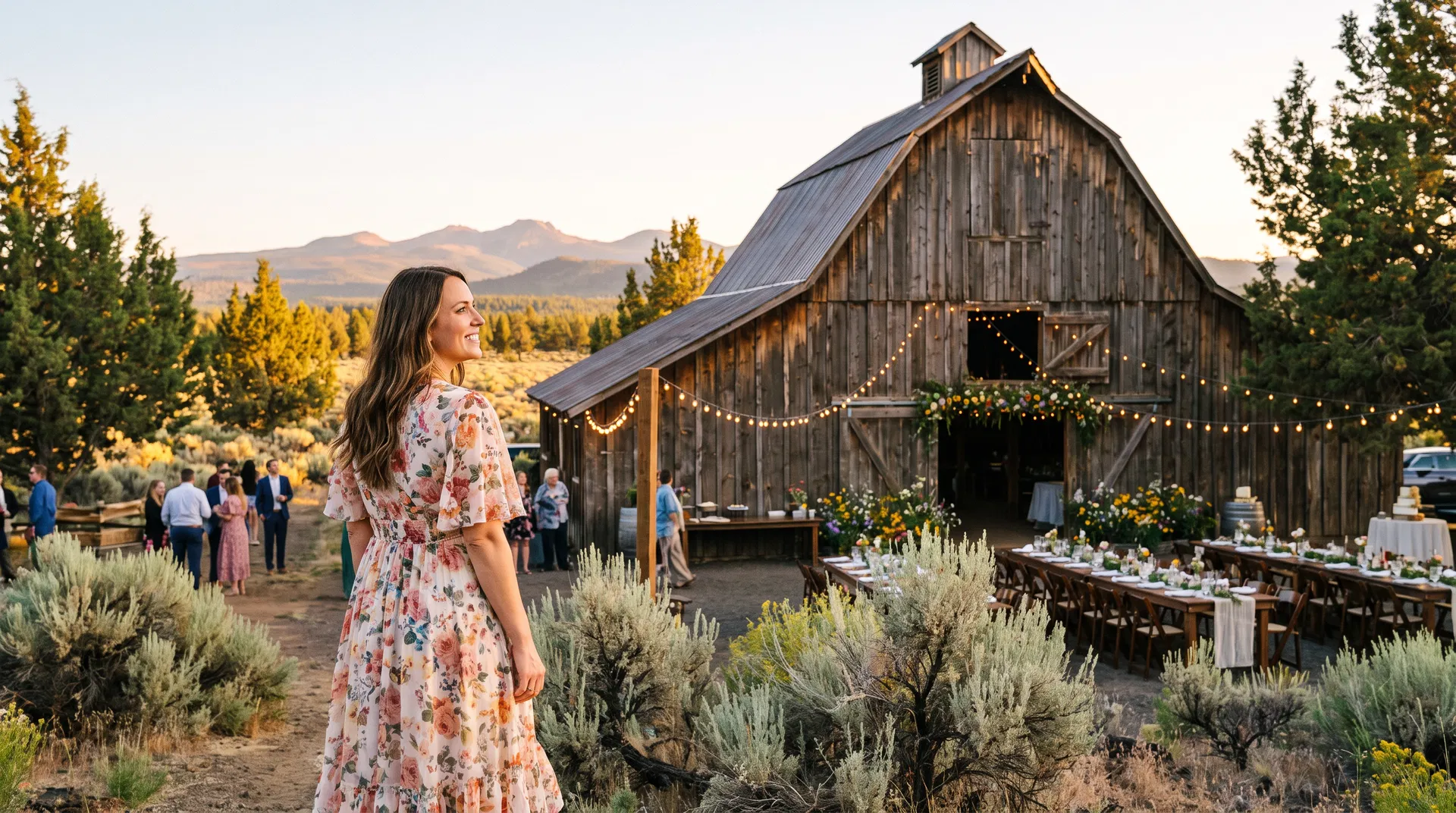
Barn weddings have become one of the most popular agritourism activities in Central Oregon. The combination of rustic agricultural aesthetics, scenic landscapes, and the desire for unique outdoor venues has made working farms and ranches attractive wedding destinations. A single barn wedding can generate $5,000–$20,000 in venue rental revenue — a meaningful supplement to agricultural income.
But barn weddings create a complex insurance situation that catches many operators off guard:
The Zoning Question Comes First
Before any insurance conversation, Crook County farm operators need to verify that their zoning allows barn weddings and events. Agricultural zoning in Oregon can be restrictive, and what constitutes "permitted use" versus "commercial use" varies by county and zoning district. Operating an event venue without proper zoning approval can void your insurance coverage — insurers won't cover activities that aren't legally permitted.
Crook County's planning department can advise on whether barn weddings are permitted on your specific parcel and what approvals may be required. This is a necessary first step before investing in event infrastructure or insurance.
Building Code and Fire Code Compliance
A barn used for agricultural storage has different code requirements than a barn used as an event venue. Once you invite the public into a structure for events, fire codes, occupancy limits, emergency egress requirements, and accessibility standards may apply that didn't apply to the agricultural use. Insurers will require the structure to be in compliance with applicable codes for its proposed use before providing coverage.
The Liability Coverage Gap
Your standard farm liability policy almost certainly does not cover event liability for barn weddings. You need either a specific event liability endorsement added to your farm policy, a standalone special events liability policy, or a commercial general liability policy that explicitly covers event venue operations.
Key coverage considerations for barn wedding venues include:
- Premises liability: Bodily injury or property damage to wedding guests on your property
- Liquor liability: Claims arising from alcohol served at the event — this is a major exposure and requires specific coverage
- Vendor liability: Whether your policy covers injuries caused by caterers, photographers, bands, or other vendors on your property
- Property coverage: Coverage for the barn structure itself at its replacement cost as an event venue (which may be significantly higher than its agricultural value)
- Business income: Coverage for lost venue rental revenue if the barn is damaged and unavailable for events
Requiring Vendor and Guest Insurance
Experienced barn wedding venue operators also require vendors (caterers, bartenders, photographers, bands) to carry their own liability insurance and name the venue as an additional insured. Many venues also require wedding couples to purchase event liability insurance for their specific event. These requirements transfer some risk to the parties most directly responsible for specific activities — but they don't replace the venue's own coverage.
Farm Stay and Overnight Guest Coverage
Farm stays — where guests pay to spend one or more nights on a working farm or ranch — are a growing agritourism category in Central Oregon. Whether it's a renovated farmhouse, a cabin, a yurt, or a glamping tent, hosting overnight guests creates insurance needs that go well beyond a standard farm policy.
Key coverage considerations for farm stays include:
- Premises liability for guests: Injuries to overnight guests anywhere on the property, including farm areas, trails, and outbuildings
- Property coverage for guest accommodations: The structure(s) used for guest lodging, insured at replacement cost for their hospitality use
- Personal property of guests: Some policies include coverage for guests' belongings; others don't
- Food liability: If you serve meals or provide food as part of the farm stay experience
- Business income: Lost revenue from farm stay bookings if accommodations are damaged and unavailable
- Workers' compensation: If you have employees who assist with farm stay operations
Note that platforms like Airbnb and VRBO provide some host protection, but these protections have significant limitations and exclusions. They are not a substitute for proper farm stay insurance. If you're listing farm stay accommodations on these platforms, you should still have your own dedicated coverage.
U-Pick Operations: The Liability You Don't See Coming
U-pick operations — where customers come to the farm to pick their own strawberries, lavender, sunflowers, pumpkins, Christmas trees, or other crops — seem like low-risk activities. In practice, they create meaningful liability exposure that standard farm policies don't cover.
Consider the scenarios:
- A customer trips on uneven terrain in the pumpkin patch and breaks a wrist
- A child falls from a hay wagon during a farm tour
- A customer has an allergic reaction to a product purchased at your farm stand
- A visitor is injured by farm equipment or animals while on the property
- A customer slips in a muddy field and suffers a back injury
Oregon's agritourism immunity statute provides some protection for inherent risks, but none of these scenarios are clearly "inherent risks" that a customer would reasonably expect. Each represents potential liability that your standard farm policy may not cover.
U-pick operations need an agritourism liability endorsement or a commercial general liability policy that explicitly covers public-access agricultural activities. The cost is typically modest — often $500–$1,500 per year for a small U-pick operation — but the protection it provides is significant.
Seasonal Events: Pumpkin Patches, Corn Mazes, and Harvest Festivals
Seasonal agritourism events — pumpkin patches, corn mazes, harvest festivals, Christmas tree farms, Easter egg hunts — are among the most popular agritourism activities in Central Oregon. They can draw hundreds or thousands of visitors over a season and generate substantial revenue.
They also create concentrated liability exposure. A pumpkin patch that draws 2,000 visitors over six weekends has 2,000 opportunities for a slip-and-fall, a child's injury, a food illness claim, or a parking lot accident. A corn maze that operates after dark has additional safety considerations. A harvest festival with food vendors and live music has liquor liability, food liability, and crowd management considerations.
Coverage for seasonal events typically requires:
- An agritourism liability endorsement on your farm policy, or a standalone commercial general liability policy
- Liquor liability coverage if alcohol is served or sold
- Food liability coverage if food is prepared or sold on-site
- Event cancellation coverage if you want protection against weather-related or other cancellations
- Workers' compensation if you hire seasonal staff for the events