



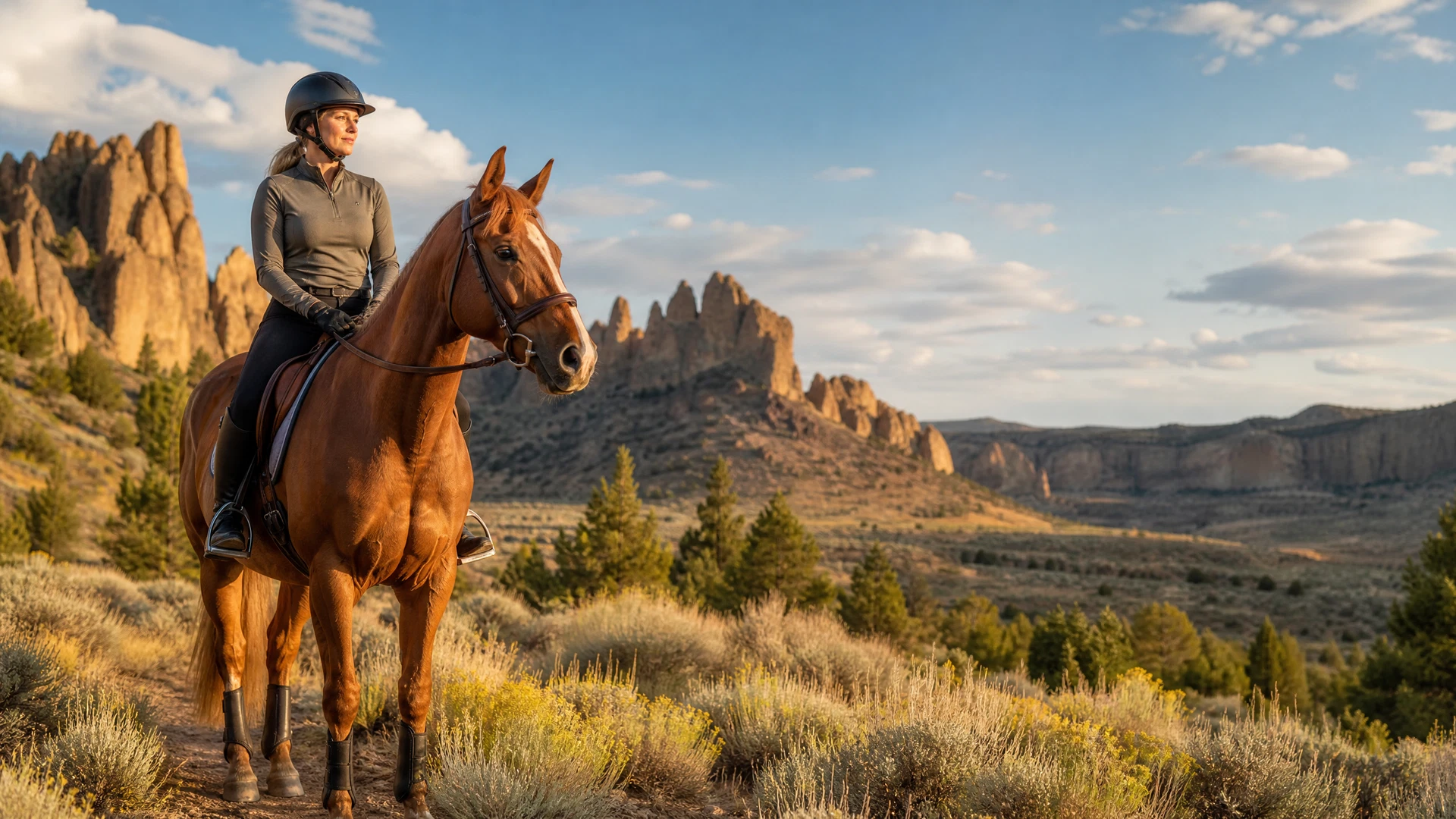

Oregon is horse country. From the working ranch horses of Crook County and the trail horses of the Ochoco Mountains to the competitive sport horses of the Willamette Valley and the cutting horses of Eastern Oregon, the state is home to hundreds of thousands of horses and the families who care for them. Every one of those horses represents a significant financial investment — and a unique set of risks that standard homeowner's and farm policies were never designed to cover.
Equine insurance is a specialized category of coverage that addresses the specific risks of horse ownership: the sudden death of a valuable animal, a catastrophic veterinary bill, a permanent injury that ends a horse's career, and the liability exposure that comes with any animal capable of injuring a person or destroying property. This guide explains every type of equine and equestrian insurance available to Oregon horse owners, how each coverage works, what it costs, and how to build a program that matches your situation — whether you own one trail horse or operate a full commercial equine facility.
Why Standard Policies Fall Short for Horse Owners
Many Oregon horse owners assume their homeowner's policy or farm policy covers their horses. In most cases, it does not — at least not adequately. Standard homeowner's policies typically exclude equine liability or cap it at a level far below the actual exposure. A horse that escapes and causes a vehicle accident on a rural Oregon highway can generate liability claims well into six figures. A horse that injures a visitor to your property can result in medical bills and legal costs that exceed any homeowner's policy limit.
Farm policies are better suited to horses than homeowner's policies, but they still require specific equine endorsements to cover mortality, major medical, and loss of use. Without those endorsements, a farm policy covers the barn and the fencing — but not the horses inside. The United States Equestrian Federation (USEF) notes that many horse owners discover these gaps only after a loss, when it is too late to add coverage.
Oregon's equine activity liability statute (ORS 30.687–30.697) provides some protection for equine activity sponsors and professionals against claims from participants who assume the inherent risks of equine activities. But this protection is not absolute — it does not apply to negligence, and it does not cover property damage or injuries to non-participants. Dedicated equine insurance fills the gaps the statute leaves open.
The Core Types of Equine Insurance Coverage
1. Mortality Insurance (Full and Limited)
Mortality insurance is the foundation of any equine insurance program. It functions similarly to life insurance for a horse — if the horse dies from a covered cause, the policy pays the declared value of the animal. Full mortality insurance covers death from any cause: illness, injury, accident, humane destruction, or theft. It requires a veterinary health certificate confirming the horse has no pre-existing conditions at the time of application, and it is typically required by insurance companies when you also carry major medical or surgical coverage.
Limited mortality insurance covers death from specified causes only — most commonly accidents and transportation incidents. It does not require a full veterinary health exam, making it a practical option for horses being shipped long distances or competing at events away from home. If your horse is being hauled from Central Oregon to a competition in the Willamette Valley, a limited mortality policy provides meaningful protection for the transit period at a fraction of the cost of full mortality coverage.
Most insurance companies impose age limits on mortality coverage. Horses older than 15–20 years typically face restricted availability or higher premiums, and some carriers will not issue new mortality policies for senior horses at all. If your horse is approaching that age threshold, locking in coverage while the horse is still insurable is worth considering.
2. Major Medical Insurance
Major medical insurance covers veterinary costs associated with illness or injury: diagnostic procedures, hospitalization, medication, and follow-up care. It works similarly to health insurance for people — there is a deductible per incident, a per-incident coverage limit, and an annual maximum. Policies are subject to exclusions for pre-existing conditions, and underwriters review each policy at renewal. If your horse has a colic episode that requires surgery and the insurance company pays a claim, the policy may exclude colic at the next renewal.
Equine veterinary costs in Oregon have risen substantially over the past decade. A colic surgery at an Oregon State University Veterinary Teaching Hospital or a private equine surgical facility can run $5,000–$15,000 or more. A serious tendon injury requiring regenerative therapy, stall rest, and rehabilitation can cost $3,000–$8,000 over the course of treatment. Major medical insurance is particularly valuable for sport horses and working horses whose veterinary care is more intensive than the average pleasure horse.
3. Surgical Insurance
Surgical insurance is a narrower form of medical coverage that applies only when a horse requires an operation. It covers the surgeon's fee and the cost of anesthesia but typically does not cover pre- and post-operative hospitalization, which can represent a significant portion of the total bill. For horse owners who cannot afford full major medical coverage, surgical insurance provides a meaningful safety net against the most catastrophic single expense in equine veterinary care — emergency surgery.
4. Loss of Use Insurance
Loss of use insurance protects you if your horse is permanently injured or becomes ill to the point where it can no longer perform the purpose for which it was purchased. The policy pays a predetermined percentage of the horse's declared value — typically 60–75% — when a licensed veterinarian certifies that the horse is permanently unable to perform its intended use. Loss of use coverage is most commonly purchased for sport horses, performance horses, and horses used in commercial operations where the animal's ability to work has direct economic value.
Loss of use claims are among the most contested in equine insurance. Insurance companies require thorough veterinary documentation, and some policies require that the horse be euthanized or surrendered to the insurer in order to collect. Before purchasing loss of use coverage, read the policy language carefully and understand exactly what the insurer requires to approve a claim.
5. Equine Liability Insurance
Equine liability insurance covers third-party bodily injury and property damage claims arising from your horse's actions. This includes injuries to riders, handlers, visitors, and bystanders — as well as property damage caused by a horse that escapes, kicks a vehicle, or destroys a neighbor's fence. Oregon's equine activity liability statute provides some protection for equine activity sponsors, but it does not eliminate the need for liability insurance. Negligence claims, injuries to non-participants, and property damage claims all fall outside the statute's protection.
Personal equine liability is appropriate for individual horse owners who keep horses for personal use. Commercial equine liability is required for boarding facilities, riding instructors, trainers, trail ride operators, and anyone who charges a fee for equine-related services. The distinction matters — a personal liability policy will not cover a claim arising from a commercial activity, and many horse owners who give occasional lessons or board a friend's horse for a fee are unknowingly operating without adequate coverage.
6. Care, Custody, and Control Coverage
Care, custody, and control (CCC) coverage is essential for anyone who is responsible for horses they do not own — boarding facility operators, trainers, farriers, veterinarians, and anyone else who takes temporary possession of another person's horse. Standard liability policies typically exclude damage to property in your care, custody, or control. If a horse in your barn is injured, becomes ill, or dies while in your care, your general liability policy will not cover the claim. CCC coverage fills that gap and is a non-negotiable component of any commercial equine operation's insurance program.
Equestrian Business and Facility Insurance
Horse owners who operate any kind of equestrian business — boarding, training, lessons, breeding, trail rides, or equine therapy — need a commercial equine insurance program that goes beyond individual horse coverage. The key components of a commercial equine facility policy include:
| Coverage Type | Who Needs It | What It Covers |
|---|---|---|
| Full Mortality | All horse owners with valuable horses | Death from any cause including illness, injury, theft, and humane destruction |
| Limited Mortality | Horses in transit or at events | Death from accidents and specified causes during transport or competition |
| Major Medical | Sport horses, working horses, high-value horses | Vet costs for illness and injury: diagnostics, hospitalization, medication |
| Surgical | Any horse owner seeking surgical-only protection | Surgeon's fee and anesthesia for covered surgical procedures |
| Loss of Use | Performance and commercial horses | 60–75% of declared value if horse is permanently unable to perform its purpose |
| Personal Liability | Individual horse owners | Third-party injury and property damage caused by your horse |
| Commercial Liability | Boarding, training, lessons, trail rides | Liability for equine business operations and activities |
| Care, Custody & Control | Boarding facilities, trainers, farriers | Damage to horses in your care that you do not own |
| Stable Property | Barn and facility owners | Buildings, fencing, tack, equipment, feed, and supplies |
| Commercial Auto / Trailer | Anyone hauling horses commercially | Horse trailer and towing vehicle used for equine business purposes |
Stable and Property Coverage
A commercial equine facility needs property insurance that covers the barn, arena, fencing, tack room, feed storage, and all the equipment that makes the operation run. Standard commercial property policies may not cover agricultural structures or may undervalue them significantly. A farm package policy with equine endorsements is typically the most cost-effective way to cover a horse facility's physical assets, and it can be structured to include the horses themselves, the buildings, the equipment, and the liability exposure in a single policy.
Workers' Compensation for Equine Businesses
Oregon law requires workers' compensation insurance for any business with employees, including equine operations. Horse-related work is physically demanding and carries a high injury rate — falls, kicks, bites, and equipment accidents are common. If you employ barn staff, exercise riders, grooms, or instructors, workers' compensation is not optional. Oregon's workers' compensation system is administered through the Workers' Benefit Fund, and penalties for non-compliance are significant. Learn more about workers' compensation requirements for Oregon businesses.
Horse Trailer Insurance
A horse trailer is one of the most expensive pieces of equipment a horse owner can own, and it carries some of the most valuable cargo imaginable. Horse trailer insurance is typically handled separately from equine insurance and can be covered under a personal auto policy with a trailer endorsement, a commercial auto policy, or a farm package policy. The key questions to answer are: Is the trailer used for personal use only, or is it used for commercial purposes? Does the trailer coverage include the horses inside during transit? And does the policy cover the full replacement cost of the trailer, or only its depreciated value?
Oregon horse owners who haul horses to competitions, trail rides, or veterinary appointments should confirm that their trailer policy and their equine mortality policy together provide seamless coverage for both the trailer and the horses in transit. Gaps between the two policies are common and can leave a horse owner with no coverage for a horse that dies in a trailer accident.
Equine Insurance for Central and Eastern Oregon
Central and Eastern Oregon present specific equine insurance considerations that horse owners in more urban areas may not face. Wildfire risk is a significant concern for horse properties in Crook County, Deschutes County, Jefferson County, and Harney County. A wildfire that destroys a barn, burns fencing, or forces an emergency evacuation can result in losses that dwarf the value of any individual horse. Farm package policies for Oregon horse properties should include adequate coverage for outbuildings, fencing, and the additional living expenses associated with emergency evacuation.
Remote location also affects veterinary access. Horse owners in rural Eastern Oregon may face longer transport times to reach an equine surgical facility, which can affect outcomes for colic emergencies and other time-sensitive conditions. Major medical insurance that covers emergency transport costs and out-of-area veterinary care is particularly valuable in areas where the nearest equine hospital is more than an hour away.
Explore agricultural insurance options for Central Oregon farm and ranch operations, including coverage for livestock, equipment, and farm structures that complement a dedicated equine insurance program.
Prineville Insurance
Get an Equine Insurance Review
Prineville Insurance works with carriers that specialize in equine and farm coverage across Central Oregon, Eastern Oregon, and the Pacific Northwest. We can help you find mortality, medical, liability, and stable coverage that fits your horses and your budget.
How Much Does Equine Insurance Cost in Oregon?
Equine insurance premiums vary based on the horse's declared value, age, breed, use, health history, and the coverage types selected. As a general benchmark, full mortality and major medical insurance combined typically costs between 2.5% and 4% of the horse's declared value per year. A horse declared at $10,000 might cost $250–$400 per year to insure for mortality and major medical. A horse declared at $50,000 might cost $1,250–$2,000 per year for the same coverage.
Factors that increase equine insurance premiums include: older age (horses over 15 typically face surcharges), high-risk disciplines (racing, eventing, and polo carry higher rates than trail riding), prior claims history, and pre-existing conditions that require exclusions. Factors that can reduce premiums include: a clean health history, a lower deductible option, and bundling equine coverage with a farm package policy from the same carrier.
Personal equine liability insurance is generally affordable — annual premiums for personal liability coverage often range from $150–$400 depending on the number of horses and the coverage limit. Commercial equine liability for a boarding or training operation is more expensive and depends on the size of the operation, the number of horses in care, and the activities offered.
Oregon-Specific Equine Insurance Considerations
Oregon's equine activity liability statute (ORS 30.687–30.697) is an important piece of the legal landscape for Oregon horse owners and equine businesses. The statute provides that equine activity sponsors and equine professionals are generally not liable for injuries to participants that result from the inherent risks of equine activities — defined broadly to include the unpredictable nature of horses, the hazards of the terrain, and the participant's own negligence. However, the statute's protection is lost if the sponsor or professional is negligent, fails to post required warning signs, or provides faulty equipment.
Oregon also has specific requirements for equine businesses that operate as LLCs or corporations. Forming a business entity can provide an additional layer of liability protection, but it does not replace the need for commercial equine liability insurance. An LLC protects personal assets from business liabilities — but only if the business itself has adequate insurance to pay claims that exceed its assets.
Horse property in Oregon may also be subject to the state's right-to-farm protections under ORS 30.930–30.947, which limit nuisance claims against agricultural operations including horse facilities. Understanding how these statutes interact with your insurance coverage is part of a comprehensive risk management strategy for Oregon equine operations.
Building a Complete Equine Insurance Program
The right equine insurance program depends on your specific situation — the number and value of your horses, how they are used, whether you operate a commercial equine business, and what other insurance you already carry. Here is a framework for thinking through the coverage decisions:
For the individual pleasure horse owner: Start with personal equine liability insurance if your homeowner's policy does not adequately cover equine liability. Add full mortality if the horse has significant financial value. Consider major medical if you would pursue aggressive veterinary treatment for a serious illness or injury.
For the sport horse or performance horse owner: Full mortality and major medical are typically essential. Loss of use coverage is worth considering for horses whose competitive career has direct economic value. Make sure your trailer coverage includes transit mortality protection.
For the equine business operator: Commercial equine liability, care custody and control coverage, stable property insurance, and workers' compensation (if you have employees) are the foundation. Add mortality and medical coverage for horses you own, and consider business income coverage if a loss would disrupt your operations.
For the horse property owner in a wildfire-prone area: Make sure your farm or homeowner's policy includes adequate coverage for outbuildings, fencing, and emergency evacuation costs. Consider a dedicated wildfire insurance review to confirm your property is adequately protected.
Related Insurance Resources for Oregon Horse Owners
Equine insurance is one component of a broader risk management strategy for Oregon horse owners and equine businesses. These related coverage areas are worth reviewing alongside your equine insurance program:
- Agricultural Insurance in Central Oregon — farm package policies, livestock coverage, and equipment protection
- Farm and Ranch Insurance — comprehensive coverage for Oregon farm and ranch operations
- Wildfire Insurance — protecting horse properties in Oregon's high-risk fire zones
- Home Insurance — coverage for the residence on your horse property
- Commercial General Liability — for equine businesses that need broader liability protection
- Workers' Compensation — required for equine businesses with employees in Oregon
- Surety Bonds — for equine auction houses, horse dealers, and other licensed equine businesses
- Horse Property Insurance in Central Oregon — what your homeowner's policy doesn't cover


