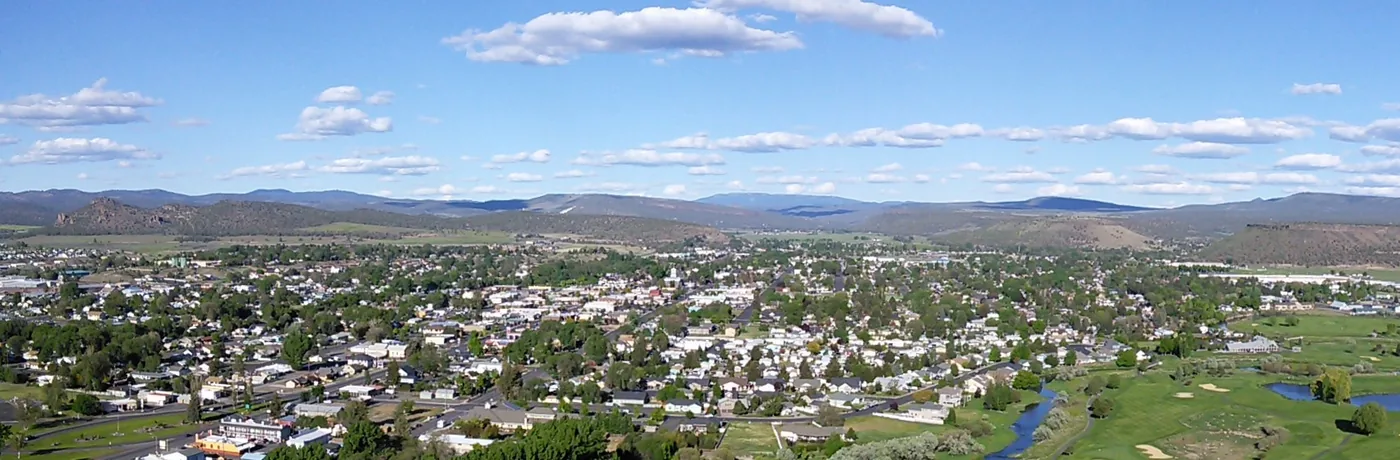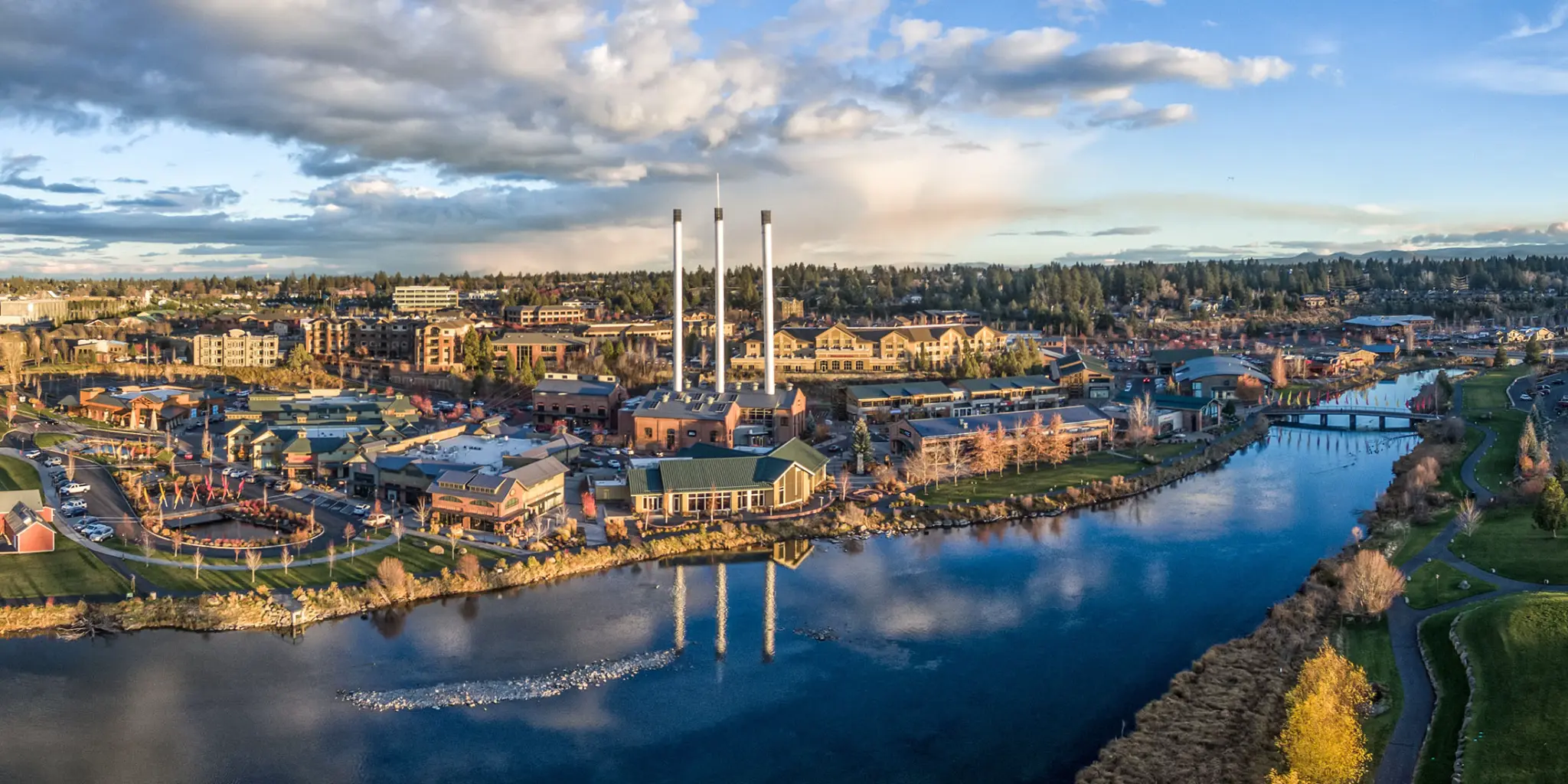



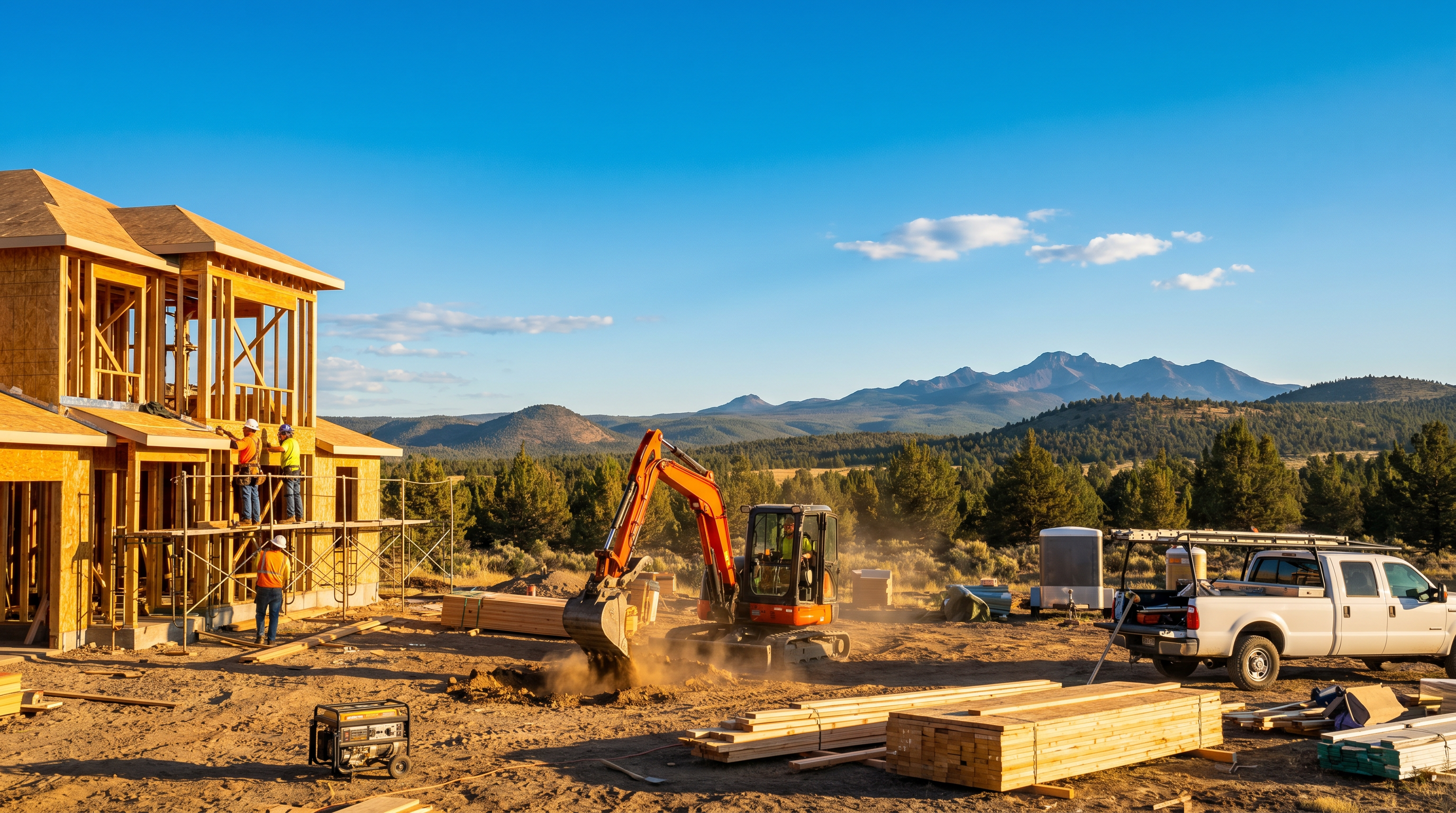
Crook County's housing supply has grown 10.6% since 2020 — second only to Deschutes County in the entire state. Meta's 4.6 million square foot data center campus has driven a construction wave that shows no signs of slowing. Jefferson County is adding residential subdivisions at a pace not seen in decades. For the plumbers, framers, electricians, excavators, roofers, and general contractors working across this region, the work is there. The question is whether your insurance is keeping up with the jobs you're actually taking.
Most contractors in Crook and Jefferson Counties carry insurance because Oregon's Construction Contractors Board (CCB) requires it to maintain a license. But carrying insurance and being properly covered are two very different things. The gap between the two is where contractors get hurt — not on the job site, but in the claims process, when they discover that the work they were doing, the equipment they were using, or the subcontractor who caused the damage wasn't actually covered by the policy they were paying for.
At Prineville Insurance, we've served the Central Oregon construction trades for 91 years. This guide addresses the specific coverage gaps we see most often — the ones that cost contractors real money when a claim hits.
Eight Coverages Every Central Oregon Contractor Should Carry
General Liability (Classified Operations)
Covers bodily injury and property damage arising from your work — but only for your listed classifications. Expanding your scope of work without updating your policy is one of the most common contractor coverage gaps.
Equipment Floater (Inland Marine)
Covers your tools and equipment in transit, at job sites, and in storage. Standard commercial property only covers equipment at your fixed business location — the floater fills the gap everywhere else.
Workers' Compensation
Required by Oregon law for any employees. Covers medical bills and lost wages for injured workers. Misclassifying employees as independent contractors is one of the most expensive mistakes a contractor can make.
Commercial Auto
Covers your work trucks, vans, and trailers for business use. Personal auto policies exclude business use — if you're hauling tools or driving to job sites, you need commercial auto coverage.
Builder's Risk
Covers the structure under construction against fire, theft, vandalism, and weather damage. Typically required by the project owner or lender. Does not cover your tools and equipment — that's the equipment floater's job.
Completed Operations Coverage
Covers claims that arise after a job is finished — a roof that leaks two years later, a deck that fails, a plumbing installation that causes water damage. Many cheap policies exclude this critical coverage.
Subcontractor Endorsements
Protects your policy when subcontractors work on your jobs. Without proper COI collection and endorsements, a subcontractor's claim can void your own coverage entirely.
Commercial Umbrella
Adds $1M–$5M of excess liability above your GL and commercial auto policies. A single serious injury on a job site can easily exceed standard policy limits — umbrella coverage is the safety net.
Is Your Contractor Policy Keeping Up With Your Work?
Prineville Insurance has served the Central Oregon construction trades since 1935. We work with multiple carriers to build contractor insurance programs that actually match the work you're doing — not just the minimum required to keep your CCB license active.
1. The Classification Trap: When Your Policy Doesn't Cover the Work You're Doing
This is the most common and most misunderstood gap in contractor insurance. Every general liability policy covers your work — but only the work that matches your listed classification of operations. Your classification is determined at policy inception based on the type of work you described to your agent. If your scope of work has expanded since then, your policy may not cover the new work at all.
Consider a framing contractor in Prineville who has been taking on occasional light demolition work as part of remodel projects. Their GL policy lists "carpentry — framing" as the classification. When a demo job goes wrong and a wall collapse injures a worker, the carrier investigates, determines the work was demolition rather than framing, and denies the claim on the basis that demolition is not a covered classification. The contractor is left with a six-figure liability exposure and no coverage.
This scenario plays out across every trade. Plumbers who do some light HVAC work. Electricians who install security systems. General contractors who take on roofing when their regular roofer is unavailable. Each of these represents a classification gap that can void coverage for claims arising from that unclassified work.
The solution is straightforward: review your policy's classification endorsements annually and update them every time your scope of work expands. If you're taking on work in Jefferson County or on commercial projects when your policy was written for residential Crook County work, that's a classification issue worth addressing before a claim forces the conversation. Talk to your contractor insurance agent about adding the appropriate classifications now.
2. Equipment Floaters: What Your Commercial Property Policy Doesn't Cover
Here is a fact that surprises many contractors: your commercial property insurance policy only covers equipment at your fixed business location — your shop, your yard, your office. The moment your excavator, skid steer, generator, or power tools leave your property and travel to a job site, your commercial property policy stops covering them. That coverage gap is exactly what an equipment floater (also called an inland marine policy) is designed to fill.
An equipment floater covers your tools and equipment wherever they go — in transit on the highway between Prineville and Madras, parked at a job site overnight, stored in a trailer on a remote project. It covers theft (a significant risk on Central Oregon job sites, where equipment theft costs the construction industry an estimated $300M–$1B nationally each year), fire, vandalism, and accidental damage.
The value of equipment a typical Central Oregon contractor has in the field is substantial. A compact excavator runs $80,000–$200,000. A skid steer is $40,000–$60,000. A generator and compressor together can be $15,000–$30,000. A full set of power tools for a framing crew can be $20,000–$40,000. Losing any of this to theft or damage without an equipment floater means paying out of pocket to replace it — and potentially shutting down your operation while you do.
Two important exclusions to know: equipment floaters typically do not cover vehicles (those need commercial auto coverage) and do not cover rented or borrowed equipment unless you specifically add a rented/borrowed equipment endorsement. If you regularly rent an excavator or borrow a lift from another contractor, ask your agent about adding that endorsement. The damage waiver offered at the rental counter is not a substitute for proper insurance coverage.
3. What Does Contractor Insurance Cost in Central Oregon?
Costs vary significantly based on trade type, annual revenue, number of employees, claims history, and coverage limits. Here are typical ranges for Oregon contractors:
| Coverage Type | What It Covers | Typical Annual Cost |
|---|---|---|
| General Liability | Bodily injury, property damage, completed operations | $800–$3,500+/year |
| Equipment Floater | Tools and equipment in transit and at job sites | $400–$2,000+/year |
| Workers' Compensation | Medical bills and lost wages for injured employees | Varies by payroll and trade |
| Commercial Auto | Work trucks, vans, trailers for business use | $1,200–$3,500+/year per vehicle |
| Builder's Risk | Structure under construction against fire, theft, weather | 1%–4% of project value |
| Completed Operations | Claims arising after job completion | Included in GL or add-on |
| Surety Bond | CCB-required financial guarantee | $100–$500+/year |
| Commercial Umbrella | Excess liability above GL and auto limits | $500–$1,500+/year |
4. Subcontractor Coverage: The COI Problem That Voids Your Policy
If you use subcontractors — and virtually every general contractor in Crook and Jefferson Counties does — you need to understand how your general liability policy treats subcontractor work. The short version: subcontractors are not automatically covered under your policy, and if you don't collect certificates of insurance (COIs) from every sub, a claim arising from their work may void your own coverage entirely.
Most commercial GL policies in the E&S (excess and surplus) market — which is where many Central Oregon contractors end up due to the region's wildfire exposure — include a subcontractor warranty endorsement. This endorsement states that if a claim arises from work performed by a subcontractor and you cannot produce a valid COI showing the sub carried their own GL and workers' comp, your policy will not cover the claim. The "hammer clause" in these endorsements is absolute: no COI, no coverage.
There is also the matter of completed operations coverage for subcontractor work. Standard ISO endorsement CG2294 — which many carriers add to contractor policies — eliminates completed operations coverage for damage caused by work performed by subcontractors on your behalf. This means that even if you do collect COIs, if a sub's work causes damage after the project is complete, your completed operations coverage may not respond. The sub's own completed operations coverage would need to respond instead — which is why verifying that subs carry adequate completed operations coverage is just as important as collecting their COI.
The practical solution: create a standard subcontractor onboarding process. Before any sub sets foot on your job site, collect their COI, verify that it names you as an additional insured, confirm that their GL limits meet your contract requirements, and confirm that their workers' comp is current. Keep these on file for at least five years after project completion — completed operations claims can arrive years after the work is done.
5. Workers' Compensation: Oregon's Strictest Requirement and Biggest Trap
Oregon has some of the strictest workers' compensation requirements in the country. If you have any employees — even one part-time worker, even a seasonal laborer — you are required to carry workers' compensation insurance. There is no minimum hours threshold, no minimum wage threshold, and no exception for family members working in the business. The only workers who can legally be excluded are sole proprietors and partners who file the appropriate exclusion with the Oregon Workers' Compensation Division.
The most expensive mistake a Central Oregon contractor can make is misclassifying employees as independent contractors to avoid workers' comp premiums. Oregon has strict tests for independent contractor status — the worker must be free from direction and control, must be engaged in an independently established business, and must meet specific criteria around tools, multiple clients, and business registration. Paying someone by the job rather than by the hour does not make them an independent contractor under Oregon law.
If a worker is injured and Oregon's Workers' Compensation Division determines they were actually an employee rather than an independent contractor, you face retroactive premium assessments, penalties, and personal liability for the injured worker's medical bills and lost wages — with no insurance coverage to respond. The premium savings from misclassification are never worth the exposure. Talk to your workers' compensation agent about proper classification before your next project.
Talk to a Central Oregon Contractor Insurance Specialist
Prineville Insurance works with contractors across Crook and Jefferson Counties — from sole-proprietor plumbers to multi-crew general contractors. We'll review your current policy, identify the gaps, and build a program that actually covers the work you're doing.
6. Commercial Auto: Why Your Personal Policy Won't Cover Your Work Truck
Personal auto insurance policies explicitly exclude vehicles used for business purposes beyond ordinary commuting. If you're driving your pickup truck to job sites, hauling tools and materials, towing a trailer with equipment, or using your vehicle in any way that generates business income, you need a commercial auto policy. This applies even if the truck is registered in your personal name.
The distinction matters most when a claim is filed. If you're in an accident while driving to a job site in Madras and your insurer determines the vehicle was being used for business purposes, your personal auto policy will deny the claim. You'll be personally responsible for the other driver's injuries and vehicle damage, plus your own vehicle repairs — with no insurance coverage to respond.
Trailers are a separate issue that many contractors overlook. Your commercial auto policy covers your truck, but trailers must be specifically listed on the policy to be covered for physical damage. An unscheduled trailer is typically covered for liability while attached to an insured vehicle, but not for collision or comprehensive damage to the trailer itself. If you pull a tool trailer, equipment trailer, or material trailer to job sites, make sure it's listed on your commercial auto policy with the appropriate physical damage coverage.
7. Completed Operations: The Coverage That Protects You After You Leave the Job Site
Completed operations coverage is the part of your general liability policy that protects you against claims arising from work you've already finished. It is one of the most important coverages a contractor can carry — and one of the most commonly limited or excluded in lower-cost policies.
Consider the exposure: a roofing contractor installs a new roof on a home in Prineville. Two years later, a flashing failure causes water intrusion that damages the interior. The homeowner files a claim. Without completed operations coverage, the roofing contractor has no insurance to respond to that claim — even though they were properly insured at the time of installation. The work is done, the policy period may have lapsed, and the coverage that should have protected them simply wasn't there.
For structural, roofing, plumbing, electrical, and HVAC contractors, completed operations coverage is not optional — it's the coverage that protects your business from the long tail of construction defect claims. Oregon's statute of limitations for construction defect claims is 10 years from substantial completion, which means a job you finish today could generate a claim a decade from now. Make sure your policy includes adequate completed operations limits and that the coverage is maintained continuously — gaps in coverage create gaps in protection for prior work.
Contractor Insurance Checklist for Crook & Jefferson County Trades
- Review your GL policy's classification of operations — make sure it covers every type of work you're currently taking on
- Add an equipment floater for all tools and equipment that leave your shop or yard
- Add a rented/borrowed equipment endorsement if you regularly rent excavators, lifts, or specialty tools
- Collect certificates of insurance from every subcontractor before they start work — and keep them on file for 5+ years
- Verify that subcontractor COIs name you as an additional insured and include completed operations coverage
- Carry commercial auto on every work vehicle — personal auto policies exclude business use
- List all trailers on your commercial auto policy with physical damage coverage
- Confirm your GL policy includes completed operations coverage — not just ongoing operations
- Carry workers' comp for every employee, including part-time and seasonal workers
- Review your CCB license requirements annually — minimum GL limits vary by license type and change over time
8. Oregon CCB Requirements: The Minimum Is Not Enough
Oregon's Construction Contractors Board requires all licensed contractors to maintain general liability insurance, a surety bond, and workers' compensation (if they have employees). The minimum GL limits depend on your license type: residential contractors need $100,000–$500,000 per occurrence; Commercial Level 1 requires $500,000 per occurrence with a $1M aggregate; Commercial Level 2 requires $500,000 per occurrence with a $2M aggregate.
Here is the critical point: the CCB minimums are not adequate limits for most Central Oregon contractors. They are the floor, not the ceiling. A single serious injury on a job site — a worker falling from scaffolding, a bystander struck by equipment, a homeowner's property damaged by a fire started during construction — can easily generate a claim that exceeds $500,000. If your policy limits are at the CCB minimum, you are personally responsible for any amount above those limits.
The solution is a combination of adequate primary GL limits and a commercial umbrella policy that adds $1M–$5M of excess coverage above your primary limits. For contractors working on commercial projects, data center construction, or any project with significant property values at stake, an umbrella is not a luxury — it's a basic risk management tool. The annual cost of a $1M commercial umbrella is typically $500–$1,500, which is a fraction of the exposure it covers.
Frequently Asked Questions: Contractor Insurance in Central Oregon
Related Insurance Resources
Don't Let a Coverage Gap Cost You the Business You've Built
Central Oregon's construction boom is creating real opportunity — and real exposure. Prineville Insurance has served the trades in Crook and Jefferson Counties for 91 years. We'll make sure your policy covers the work you're actually doing, the equipment you're actually using, and the subcontractors you're actually working with.