



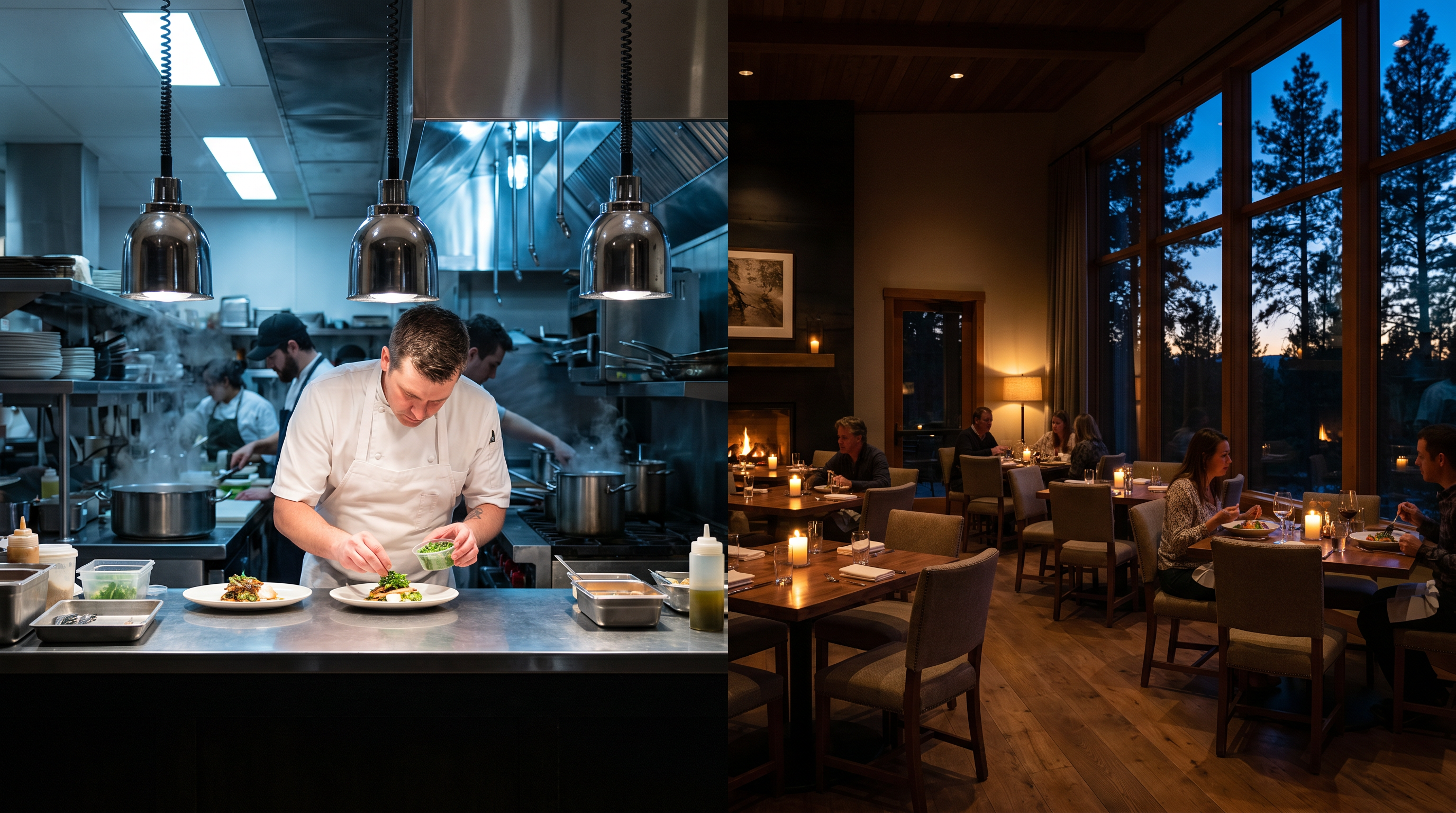
Running a restaurant in Oregon is one of the most rewarding — and most challenging — things a small business owner can do. The margins are tight, the hours are long, and the risks are everywhere: a kitchen fire that shuts you down for three months, a patron who sues after slipping on a wet floor, a refrigeration failure that wipes out $8,000 in perishable inventory, or a former employee who files an EPLI claim. Any one of these events can end a restaurant that wasn't properly insured.
Oregon's food service industry is vibrant and growing — from Bend's thriving restaurant scene to the farm-to-table establishments in Prineville and the food trucks that follow Central Oregon's summer festival circuit. But the insurance landscape for restaurants is more complex than most owners realize. A standard small business insurance policy leaves dangerous gaps that food service operations simply can't afford. This guide covers everything Oregon restaurant owners need to know about insurance — what coverages you need, what they cost, and where the gaps are.
Eight Coverages Every Oregon Restaurant Needs
General Liability
Covers bodily injury and property damage claims from customers — slip-and-falls, burns, injuries on your premises, and damage to customer property. The foundation of any restaurant insurance program.
Liquor Liability
Covers claims arising from alcohol service — including injuries caused by over-served patrons. Oregon's dram shop laws make this coverage essential for any restaurant or bar that serves alcohol.
Commercial Property
Covers your building, kitchen equipment, hood systems, dining room furnishings, and inventory against fire, storm, vandalism, and other covered perils. Kitchen fires are the #1 property risk.
Food Spoilage & Contamination
Covers spoiled inventory from refrigeration failures, power outages, and contamination events. A single refrigeration failure can result in thousands of dollars in lost perishable inventory.
Workers' Compensation
Required by Oregon law for any business with employees. Restaurants have some of the highest workers' comp claim rates of any industry — from kitchen burns and cuts to slip-and-falls and lifting injuries.
Product Liability
Covers claims arising from foodborne illness, allergic reactions, and other injuries caused by food or beverages you serve. Essential for any food service operation.
Business Interruption
Covers lost income if your restaurant is forced to close due to a covered loss — keeping your business financially stable during repairs, cleanup, or health department closures.
Commercial Auto
Covers delivery vehicles, catering vehicles, and other vehicles used in your restaurant operations — including delivery driver liability and hired/non-owned auto coverage.
Is Your Oregon Restaurant Properly Covered?
Prineville Insurance works with commercial carriers that specialize in Oregon food service insurance — from fast-casual restaurants to fine dining, bars, cafés, and food trucks. Get a free quote tailored to your operation.
1. Liquor Liability: Oregon's Dram Shop Laws and Why They Matter
Oregon's dram shop statutes (ORS 471.565) allow injured parties to sue establishments that served alcohol to a visibly intoxicated person or a minor who then caused harm to themselves or others. In plain terms: if your bartender serves one too many to a patron who then drives home and injures someone, your restaurant can be named in the lawsuit.
These claims are not rare, and they are not small. A single liquor liability judgment can easily exceed $500,000 — and jury awards in Oregon have reached into the millions. Standard general liability policies typically exclude liquor liability or provide only limited coverage. Any Oregon restaurant, bar, or café that serves alcohol needs a dedicated restaurant insurance policy with liquor liability coverage at limits of at least $1 million per occurrence.
The cost of liquor liability coverage depends on your alcohol revenue as a percentage of total revenue. A restaurant where alcohol represents 20% of revenue will pay less than a bar where it represents 80%. Be honest with your agent about your alcohol revenue — misrepresenting this figure can void your coverage at claim time.
2. Kitchen Fire: The #1 Property Risk for Oregon Restaurants
Commercial kitchen fires are one of the leading causes of property losses for Oregon businesses. Grease fires, hood system failures, and electrical fires in commercial kitchens can cause devastating damage — and the business interruption that follows a serious kitchen fire can last three to six months or longer.
Commercial property coverage for restaurants needs to be written at replacement cost, not actual cash value — the difference between getting a new commercial range and getting a check for what your ten-year-old range was worth. It also needs to specifically cover your hood and suppression system, walk-in coolers and freezers, and any tenant improvements you've made to a leased space.
Business interruption coverage is equally critical. If a kitchen fire shuts you down for three months, business interruption coverage pays your ongoing expenses — rent, utilities, payroll — and replaces your lost income while you rebuild. Without it, a covered property loss can still put you out of business. Talk to your commercial property insurance agent about including business interruption in your restaurant policy.
3. What Does Restaurant Insurance Cost in Oregon?
Restaurant insurance costs vary significantly based on your restaurant type, seating capacity, annual revenue, alcohol service volume, and claims history. Here are typical ranges for Oregon food service operations:
| Coverage Type | What It Covers | Typical Annual Cost |
|---|---|---|
| General Liability (BOP) | Slip-and-falls, property damage, product liability | $1,500–$4,000/year |
| Liquor Liability | Over-service claims, dram shop liability | $1,000–$3,500/year |
| Commercial Property | Building, equipment, inventory, improvements | $1,200–$5,000/year |
| Food Spoilage | Refrigeration failure, power outage, contamination | $300–$800/year |
| Workers' Compensation | Employee injuries (required by Oregon law) | $3,000–$10,000/year |
| Business Interruption | Lost income during covered closure | Bundled with property |
| Commercial Auto | Delivery vehicles, catering vehicles | $1,500–$4,000/year |
| Full Program (mid-size restaurant) | All of the above combined | $8,000–$20,000/year |
4. Workers' Compensation: Oregon's Most Enforced Insurance Requirement
Oregon law requires workers' compensation insurance for any business with employees — no exceptions for part-time workers, seasonal staff, or family members. The Oregon Workers' Compensation Division actively enforces this requirement, and the penalties for operating without coverage include fines of up to $250 per day plus liability for all medical costs and lost wages for any injured employee.
Restaurants have some of the highest workers' compensation claim rates of any industry. Kitchen staff face constant exposure to cuts, burns, and slips on wet floors. Servers and bussers face lifting injuries and repetitive motion claims. Dishwashers face chemical exposure and slip-and-fall hazards. The combination of a high-turnover workforce and a physically demanding environment creates significant workers' comp exposure that must be properly rated and covered.
The good news: Oregon's workers' compensation system includes experience rating, which means restaurants with good safety records and low claims history pay lower premiums. Investing in kitchen safety training, non-slip mats, and proper lifting protocols pays dividends in lower workers' comp costs over time. Ask your workers' compensation insurance agent about Oregon's safety incentive programs.
5. Food Spoilage and Contamination: The Coverage Most Restaurants Skip
A refrigeration failure on a Friday night can wipe out an entire weekend's worth of perishable inventory — meat, seafood, dairy, produce — in a matter of hours. For a mid-size restaurant, that can represent $5,000 to $15,000 in lost inventory. A power outage that affects multiple refrigeration units can be even more devastating.
Food spoilage coverage is typically available as an endorsement on a commercial property policy or as part of a restaurant-specific BOP. It covers the cost of replacing spoiled inventory from equipment breakdown, power outages, and contamination events. The premium is modest — typically $300 to $800 per year — and the coverage can pay for itself in a single claim.
Food contamination coverage goes further — it covers the business interruption costs and cleanup expenses associated with a contamination event that forces you to close. If the Oregon Health Authority or your local health department orders you to close due to a contamination event, food contamination coverage pays your lost income and cleanup costs. This coverage is especially important for restaurants that have experienced health department scrutiny or operate in high-volume tourist markets where a contamination event can generate significant media attention.
Don't Wait for a Claim to Find the Gaps
Most restaurant owners discover their insurance gaps at claim time — when it's too late. Prineville Insurance offers a free coverage review for Oregon restaurants to identify gaps before they become problems. Call us or request a quote online.
6. Food Trucks and Catering Operations: Coverage That Travels With You
Central Oregon's food truck scene has exploded over the past decade — from Bend's Old Mill District to the summer festival circuit in Sunriver, Sisters, and Prineville. Food trucks and catering operations have insurance needs that are fundamentally different from brick-and-mortar restaurants, and a standard restaurant policy typically doesn't cover them.
A food truck needs commercial auto coverage for the vehicle itself, general liability coverage for operations at each location, and equipment coverage for the commercial kitchen built into the truck. If the truck is involved in an accident while traveling to an event, the commercial auto policy responds. If a customer is injured at the service window, the general liability policy responds. These coverages need to be coordinated — and they need to follow the truck wherever it goes.
Off-premises catering events require either a catering endorsement on your existing policy or a separate event liability policy. Many event venues and festival organizers require proof of event liability insurance as a condition of participation. If you cater private events, weddings, or corporate functions, make sure your policy includes coverage for off-premises operations and that your limits are adequate for the venues you work in. Contact Prineville Insurance to discuss food truck and catering coverage options.
7. Employment Practices Liability: The Coverage Oregon Restaurants Overlook
Restaurants have high employee turnover, a young and diverse workforce, and a culture of close physical proximity — all of which create significant employment practices liability (EPLI) exposure. EPLI covers claims from current and former employees alleging wrongful termination, discrimination, sexual harassment, retaliation, and wage and hour violations.
Oregon has some of the most employee-friendly labor laws in the country. Oregon's wage and hour laws, anti-discrimination statutes, and tip pooling regulations create a complex compliance environment for restaurant operators. A single EPLI claim — even one that is ultimately dismissed — can cost tens of thousands of dollars in legal defense costs. EPLI coverage pays those defense costs and any resulting judgments or settlements.
EPLI is not included in a standard BOP or general liability policy. It must be added as a separate policy or endorsement. For restaurants with five or more employees, EPLI coverage is strongly recommended. Learn more about EPLI insurance for Oregon employers in our dedicated guide.
Oregon Restaurant Insurance Checklist
Use this checklist to evaluate your current coverage against what a well-protected Oregon restaurant should carry:
- General liability with food service product liability endorsement
- Liquor liability (if serving beer, wine, or spirits)
- Commercial property covering kitchen equipment and hood systems
- Food spoilage and contamination coverage
- Workers' compensation (required by Oregon law)
- Business interruption / loss of income coverage
- Commercial auto for delivery or catering vehicles
- Employment practices liability (EPLI) for HR claims
- Cyber liability for POS and payment card data
- Umbrella policy for catastrophic liability events
Related Insurance Resources for Oregon Businesses
Restaurant insurance is part of a broader commercial insurance strategy. These related resources from Prineville Insurance cover topics that affect Oregon food service businesses:
Restaurant Insurance Oregon — Frequently Asked Questions
Oregon law requires workers' compensation insurance for any restaurant with employees. Commercial auto insurance is required for any vehicles used in business operations. Beyond those legal requirements, general liability, commercial property, and liquor liability (if serving alcohol) are strongly recommended and often required by landlords or lenders. A standard BOP (Business Owner's Policy) is a good starting point but typically needs to be supplemented with food service-specific endorsements.
Oregon law does not mandate liquor liability insurance, but Oregon's dram shop statutes (ORS 471.565) allow injured parties to sue establishments that served alcohol to visibly intoxicated individuals or minors who then caused harm. A single liquor liability claim can easily exceed $500,000. Any Oregon restaurant or bar that serves alcohol should carry liquor liability coverage with limits of at least $1 million per occurrence.
Product liability coverage — which is often included in a food service general liability policy — covers claims arising from foodborne illness, allergic reactions, and injuries caused by food or beverages you serve. Standard general liability may provide some protection, but a food service-specific policy with product liability is the correct coverage for any restaurant. Food contamination coverage (a separate endorsement) covers the cost of discarding contaminated inventory and the business interruption that follows a contamination event.
A basic BOP (general liability + commercial property) for a small Oregon restaurant typically runs $2,000–$5,000 per year. Adding liquor liability adds $1,000–$3,000 depending on your alcohol revenue percentage. Workers' compensation for a restaurant with 5 employees might run $3,000–$8,000 annually. A full insurance program for a mid-size Oregon restaurant — including GL, property, liquor liability, workers' comp, and food spoilage — typically runs $8,000–$20,000 per year. Contact Prineville Insurance at (541) 447-6372 for a quote specific to your operation.
Kitchen fires are the single largest property risk for Oregon restaurants — commercial kitchens account for a disproportionate share of commercial property losses. Liquor liability is the largest liability risk for bars and restaurants that serve alcohol, with individual claims frequently exceeding $500,000. Workers' compensation is the highest-frequency risk, with kitchen staff experiencing injury rates among the highest of any industry. A comprehensive restaurant insurance program must address all three.
Standard restaurant policies typically do not cover mobile food operations or off-premises catering events. Food trucks need a specialized policy that includes commercial auto, general liability, and equipment coverage that travels with the vehicle. Off-premises catering requires either a catering endorsement on your existing policy or a separate event liability policy. If you operate both a brick-and-mortar restaurant and a food truck, you need separate coverage for each operation. Prineville Insurance can build a program that covers both.
Oregon's Restaurant Community Deserves Better Insurance
You've built something real — a restaurant that feeds your community and reflects your craft. Don't let a coverage gap undo it. Prineville Insurance works with Oregon restaurants of all sizes to build comprehensive insurance programs that actually fit the food service business. Call us today for a free review.



