



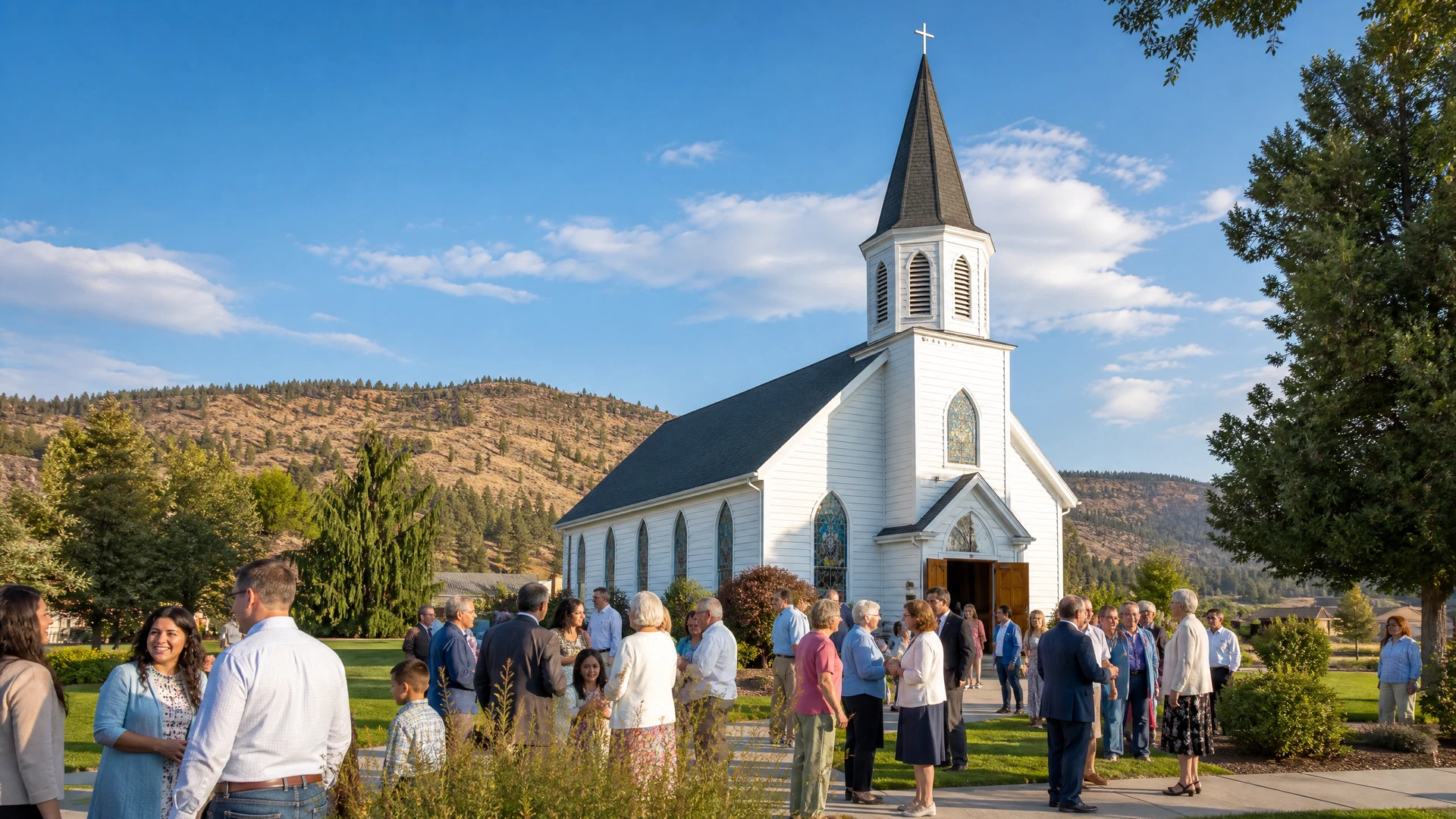

Churches, synagogues, mosques, temples, and other faith communities in Central Oregon serve far more than a spiritual function. They operate buildings, employ staff, transport congregants, host events, run youth programs, and often provide counseling and social services. Each of those activities carries a distinct set of risks — and a standard homeowners or commercial policy is rarely designed to address them.
Religious organization insurance is a specialized category of coverage built around the unique exposures that faith communities face. From property damage caused by a kitchen fire during a potluck dinner to a liability claim arising from a mission trip abroad, the right insurance program protects the ministry's financial foundation so it can continue serving the community. This guide walks through each coverage type, explains Oregon-specific requirements, and identifies the questions every church board should ask before the next renewal.
Why Standard Commercial Insurance Falls Short for Religious Organizations
A standard business owners policy (BOP) is designed for commercial enterprises — retail stores, offices, and service businesses. Religious organizations operate differently. They rely heavily on volunteers whose injuries may not be covered under a standard workers' compensation policy. They host events that draw large crowds of non-members. They provide counseling services that create professional liability exposure. They work with children and vulnerable adults in ways that create sexual misconduct liability that standard policies specifically exclude.
Carriers that specialize in religious organization insurance build their policies around these realities. A church package policy typically bundles property, general liability, sexual misconduct liability, and directors and officers coverage into a single form — often at a lower combined premium than purchasing each coverage separately from a standard commercial carrier. Working with an independent agent who has access to specialty religious organization markets is the most efficient way to find the right program for your congregation.
The Core Coverages Every Oregon Religious Organization Needs
1. Commercial Property Insurance
A church's property represents decades of community investment. Commercial property insurance covers the building structure, its contents, and specialized items unique to houses of worship — pews, pipe organs, stained glass windows, musical instruments, audio-visual equipment, and library collections. The policy should be written on a replacement-cost basis rather than actual cash value, because depreciated values rarely reflect what it would actually cost to rebuild or replace a historic sanctuary.
Property coverage also typically includes business income protection, which reimburses the organization for ongoing expenses — staff salaries, utilities, loan payments — if a covered loss forces the facility to close temporarily. For a congregation that depends on weekly offerings to meet its operating budget, this coverage can be the difference between a temporary disruption and a permanent closure.
Oregon churches in flood-prone areas should note that standard property policies do not cover flood damage. Flood insurance must be purchased separately, typically through the National Flood Insurance Program (NFIP). Given that most NFIP policies have a 30-day waiting period before coverage takes effect, purchasing flood coverage well in advance of storm season is essential. See our commercial flood insurance page for more information.
2. General Liability Insurance
General liability insurance protects the organization against third-party claims of bodily injury and property damage. A visitor who slips on an icy walkway, a child injured during a youth group activity, or a contractor who claims the church damaged their equipment during a renovation project — all of these scenarios can generate liability claims that general liability insurance is designed to address.
The standard recommendation for religious organizations is a minimum of $1 million per occurrence and $2 million aggregate. Larger congregations with significant programming, multiple facilities, or high-traffic community events should consider higher limits. An umbrella liability policy can provide an additional layer of protection above the primary general liability limits at a relatively modest cost.
3. Sexual Misconduct Liability
This is the coverage that religious organizations most frequently overlook — and the one that can generate the most financially devastating claims. Standard general liability policies specifically exclude sexual abuse and molestation claims. A separate sexual misconduct liability policy covers legal defense costs and damages arising from allegations of sexual abuse, whether the alleged perpetrator is a staff member, volunteer, or clergy.
Oregon's statute of limitations for civil claims of childhood sexual abuse has been extended significantly in recent years. Claims can now be filed decades after the alleged abuse occurred, meaning that historical incidents can generate current claims even under policies that were not in place at the time. Carriers that write religious organization insurance typically offer this coverage as a standard component of their church package, and many require the organization to maintain a formal child protection policy as a condition of coverage.
4. Directors and Officers (D&O) Insurance
Church boards and governing bodies make decisions about finances, employment, property, and programming that can generate lawsuits from members, employees, or third parties. Directors and officers insurance protects individual board members and officers from personal financial liability arising from their governance decisions. Without D&O coverage, a board member who votes to terminate an employee, redirect a designated fund, or approve a controversial program could face personal liability if the decision is later challenged in court.
D&O coverage is particularly important for larger congregations with significant assets, those that employ multiple staff members, and those that operate schools, daycare centers, or social service programs. See our Directors and Officers Insurance page for a detailed overview of this coverage.
5. Workers' Compensation Insurance
Oregon law requires any employer with one or more employees to carry workers' compensation insurance, and religious organizations are not exempt. A part-time music director, a full-time administrator, a custodian, or a youth pastor — each of these individuals is an employee whose on-the-job injury must be covered. Failure to carry required workers' compensation coverage in Oregon can result in penalties, stop-work orders, and personal liability for the organization's officers.
Volunteers present a separate question. Workers' compensation generally does not cover volunteers, which means a volunteer who is injured while setting up chairs, painting the fellowship hall, or working in the church kitchen may not have a covered claim under the workers' comp policy. A volunteer accident policy fills this gap by providing medical expense reimbursement for injured volunteers regardless of fault. See our workers' compensation insurance page for Oregon-specific requirements.
6. Religious Counseling Liability
Many pastors, priests, rabbis, and other clergy provide pastoral counseling as part of their ministry. If a counseling recipient later claims that the advice they received caused them harm — emotional distress, financial loss, or a deteriorated relationship — the organization can face a professional liability claim. Religious counseling liability insurance covers legal defense costs and damages arising from these claims, similar in concept to the professional liability coverage that therapists and social workers carry.
This coverage is especially important for organizations that offer structured counseling programs, employ licensed counselors on staff, or refer congregants to counseling services provided under the church's umbrella. Our professional liability insurance page provides additional context on how this coverage category works.
7. Commercial Auto Insurance
If the organization owns a van, bus, or other vehicle used to transport congregants, deliver meals, or conduct mission activities, commercial auto insurance is required. Personal auto policies do not cover vehicles used for organizational purposes. Church vans and buses — particularly 15-passenger vans — carry elevated rollover risk, and carriers may require driver screening and training programs as a condition of coverage.
Non-owned auto liability coverage extends protection to situations where volunteers or staff use their personal vehicles for church business — delivering food to homebound members, running errands for a church event, or transporting youth group participants. See our commercial auto insurance page for a full overview of fleet and non-owned auto coverage options.
8. Cyber Liability Insurance
Religious organizations store significant amounts of sensitive member data: names, addresses, phone numbers, email addresses, giving histories, and in some cases financial account information for recurring online donations. Cybercriminals specifically target nonprofits and religious organizations because they are perceived as having limited IT security infrastructure.
Oregon's Consumer Information Protection Act (ORS 646A.600) requires organizations that experience a data breach to notify affected individuals and, in some cases, the Oregon Attorney General. Cyber liability insurance covers the cost of breach notification, credit monitoring services, forensic investigation, public relations response, and third-party claims from individuals whose data was compromised. See our cyber liability insurance page for more detail on what a cyber policy covers.
9. Special Event Coverage
Churches host a wide range of events beyond regular worship services — Easter egg hunts, harvest festivals, vacation bible school, fundraising dinners, concerts, and community outreach programs. Whether these events are covered under the church's general liability policy depends on the nature of the event, its location, and the policy's terms. Events held off church property, events that involve alcohol service, or events that draw significantly larger crowds than typical services may require a separate special event policy.
Mission trips present a separate set of coverage questions. Domestic missions may be covered under the general liability policy, but international missions typically require a separate policy that provides worldwide liability coverage, travel medical insurance, and in some cases kidnap and ransom coverage for travel to high-risk regions. See our nonprofit insurance page for information on event and mission coverage options.
| Coverage | What It Protects | Oregon Requirement? |
|---|---|---|
| Commercial Property | Buildings, contents, income loss | No (but essential) |
| General Liability | Bodily injury, property damage claims | No (but essential) |
| Sexual Misconduct Liability | Abuse and molestation allegations | No (but essential) |
| Directors & Officers | Board governance decisions | No |
| Workers' Compensation | Employee on-the-job injuries | Yes — 1+ employees |
| Religious Counseling Liability | Pastoral counseling claims | No |
| Commercial Auto | Owned and non-owned vehicles | Yes — if vehicles owned |
| Cyber Liability | Data breaches, notification costs | No (but strongly recommended) |
| Special Event / Mission | Off-site events and mission trips | No |
| Umbrella Liability | Excess coverage above primary limits | No |
Oregon-Specific Considerations for Religious Organizations
Oregon's legal environment creates several considerations that are particularly relevant for religious organizations in the state. The Oregon Nonprofit Corporation Act (ORS Chapter 65) governs the formation and operation of nonprofit religious corporations, including requirements for board governance, financial reporting, and member rights. Compliance with these requirements is relevant to D&O coverage, as carriers may evaluate governance practices when underwriting the policy.
Oregon's extended statute of limitations for childhood sexual abuse claims means that historical incidents can generate current claims. Religious organizations that have operated for decades should discuss with their agent how their current policy addresses claims arising from past conduct, and whether tail coverage or a retroactive date endorsement is appropriate.
Oregon's wildfire risk is a property coverage consideration for churches in rural and semi-rural areas of Central and Eastern Oregon. Standard property policies may exclude or limit coverage for wildfire damage in high-risk zones, or may require defensible space and fire-hardening measures as a condition of coverage. See our wildfire insurance page for guidance on protecting Oregon properties in fire-prone areas.
Is Your Congregation Fully Protected?
Prineville Insurance works with religious organizations across Central Oregon to build comprehensive coverage programs. We represent 50+ carriers and can compare options across specialty church markets.
Building a Complete Church Insurance Program
The most effective approach to religious organization insurance is a comprehensive program review rather than purchasing individual policies in isolation. A church package policy from a specialty carrier bundles the core coverages — property, general liability, sexual misconduct liability, and D&O — into a single form with coordinated limits and no coverage gaps between policies. Additional coverages such as workers' compensation, commercial auto, cyber liability, and special event coverage are then layered on top of the package.
An independent insurance agent who works with religious organizations can access specialty carriers that standard commercial agents may not represent. These carriers understand the unique exposures of faith communities and often offer risk management resources — child protection policy templates, volunteer screening guidelines, and facility safety checklists — as part of the policy relationship. Prineville Insurance works with religious organizations throughout Central Oregon, from small rural congregations in Crook County to larger faith communities in Bend and Redmond.
Related coverage areas worth reviewing alongside your church insurance program include nonprofit organization insurance, employment practices liability insurance, and commercial general liability insurance. If your organization operates a school, daycare, or social service program, those activities may require separate coverage endorsements or standalone policies.
Questions to Ask Before Your Next Renewal
A church insurance review should address the following questions at minimum. Does the property policy cover replacement cost or actual cash value? Is sexual misconduct liability included, and what child protection policy requirements does it impose? Are volunteers covered under any policy for accidental injuries? Does the general liability policy cover events held off church property? Is cyber liability included or available as an endorsement? Does the D&O policy cover employment-related claims, or is a separate EPLI policy needed? Are mission trips — domestic and international — covered under the existing policy?
These questions do not have universal answers. The right coverage structure depends on the size of the congregation, the nature of its programming, the number of employees and volunteers, the value of its property, and the specific carriers available in the Oregon market. An independent agent can help you work through each question systematically and document the coverage decisions for the board's records.
Frequently Asked Questions
Do Oregon churches have to carry workers' compensation insurance?
Oregon law requires employers with one or more employees to carry workers' compensation insurance, and churches are not exempt. Even part-time employees such as a part-time music director or administrative assistant trigger the requirement. Volunteers are generally not covered under workers' comp, so a separate volunteer accident policy is worth discussing with your agent. The Oregon Workers' Benefit Fund administers the program; review ORS Chapter 656 for the current statutory requirements.
Is sexual misconduct liability included in a standard church general liability policy?
No. Most standard general liability policies specifically exclude sexual abuse and molestation claims. Religious organizations need a separate sexual misconduct liability endorsement or standalone policy. Given the severity of these claims and the long discovery periods in some states, this coverage should be treated as essential rather than optional. Carriers that specialize in religious organization insurance typically offer this as a standard component of their church package.
What happens to our insurance if we rent our facilities to outside groups?
When a church rents its facility to outside organizations — such as a community group, school, or event — the church's general liability policy may not automatically extend to those users. Best practice is to require outside groups to carry their own liability insurance and name the church as an additional insured on their policy. Your agent can help you review your facility-use agreement and confirm whether your policy covers third-party rental activities or whether a separate endorsement is needed.
Does our church need cyber liability insurance?
Yes, if your organization stores member data, processes online giving, or uses church management software. Religious organizations are frequently targeted by cybercriminals because they are perceived as having limited IT security. A data breach involving member names, addresses, and financial giving records can trigger notification obligations under Oregon's Consumer Information Protection Act (ORS 646A.600). Cyber liability insurance covers breach response costs, notification expenses, credit monitoring, and third-party claims arising from a data incident.
Talk to a Prineville Insurance Agent About Your Church's Coverage
We serve religious organizations throughout Central Oregon — from Prineville and Bend to Redmond, Madras, Sisters, and La Pine. Our agents understand the unique risks faith communities face and can help you build a program that protects your ministry, your staff, your volunteers, and your congregation.
References
- World Insurance Associates — The 7 Types of Insurance Coverage Every Church Should Consider (2023)
- Southern States Insurance — 15 Things You Need to Know About Church Insurance
- Oregon Legislative Assembly — ORS Chapter 656: Workers' Compensation
- Oregon Legislative Assembly — ORS 646A.600: Consumer Information Protection Act


