



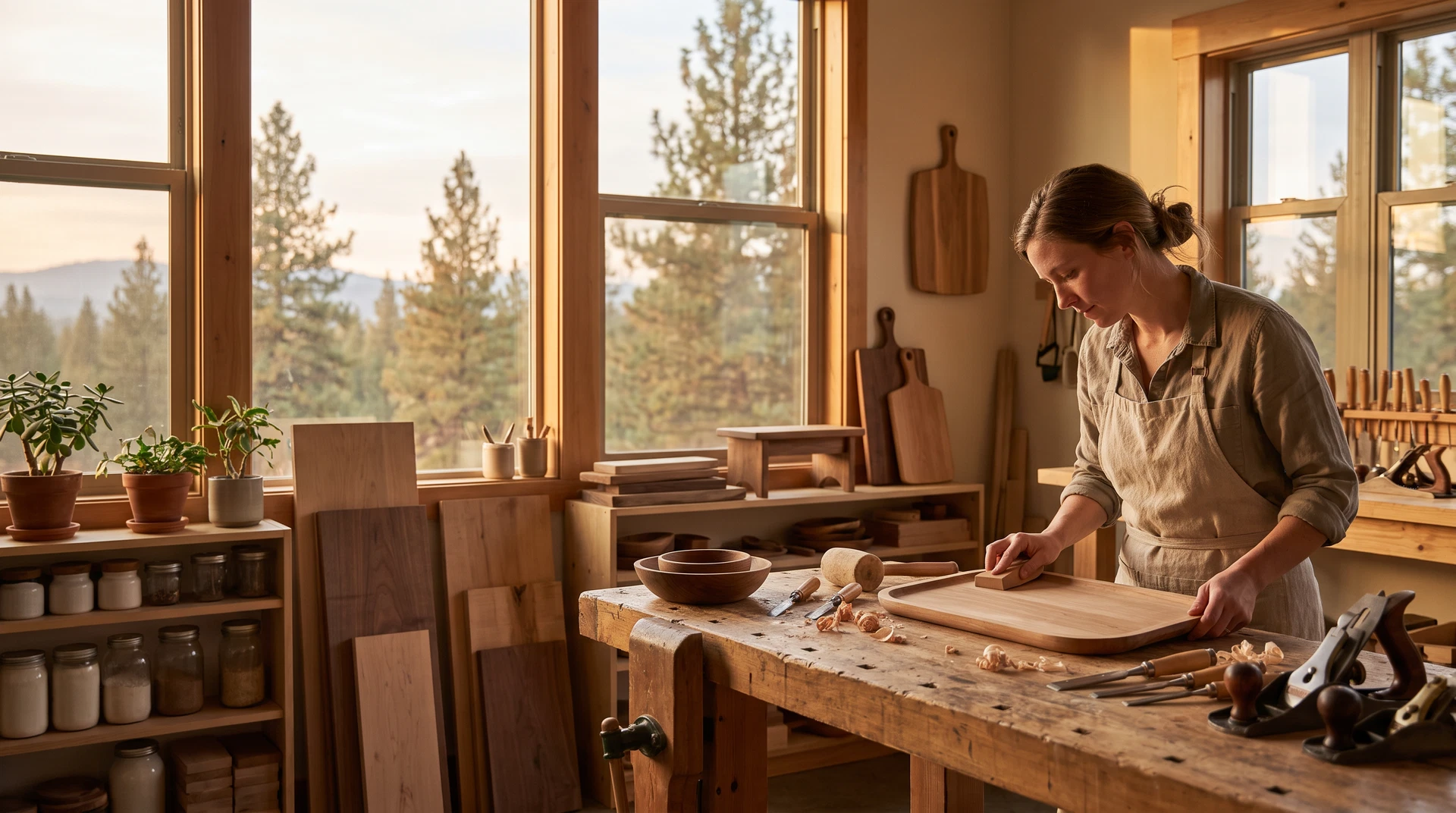

Oregon makers turn skill, patience, and local materials into products people want to keep, gift, wear, serve, or use every day. A first sale might happen from a kitchen table, a garage studio, Etsy shop, pop-up tent, or farmers-market booth. The business can grow quickly from there—and the insurance questions often grow with it.
Whether you build custom furniture, fabricate metal art, pour candles, make jewelry, print apparel, package food, sell vintage goods, or ship handmade products, the key question is not simply “Am I a small business?” It is whether your policy, property record, contracts, products, sales channels, and work locations match the operation you actually run. Our small-business insurance resource is a useful starting point, but every maker's coverage, limits, exclusions, eligibility, and claim outcome are determined by the policy and insurer—not a general checklist.
When a Hobby Becomes a Business Insurance Conversation
There is no single sales number that automatically creates the right insurance answer. The turning point is usually practical: you have inventory that would be costly to replace, tools or machinery that live at home, a customer visiting a studio, a market application asking for a certificate, products moving through the mail, paid helpers, business driving, or a contract that transfers risk to you. The U.S. Small Business Administration notes that a business should reassess its insurance when property or operations change, rather than simply renewing the same arrangement every year.[4]
Start with an honest one-page description of the work: what you make, what materials or heat-producing tools you use, where you work, who enters the space, who owns the stock and equipment, how you sell, where you ship, and whether you use a personal vehicle for deliveries. Compare those facts with your personal policy and a commercial general liability discussion. A personal-policy endorsement, business owners policy, specialty package, stand-alone coverage, or no available option may be appropriate depending on the facts; an agent can help you compare the questions without promising a particular result.
| Maker activity | Questions to bring to a coverage review | Useful records to keep |
|---|---|---|
| Home workshop or studio | Are tools, stock, business property, customer visits, dust/heat work, and detached structures described accurately? | Photos, receipts, serial numbers, equipment list, lease or workspace details. |
| Craft fair or farmers-market booth | Does the event require a certificate, additional insured status, a minimum limit, or specific products to be listed? | Vendor agreement, certificate request, booth map, market rules, product list. |
| Online shop and shipped orders | How are inventory, product allegations, customer information, payment systems, shipping, and off-premises property addressed? | Order records, product descriptions, shipment records, return process, data-security practices. |
| Custom woodworking or metalwork | Are installation, completed operations, product liability, tools, machinery, jobsite work, and client contracts part of the review? | Signed scope, photos, material invoices, safety procedures, tool inventory. |
| Cottage food or packaged food | What do ODA, local health authorities, the market, and the policy say about ingredients, preparation, labeling, samples, delivery, and events? | Labels, approved kitchen or exemption records, vendor/health documentation, ingredient sources. |
| Helpers, delivery, or growth | Are payroll, workers' compensation, vehicle use, hired help, subcontractors, additional locations, and sales volume up to date? | Payroll records, driving log, helper/subcontractor agreements, updated revenue estimate. |
Property, Tools, Stock, and the Places Your Work Travels
A maker's property can be spread across more places than a traditional storefront: a spare bedroom, shed, detached garage, shared studio, storage unit, market canopy, client location, vehicle, parcel carrier, or retail partner. That is why a review should separate the building from the business property inside it, and business property from stock that travels. Review how your policy addresses your workshop tools, raw materials, finished inventory, packaging, display equipment, laptops, card readers, and property temporarily away from the premises.
As values grow, a commercial-property insurance discussion can help you inventory the assets that support the business. If you deliver work, haul a booth, or use a vehicle to transport materials and products, our commercial auto insurance page outlines why business driving deserves its own policy conversation. The right answer depends on the vehicle, driver, ownership, use, cargo, route, and policy wording.
Product Liability Is a Product-and-Process Question
Makers are often proud of the care they put into each item. That care is important, but it does not eliminate the possibility that a customer could allege injury or property damage after a product is made, altered, packaged, installed, sold, or shipped. The SBA lists product liability as a coverage consideration for manufacturers, wholesalers, and distributors.[4] A hand-poured candle, children's item, custom shelf, food product, skincare item, metal fixture, or electrical accessory can present different questions.
Keep detailed product descriptions, purchase sources, batch or order records when practical, instructions or warnings when appropriate, photographs, and a clear return process. The Consumer Product Safety Commission offers small-business guidance and product-specific education because no one-size-fits-all consumer-product rule applies to every maker.[5] Regulatory compliance and insurance are separate matters: a policy does not prove that a product complies, and compliance does not establish that a policy will respond to a claim. The useful next step is to explain the actual product and sales process to your insurer or agent.
Bring the Maker Details—Not Just a Sales Total
For a useful insurance conversation, gather your product list, market contracts, inventory estimate, equipment list, home/workspace details, delivery use, online-store process, and any certificate requirements. Prineville Insurance can help organize the coverage questions as you compare available options. Every insurer determines eligibility, terms, limits, deductibles, pricing, and coverage based on its own underwriting and policy language.
Farmers Markets, Pop-Ups, and Food Products Require Early Planning
A Saturday market can look simple from the customer side, but a vendor may be working under a detailed event agreement. Oregon Farmers Markets Association explains that licensing responsibility can vary by product type: ODA is involved with categories including processed foods and bakeries, local health departments govern ready-to-eat booths and mobile food units, and OLCC regulates alcohol.[2] It also notes that vendors may encounter insurance and business-registration questions as part of the market process. Read the exact market rules, do not assume one event's certificate requirement applies everywhere, and allow time before an application deadline.
For makers who sell food, Oregon Department of Agriculture says some cottage foods may qualify for an exemption under specific rules and a current annual-sales limit, while food vendors at farmers markets generally need a license unless an exemption applies.[1] The market does not make that decision for you. Confirm your specific product, kitchen, labeling, sales channel, sampling, and licensing status with ODA or the appropriate local authority. Our food-industry insurance page can help you frame the commercial coverage discussion, while the separate regulatory questions should go to the agency or market manager.
Online Sales Add Data, Shipping, and Contract Questions
A web shop may receive names, shipping addresses, contact details, payment confirmations, messages, and sometimes custom specifications. Safeguard the information you hold, use strong account security, understand platform and payment-provider terms, and document how customer information is stored and accessed. If your sales process handles meaningful customer data, our commercial cyber liability resource describes the kind of questions a business should raise with a carrier.
Marketplace policies, platform protections, chargeback procedures, postal or carrier claims, and customer waivers are not all the same as insurance you purchase for your own business. Review the terms that apply to your store, shipping method, contract work, consignment relationships, and products. A local retail maker with a showroom, regular customer traffic, or a leased space can also compare its exposure with our retail-business insurance guide.
Growth Changes the Questions Again
Hiring a helper, accepting a wholesale order, adding a laser, kiln, saw, welding equipment, commercial kitchen, delivery route, or second market can change the business profile. In Oregon, business registration can depend on the entity and name used; the Secretary of State explains that sole proprietors generally need to register an assumed or fictitious business name unless they use the owner's real and true name.[3] That is a business-registration question, but it is also a good prompt to make sure the insurance file no longer describes last year's smaller operation.
If you employ people, ask early about wage, payroll, job duties, use of vehicles, and workers' compensation obligations. Our workers' compensation resource explains common employer questions, but only the applicable statutes, workforce arrangement, insurer, and policy control. The same principle applies to all maker coverage: update the facts first, then compare actual options with an experienced agent.
Frequently Asked Questions
Does a homeowners policy automatically cover my handmade inventory and tools?
Do not assume it does. A personal policy may have limitations for business property, business activity, customer injury, product-related allegations, or business use away from the home. The answer depends on the policy, insurer, property, sales activity, and loss facts. Review your actual policy before relying on a particular protection.
Do farmers-market vendors need insurance in Oregon?
Many market or event organizers ask vendors for insurance documentation, but the actual requirement comes from the individual market agreement, vendor contract, and local rules. Oregon Farmers Markets Association notes that vendors may also need licensing, registration, or food-safety credentials depending on what they sell. Ask the organizer for written requirements early in the application process.
What insurance questions should an online seller ask?
Start with the products, where stock is kept, sales volume, shipping, returns, personal customer information, any advice or custom work, and how payments are accepted. A personal policy, marketplace protection, shipping provider, or payment processor should not be treated as a substitute for reading the business policy you actually have.
Is product liability only important for large manufacturers?
No. Product-related concerns can arise for businesses that make, alter, package, import, distribute, or sell physical products. A tiny operation can still have a meaningful financial exposure if a customer alleges injury or property damage. Whether a policy responds depends on the product, allegation, exclusions, limits, insurer, and policy terms.
Can I sell cottage food at an Oregon farmers market without a license?
Possibly, but only if the product and operation qualify for an applicable exemption. ODA identifies specific cottage-food conditions and annual sales limits, while market rules and local requirements can also apply. Check directly with ODA and the individual market or event before selling, rather than relying on a general online summary.
The Bottom Line for Oregon Makers
A maker business does not need to become a large company before it deserves a clear insurance conversation. Once your work has customers, stock, equipment, markets, deliveries, contracts, a shared workspace, paid help, or a growing online audience, it is time to compare the business you actually operate with the policy you rely on. Contact Prineville Insurance or request a review through our quote page to discuss the available options for your Central Oregon maker business.
References
- Oregon Department of Agriculture — What Can I Do Without a License?
- Oregon Farmers Markets Association — Vendor Licenses & Permits
- Oregon Secretary of State — Do I Need to Register My Business in Oregon?
- U.S. Small Business Administration — Rethinking Insurance Coverage
- U.S. Consumer Product Safety Commission — Small Business Resources
- Multnomah County Environmental Health — Selling Food at a Farmers Market or Community Event


