



A Central Oregon horse facility can be a home base for boarded horses, a training program, a lesson barn, a breeding operation, a haul-in arena, a clinic site, and a working farm—all at once. That blend creates a more detailed insurance conversation than “I own a barn.” Start with the purpose-built farm boarding, breeding, and training insurance resource, then map the people, horses, buildings, contracts, and daily routines that make your operation unique.
This article is educational information, not legal, veterinary, safety, regulatory, or insurance advice. A release, sign, contract, emergency plan, certificate, stall list, boarding invoice, or blog post does not create coverage, establish a legal defense, prove compliance, or guarantee a claim result. Policy forms, endorsements, exclusions, limits, sublimits, deductibles, valuation terms, horse ownership, the work being performed, participant status, contracts, and the facts of a loss all matter. Oregon counsel, veterinary professionals, and the insurer that writes your policy should help with the questions that apply to your actual operation.
A Horse Facility Is Usually Several Operations at Once
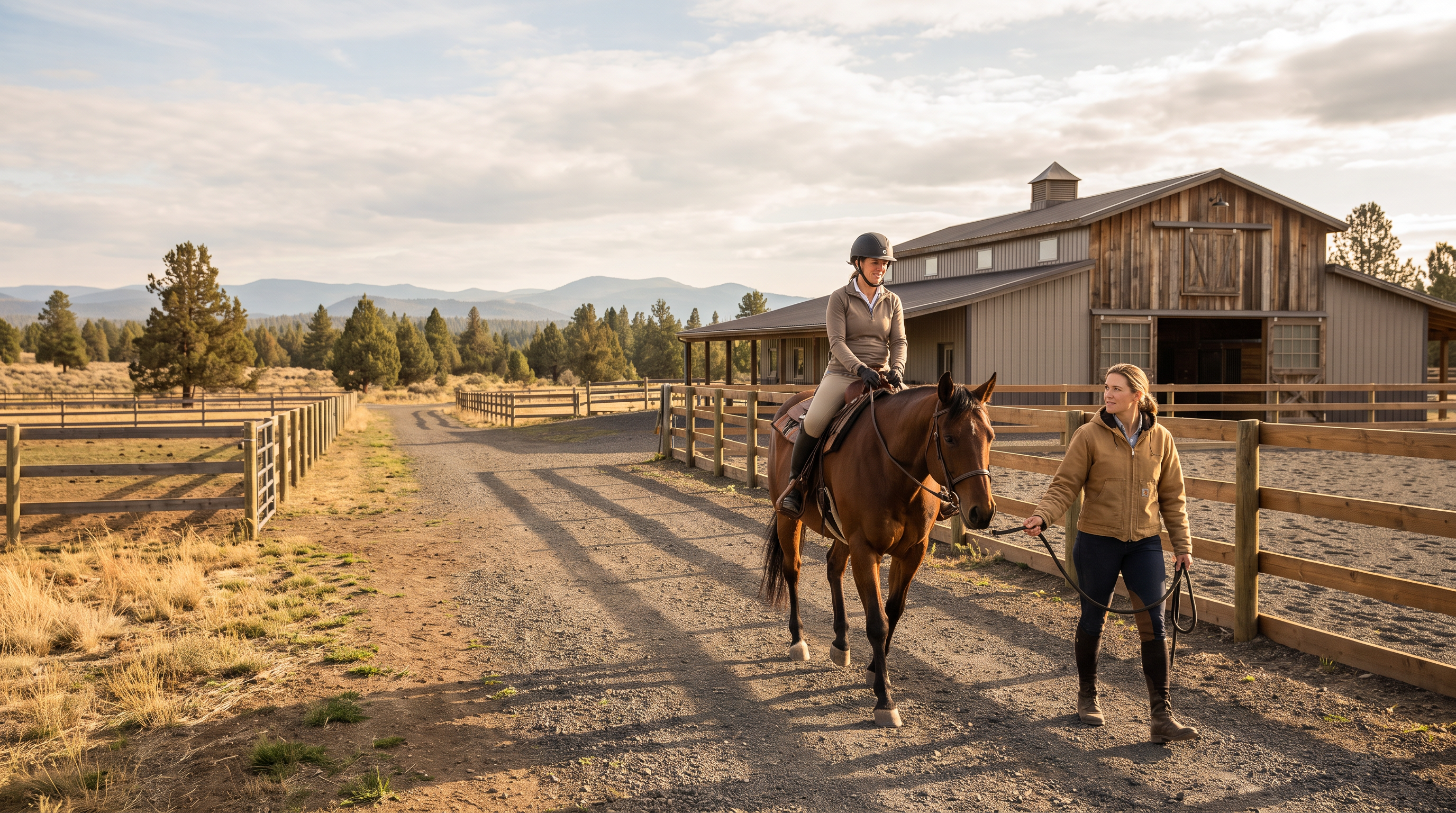
Before discussing coverage labels, write down every activity on the property and every activity that leaves it. A boarding barn may offer stall board, pasture board, training rides, lessons on client-owned or school horses, tack rental, turnouts, hauling, leases, sales, clinics, day camps, volunteer programs, pony rides, arena rentals, trail access, or an occasional event. The same facility may store hay, feed, medications, trailers, tractors, customer tack, business records, and valuable equipment.
Oregon’s equine activity statute specifically includes boarding, training, grooming, breeding, teaching, and riding or evaluating another person’s horse within its definition of an equine activity.[1] It also describes sponsors as people or organizations that provide facilities such as stables and arenas, and describes certain paid instruction or equipment/tack rental activities as equine-professional work.[1] Those definitions are useful prompts to inventory what you do; they are not a substitute for facility-specific legal advice or a policy review.
Consider the difference between a Prineville property that boards four family horses and a Bend facility that boards, trains, teaches, hosts clinics, employs barn staff, and hauls students to shows. A Redmond trainer with client horses in a leased arena, a Sisters lesson program with school horses, and a Madras ranch that boards horses alongside livestock may each need a different conversation about ownership, premises, care, employee duties, and off-property activity. The best start is a current written operations list—not a generic business description copied from a prior application.
| Operational fact | Questions to document | Insurance conversation to begin |
|---|---|---|
| Horses on the premises | Who owns each horse? Is it boarded, trained, leased, for sale, a school horse, or temporarily under your direction? | Ask how the policy addresses owned and non-owned horses, care/custody/control, valuation, medical or mortality questions, exclusions, limits, and paperwork. |
| Riders, visitors, and programs | Who rides, observes, volunteers, assists, enters the arena, uses tack, attends a clinic, or brings guests? | Ask how the program treats lessons, independent instructors, youth activities, spectators, arena rentals, clinics, releases, and certificates. |
| Barn, arena, and grounds | What buildings, fencing, stalls, hay/feed, tack, water systems, equipment, signs, and animal areas do you own or lease? | Ask about commercial or farm property, business income, equipment, premises liability, vehicle/trailer, and wildfire questions. |
| People who work | Who is an employee, working student, volunteer, independent trainer, groom, farrier, contractor, or vendor? | Discuss workers’ compensation, general liability, employment-practices, contracts, certificates, and the limits of any classification label. |
| Transportation and off-site activity | Do you haul horses, pull trailers, use a personal vehicle for business, travel to shows, or instruct away from the premises? | Discuss commercial auto, hired/non-owned vehicle, trailer, equipment, liability, and certificate requirements before travel or a new service starts. |
Care, Custody, or Control: Ask Which Horse, Whose Property, and What Happened
“Care, custody, or control” is often used in equine insurance conversations when a business handles horses it does not own. It should not be treated as a magic phrase or as a promise that every injury, illness, escape, theft, death, or veterinary expense involving a non-owned horse is covered. The exact policy wording, endorsements, limits, exclusions, valuation provisions, horse ownership, cause of loss, service agreement, and facts all matter.
Instead, tell the full story. Was the horse boarded full-time, in training for 30 days, in a lesson, turned out by staff, being transported, kept overnight for a clinic, being shown by an instructor, or temporarily held during an emergency? Who was authorized to make veterinary decisions? Did the facility have a care plan, medication record, stall or pasture assignment, photo, purchase/lease information, and owner contact? Were other people, a gate, fence, trailer, arena surface, tack, or weather conditions involved? Detail makes the policy question clearer.
This conversation belongs alongside the broader Oregon equine insurance and farm and ranch insurance review. It can include the facility’s liability program, property, equipment, trailers, employee exposure, and written agreements; it should not be reduced to a single checkbox on an application. Keep owner communications and horse records current as operations change.
Waivers, Oregon’s Equine Activity Statute, and Safe Operations Are Different Tools
Oregon’s policy statement says that people are not liable solely for reasonably obvious, expected, or necessary inherent risks of equine activity. The same statutory section also says that people responsible for equines or participant safety who are negligent and cause foreseeable injury bear responsibility under other applicable law.[2] That is why a facility should not treat a release or an inherent-risk sign as a replacement for prudent maintenance, rider assessment, horse selection, supervision, emergency planning, incident records, employee training, and legal review.
A boarding agreement, training agreement, lesson enrollment form, arena-rental agreement, and event/clinic agreement can serve different purposes. Ask Oregon legal counsel to help determine what documents, warnings, acknowledgements, and procedures are appropriate for the entity, land, program, and people involved. Then ask an insurance professional whether the policy matches those operations. For example, adding school-horse lessons, an independent trainer, a summer camp, an arena rental, an off-property clinic, or a horse lease may change the risk questions without automatically changing the policy.
General liability can be one part of a program, but Oregon’s Division of Financial Regulation notes that standard commercial general liability has exclusions and does not cover every business exposure.[7] The same source distinguishes employee work injuries and auto exposures from general liability. Read our general liability insurance overview as a starting point, then review the equine-specific questions with the carrier, agent, and appropriate advisers.
Organize the Horses, People, and Facility Before Renewal
Prineville Insurance can help you prepare a policy-specific conversation around boarding, training, lessons, staff, facilities, customer horses, trailers, emergency plans, and changes in the way your barn operates.
Property, Premises, and Barn Operations Need Their Own Review
A facility risk is not limited to a horse-and-rider incident. Think about the barn, stalls, indoor or outdoor arena, round pen, fencing, gates, wash rack, tack room, feed room, hay storage, lighting, electrical systems, water supply, pumps, tractor, manure equipment, arenas, sheds, tools, computers, medications, and business records. A property review should use current values, lease terms where relevant, photos, purchase records, maintenance information, and a realistic description of what is stored where.
Oregon Veterinary Medical Association guidance highlights barn-fire prevention, dry hay storage, electrical inspections, clear access to water, backup water/power considerations, fencing and pasture hazards, animal identification, and pre-arranged evacuation transport.[5] Oregon State University Extension also explains that mud, manure, footing, runoff, pasture management, and water protection can affect horse health and facility conditions.[6] These are operational-risk prompts, not statements that a policy covers a particular repair, animal injury, contamination, or interruption.
Use a commercial property insurance discussion to ask which building, business-personal-property, equipment, valuation, deductible, and business-income questions belong in your program. If your barn is on a farm/ranch property or combines personal and commercial use, disclose that structure accurately rather than assuming a residence, farm policy, or business policy treats every area the same way.
Lessons, Trainers, Working Students, and Staff: Clarify Roles Before a Problem
The word “trainer” can hide many different arrangements. An owner might be a trainer, an independent instructor might rent arena time, a working student might exchange labor for lessons, a groom might be a paid employee, a volunteer may assist with an event, and a farrier or veterinarian can be an independent business. State each person’s real role, who controls the work, who owns the horse/equipment, who holds the agreement, and what happens on the premises or off-site. Do not assume that calling someone an independent contractor decides insurance, payroll, employment, or workers’ compensation treatment.
Employee injuries raise separate questions from customer or visitor injuries. Oregon DFR’s liability guidance notes that commercial general liability excludes the business and its employees for work-related injury or illness and points to workers’ compensation as a separate concern.[7] Review the facility’s actual payroll, work duties, volunteers, exchanged labor, instructor arrangements, and any required certifications with the appropriate professionals. The site’s workers’ compensation resource and guide for Oregon businesses using subcontractors, freelancers, and 1099 workers can help generate questions before a new relationship begins.
Travel can add another layer. A trainer’s pickup, horse trailer, farm vehicle, employee’s car used for business, leased trailer, or hired transport does not become a complete insurance answer just because a horse is involved. Before the next clinic, show, evacuation, or sale transport, review the driver, vehicle, trailer, ownership, use, route, loading plan, agreement, and insurance. Our commercial auto insurance resource can help frame the vehicle conversation.
Biosecurity and Emergency Planning Protect the Operation’s Continuity
A boarding facility’s continuity plan should cover more than weather. Oregon Department of Agriculture guidance says equine herpesvirus can spread directly between horses and indirectly through tack, grooming equipment, feed/water buckets, people’s hands, clothing, boots, and other equipment. It advises facilities to stop movement when animals may be infected, isolate sick horses, avoid shared equipment, and use hygiene practices that reduce person-to-horse spread.[3] ODA also notes that current exhibition-related rules can require registration and records; facilities and event organizers should consult ODA and their veterinarian for current requirements rather than relying on a blog.
Put a facility-specific biosecurity plan in writing with veterinary input: new-horse arrival protocol, illness reporting, isolation location, visitor/contractor expectations, cleaning procedures, shared-equipment rules, boarding-owner communications, and current contact lists. The same disciplined recordkeeping helps an operation describe its practices to insurers, but it does not guarantee an insurance result or eliminate disease risk.
Central Oregon wildfire, smoke, barn-fire, wind, winter-storm, road-closure, and power/water interruption planning also deserves a standing place in a boarding agreement and operations file. ODA advises animal owners to build emergency plans and kits and stay informed through Oregon alerts.[4] Keep owner emergency authorization, proof-of-ownership/horse identification, veterinarian numbers, medication instructions, halters/leads, trailer contacts, possible destinations, route options, and communication procedures current. For broader property preparedness questions, review the site’s wildfire insurance resource before fire season.
After an Injury, Illness, Escape, or Property Event: Preserve Facts Without Promising Outcomes
First protect people and animals and follow emergency, veterinary, fire, law-enforcement, and evacuation directions. When safe, preserve facts: date/time, people present, horse and rider identification, photos/video as appropriate, weather and footing observations, what occurred before and after the event, relevant agreements, witness information, veterinary or emergency contacts, and steps taken to protect remaining property. Do not alter or discard relevant property, tack, equipment, gates, fencing, feed, or records before the insurer or other appropriate authority gives direction.
Notify the insurer or agent promptly and provide accurate information. Avoid characterizing a loss as covered or not covered before the policy and facts are evaluated. A calm, current facility record can help organize communication; it does not decide liability, coverage, value, or payment. Use the information after the immediate event to identify unanswered renewal questions, such as whether ownership was documented, a vehicle/trailer was involved, an instructor relationship had changed, or horse/location information was stale.
A Practical Renewal Checklist for an Oregon Boarding or Lesson Barn
Before renewal—or before adding a new service—bring a current operations list, annual revenue and payroll information, horse count and ownership categories, location and building details, photos, equipment and trailer lists, written agreements, certificates, instructor/staff information, incident logs, lease terms, and emergency/biosecurity plan. Ask the insurer to identify the provisions, limits, deductibles, exclusions, endorsements, valuations, and conditions that apply to the actual program. Compare proposed changes against the operation you will run next year, not only the operation you ran last year.
Consider whether your business has enough liability capacity for the contracts, facilities, assets, visitors, and services it now supports. An umbrella liability insurance review may be worth discussing separately from the primary policy; whether it is appropriate or available is carrier- and operation-specific. The goal is not to collect every possible policy label. It is to identify the questions an equestrian facility cannot afford to leave vague.
Frequently Asked Questions
Does a horse boarding policy automatically cover a boarded horse that is hurt, ill, lost, or dies?
Not automatically. A horse owned by the facility, a horse owned by a boarder, and a horse temporarily in the facility’s care can raise different questions. Care, custody, or control provisions, equine liability, mortality or medical coverage, exclusions, limits, valuation terms, deductibles, endorsements, boarding agreements, the activity, and the facts of the event can all matter. Ask the insurer to explain the actual policy language before a loss—not after one.
Is a signed waiver enough for an Oregon boarding barn or riding instructor?
A waiver is not an insurance policy and is not a substitute for safe procedures, good records, maintenance, supervision, or legal review. Oregon’s Equine Activity Liability Act addresses inherent equine risks, but Oregon’s policy language also refers to responsibility under other applicable law when negligence causes foreseeable injury. Have Oregon legal counsel review facility-specific releases, warnings, contracts, signs, and procedures; ask an insurance professional how your policy is structured around your actual operation.
Do riding lessons create different insurance questions than boarding?
Often, yes. Paid instruction, school horses, student riders, tack rental, independent instructors, youth programs, spectators, arena use, off-property rides, clinics, and events can change the questions that should be presented to an insurer. The policy may distinguish between operations, insureds, participants, premises, and professional services. Describe every activity and who performs it rather than assuming that one label—such as “boarding barn”—captures the whole operation.
What emergency records should a boarding facility and horse owner keep?
Oregon equine preparedness guidance recommends animal identification, medical and vaccination records, proof of ownership, emergency contacts, medication information, halters and leads, and evacuation planning. A facility may also need owner-authorized veterinary decision instructions, trailer and destination contacts, a current stall or pasture map, and a process for communicating during a wildfire, barn fire, flood, severe weather event, or road closure. Documentation helps organize a response but does not establish coverage or guarantee payment.
Can a general liability policy replace workers’ compensation or commercial auto coverage?
No policy category should be assumed to replace another. Oregon DFR notes that commercial general liability does not cover employees’ work-related injury or illness, and auto-related claims can require a separate auto policy. A barn with employees, working students, instructors, owned or hired vehicles, trailers, or off-property horse transportation should describe each exposure during a policy review.
Start With an Accurate Description of the Barn You Run Today
Boarding and lesson programs change quickly. A new instructor, additional school horse, clinic, arena rental, customer-horse training program, trailer, barn improvement, employee, or wildfire evacuation plan can create questions that were not relevant at the last renewal. Update the operation’s description before the change, not only after an incident.
Prineville Insurance can help Central Oregon horse businesses prepare for a policy-specific conversation with their insurers. Bring the agreements, horse list, property/equipment schedule, vehicle/trailer details, staff roles, and emergency-plan records that show how the operation works in real life. The more precise the description, the better the questions around horses, people, premises, and continuity can be organized.
References
- Oregon Revised Statutes — ORS 30.687, Definitions for Oregon’s Equine Activity Liability Act
- Oregon Revised Statutes — ORS 30.689, Policy
- Oregon Department of Agriculture — Equine Herpesvirus
- Oregon Department of Agriculture — Disaster Preparedness for Animal Owners
- Oregon Veterinary Medical Association — Disaster Preparedness for Equine & Large Animal Owners
- Oregon State University Extension — Managing Small-Acreage Horse Farms in Western Oregon and Western Washington
- Oregon Division of Financial Regulation — Liability Insurance