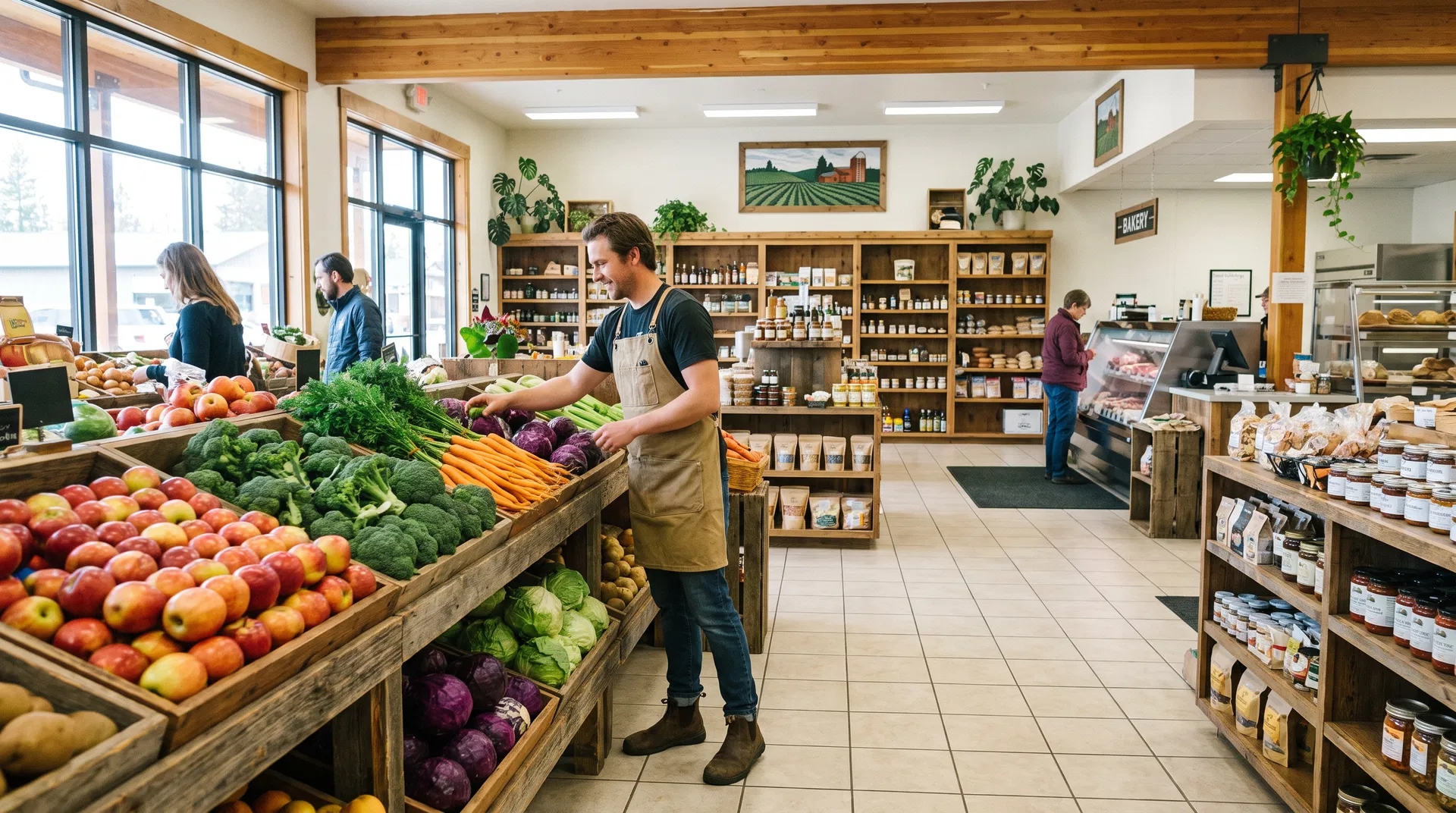
What Insurance Does a Grocery Store Need in Oregon?
A complete Oregon grocery store insurance program combines multiple coverages. Here is what every grocer should carry:
1. General Liability Insurance
General liability is the foundation of any grocery store insurance program. It covers bodily injury and property damage claims from third parties — most commonly slip-and-fall accidents on wet floors, spilled products, or uneven parking lots. It also covers product liability (a customer injured by a product you sold), advertising injury, and property damage caused by your operations. Most commercial leases require at least $1M/$2M in general liability coverage. The average cost for grocery stores is $43/month, or $510/year, according to Insureon's 2025 data.
2. Commercial Property Insurance
Commercial property insurance covers your building (if you own it), store fixtures, shelving, refrigeration units, HVAC systems, POS equipment, and inventory against fire, storm, theft, vandalism, and other covered perils. For grocery stores, it is critical to insure at replacement cost — not actual cash value — to avoid depreciation gaps on expensive refrigeration equipment. Central Oregon construction costs have increased 25–40% since 2020, so coverage limits should be reviewed annually.
3. Food Spoilage Coverage
Standard commercial property policies do not automatically cover perishable inventory. Food spoilage coverage must be added as an endorsement or included in a specialized grocery store BOP. This coverage pays for produce, meat, dairy, and frozen foods that spoil due to a covered power outage, refrigeration equipment failure, or contamination event. For a Central Oregon grocery store with $50,000–$200,000 in perishable inventory, this is one of the most important coverages you can carry.
4. Workers' Compensation Insurance (Oregon Required)
Oregon law requires all employers with one or more employees to carry workers' compensation insurance. Grocery stores have above-average workers' comp exposure: cashiers develop repetitive stress injuries from scanning, stockers suffer back injuries from lifting, and deli and meat counter workers face laceration and burn risks. The Oregon Workers' Compensation Division (WCD) reports that grocery and food retail workers are among the top occupational groups for injury claims. The average cost for grocery store workers' comp is $175/month, or $2,097/year.
5. Equipment Breakdown Coverage
Standard commercial property insurance covers damage from external causes (fire, storm, theft) but does not cover sudden mechanical or electrical breakdown of equipment. Equipment breakdown coverage protects your refrigeration units, walk-in coolers, HVAC systems, compressors, and POS equipment from sudden failure. For a grocery store, a single refrigeration compressor failure can destroy an entire walk-in cooler's inventory while repairs take days or weeks. This coverage is essential and is often available as an endorsement to your commercial property policy.
6. Business Income Insurance
Business income insurance (also called business interruption insurance) replaces lost revenue and covers continuing expenses — rent, utilities, employee wages — if your store is forced to close due to a covered loss. A fire, major pipe burst, or structural damage can close a grocery store for weeks or months. The average Central Oregon grocery store generates $30,000–$150,000 per week in revenue. Without business income coverage, a 4-week closure could mean $120,000–$600,000 in unrecovered losses.
7. Liquor Liability Insurance
If your grocery store sells beer, wine, or spirits, Oregon's dram shop laws can hold you liable for alcohol-related incidents involving customers who purchased alcohol at your store. Liquor liability is a separate coverage from general liability and is required for any Oregon retailer with a liquor license. This coverage protects against claims arising from sales to minors or visibly intoxicated individuals.
8. Commercial Auto Insurance
If your grocery store operates delivery vehicles, catering vans, or any other business vehicles, commercial auto insurance is required. For stores using employee personal vehicles for deliveries, hired and non-owned auto (HNOA) coverage fills the gap — personal auto policies exclude business use. The average cost for commercial auto insurance for grocery stores is $171/month.
9. Cyber Liability Insurance
Any grocery store processing credit or debit card payments, operating a customer loyalty program, or using internet-connected POS systems faces cyber liability exposure. Oregon's Consumer Information Protection Act (OCIPA) requires breach notification within 45 days. Cyber liability insurance covers breach notification costs, credit monitoring services, regulatory fines, and legal defense. At an average of $57/month, it is one of the most cost-effective coverages available for Oregon retail businesses.
10. Commercial Umbrella Insurance
A commercial umbrella policy provides an additional layer of liability protection above your primary general liability, commercial auto, and employer's liability policies. For high-traffic grocery stores, umbrella coverage of $1M–$5M is a cost-effective way to protect against catastrophic claims. The average cost is $59/month for grocery stores.
Oregon Grocery Store Insurance Cost Guide
Here is a summary of average monthly insurance costs for Oregon grocery stores, based on Insureon's 2025 national data:
The 8 Most Common Grocery Store Insurance Gaps in Central Oregon
After reviewing insurance programs for grocery stores and food retailers across Central Oregon, the same coverage gaps appear repeatedly. Each gap represents a real financial risk that could threaten your business's survival.
Central Oregon Grocery Store Insurance: Local Considerations
Central Oregon's grocery market includes a mix of independent grocers, regional chains, and specialty food retailers. Stores like Ochoco Thriftway in Prineville, Grocery Outlet and Market of Choice in Bend, and independent markets throughout Madras, Redmond, Sisters, and La Pine serve communities where they are often the only full-service grocery option within miles. This creates unique insurance considerations:
- Wildfire smoke and air quality events can force temporary closures and affect perishable inventory. Business income coverage is critical for Central Oregon grocers.
- Power outages from winter storms are more frequent in rural Central Oregon than in urban areas. Food spoilage coverage is essential — a single extended outage can destroy an entire store's refrigerated and frozen inventory.
- Limited contractor availability means that after a covered loss, rebuilds and repairs take longer in Central Oregon than in Portland or Bend. Business income coverage periods should be extended to 18–24 months to account for this reality.
- Seasonal population fluctuations around Sunriver, Black Butte Ranch, and other resort areas can dramatically increase foot traffic — and slip-and-fall liability — during peak seasons. Review your general liability limits seasonally.
Prineville Insurance works with grocery stores across Crook, Deschutes, Jefferson, and Wheeler counties. Our agents understand the specific risks facing Central Oregon food retailers and work with 50+ carriers to build insurance programs tailored to your operation.
Oregon Food Safety and Liability Regulations
Oregon grocery stores operate under a complex web of food safety regulations that create direct insurance implications. The Oregon Department of Agriculture (ODA) licenses and inspects retail food establishments. The Oregon Health Authority (OHA) regulates food handler certifications. Federal regulations under the Food Safety Modernization Act (FSMA) apply to stores with prepared food operations.
From an insurance perspective, the most important regulatory consideration is Oregon's Consumer Information Protection Act (OCIPA), which requires businesses to notify affected customers within 45 days of discovering a data breach and to notify the Oregon Attorney General if more than 250 Oregon residents are affected. For grocery stores with customer loyalty programs or POS systems that store card data, a breach can trigger mandatory notification costs of $50,000–$200,000 — costs that cyber liability insurance covers.
Oregon's dram shop laws also create significant liability for grocery stores with liquor licenses. Under ORS 471.565, a grocery store can be held liable for selling alcohol to a visibly intoxicated person or a minor if that person subsequently causes injury or death. Liquor liability insurance is not optional for any Oregon grocer with a liquor license — it is a legal and financial necessity.
How to Get the Right Grocery Store Insurance in Oregon
The most effective way to build a comprehensive grocery store insurance program is to work with an independent insurance agent who has access to multiple carriers and understands the specific risks of food retail operations. Here is what to bring to your insurance review:
- Your store's annual gross revenue and payroll
- Square footage of your store and any cold storage facilities
- Number of full-time, part-time, and seasonal employees
- Whether you have a liquor license, deli counter, bakery, or hot food operation
- Whether you own or lease your building
- Whether you operate delivery vehicles or use employee vehicles for deliveries
- Your current coverage limits and deductibles (if you have existing coverage)
- Any claims history from the past 5 years
Prineville Insurance is an independent agency serving Central Oregon since 1935. We work with 50+ top-rated carriers to find the right coverage at competitive rates for grocery stores, markets, and food retailers across the region. Our agents can review your current program, identify gaps, and build a comprehensive insurance solution tailored to your specific operation.