


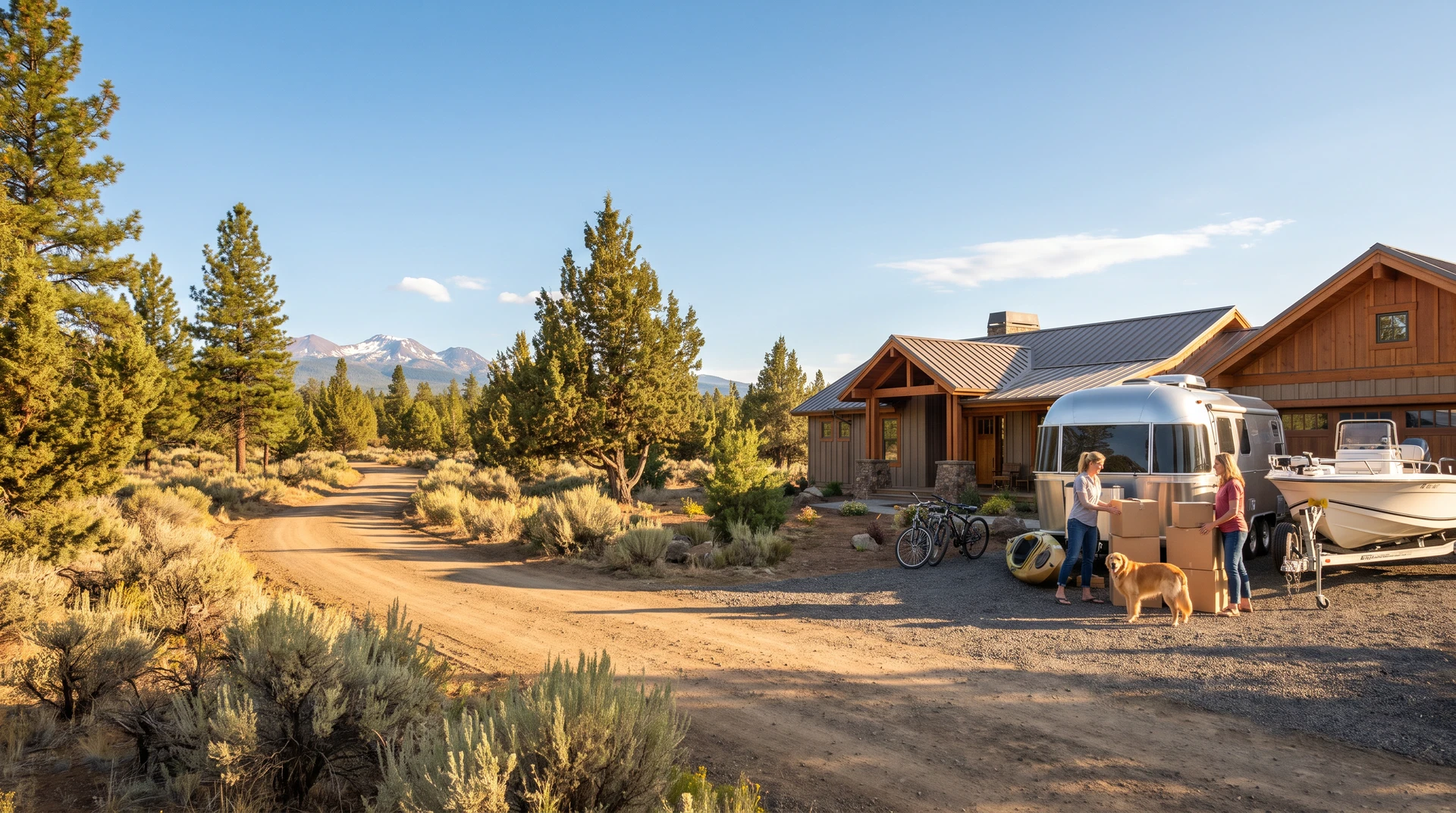

Moving to Oregon can mean more than changing an address. A household may arrive with a dog, a boat and its trailer, an RV, a motorcycle, a utility trailer, fishing or camping equipment, outdoor gear, and a new home in a very different setting. Those items are not one insurance question. They are a set of property, vehicle, use, storage, liability, registration, valuation, and location questions worth organizing before moving day.
This checklist is educational, not legal, DMV, Marine Board, veterinary, safety, or insurance-coverage advice. Coverage, limits, deductibles, eligibility, valuation, exclusions, endorsements, claim results, registration requirements, and pricing depend on the insurer, policy, item, ownership, storage, use, location, and cause of loss. The purpose is to help a new Oregon household make an accurate, organized conversation possible before a gap becomes urgent.
Start With a Move Inventory, Not a Single Insurance Question
The most useful first step is to make one complete move inventory. Separate the things that are part of the house from the things that travel, float, tow, or operate away from the property. The National Association of Insurance Commissioners recommends contacting an agent before an interstate move, providing a timeline and details about the new home, confirming how belongings are treated in transit, and reviewing the mover's contract.[3] Photos and serial numbers can help turn a vague discussion into a more useful record.
For the new residence, begin with the building type, roof, replacement-cost details, wildfire setting, emergency access, detached structures, garages, storage, and the people and animals who live there. Oregon's Division of Financial Regulation explains that insurer underwriting can vary based on factors such as location, construction, fire protection/access, property condition, claims history, and individual company rules.[4] Our Oregon home insurance guide and wildfire insurance resource are useful places to prepare home-specific questions.
| What is moving? | Record before the move | Insurance-review question |
|---|---|---|
| Passenger vehicles | VIN, garaging address, drivers, lienholder, existing policy and registration papers. | When does Oregon garaging begin, and what does the actual auto policy require for drivers, use, limits, deductibles, towing, and physical damage? |
| Boat and trailer | Title/registration records, motor and trailer details, storage location, equipment, photographs, and intended waters. | Are boat, motor, trailer, accessories, liability, storage, transport, and navigation/use questions addressed by the actual policy? |
| RV, camper, or travel trailer | VIN, title, loan information, travel plans, storage address, installed equipment, and personal-property list. | Is the unit treated according to its actual use and storage? What do the policy's physical-damage, liability, contents, roadside, and vacation-liability terms say? |
| Motorcycle or recreational equipment | Vehicle/equipment details, trailers, safety gear, seasonal storage, use locations, and values. | Which items need their own policy or scheduled-property discussion, and what happens while they are towed, stored, or used away from home? |
| Pets and household property | Animal details relevant to the application, vet records, carriers, household inventory, and move records. | What household-liability, animal, personal-property, temporary-living, and evacuation questions should be reviewed with the insurer? |
1. Update Garaging, Driver, and Vehicle Details Early
An Oregon move changes where vehicles are principally kept, who drives them, road conditions, storage, and sometimes the kinds of trips a household makes. Give your agent the real move date, new address, drivers, vehicles, trailer combinations, intended use, lienholder details, and any changes in commuting, remote work, towing, or seasonal travel. Our auto insurance overview can help you assemble questions before the move.
Oregon DMV treats vehicle title and registration as a separate process. Its guidance says a vehicle must be titled in Oregon to be registered and explains residence, domicile, and vehicle-situs considerations.[1] Check DMV's current directions for your own vehicle, trailer, RV, and ownership situation rather than relying on a general insurance article for compliance timing or paperwork.
2. Give Boats, Trailers, and Watercraft Their Own Line on the Checklist
A boat does not become a home-policy question just because it sits in a driveway, and a boat trailer is not necessarily the same question as a passenger vehicle. Boat value, motor, trailer, navigation territory, storage, passenger use, fishing gear, safety equipment, towing, and liability needs can matter. Visit our boat insurance page to prepare practical questions, then confirm the actual terms with the insurer.
The Oregon State Marine Board says all motorboats must be titled and registered in Oregon, regardless of length, and sailboats 12 feet and longer must be titled and registered even when moored in Oregon waters.[2] Registration is not insurance, and insurance is not registration. Keep both discussions organized, along with titles, bills of sale, lien information, motor details, and a current inventory of removable equipment.
3. Treat an RV, Camper, or Travel Trailer as a Use-and-Storage Conversation
A motor home, camper, travel trailer, or park-model unit can have different ownership, registration, storage, and use circumstances. Oregon DMV has vehicle-type-specific title and registration information for recreational vehicles and park-model recreational vehicles.[1] For insurance purposes, do not simplify that into one answer. Explain whether the unit is used for occasional trips, kept at a campground, stored on a rural property, financed, rented, loaned, occupied seasonally, or taken across state lines.
Our RV insurance resource and rural property insurance guide can help identify the questions to bring to a review. Actual coverage for the unit, contents, liability, emergency expense, roadside assistance, physical damage, and tow vehicle depends on the terms selected and the specific carrier.
Before You Hook Up the Trailer, Build One Coordinated Insurance List
Bring the new address, vehicle and trailer details, ownership documents, equipment photographs, storage plans, pet details relevant to applications, lender information, and current declarations pages. Prineville Insurance can help you organize questions for the insurers you work with before Oregon move-in day.
4. Bring Motorcycles and Recreational Equipment Into the Same Review
A move is also an opportunity to update recreational items that may have been stored, rarely used, recently purchased, or carried on a trailer. Motorcycles, ATVs, side-by-sides, snow equipment, sporting gear, and equipment kept in a garage or shed can create separate questions about registration, ownership, transport, storage, theft, physical damage, liability, or policy limits. Use our motorcycle insurance page as a starting point, then describe actual ownership and use rather than assuming an item is handled like household contents.
Keep photos, serial numbers, receipts, title records where applicable, and a clear explanation of where each item is kept. Oregon DFR encourages home inventories because a detailed property list is difficult to recreate after a loss.[4] Good records do not create coverage, but they can make a future policy or claim conversation more accurate.
5. Pets Belong in the Household-Liability Conversation
Your pet is family, but the move checklist should still make room for accurate household information. If an application or renewal asks about an animal, be direct. Oregon DFR notes that dog-bite risk can affect underwriting under some insurer rules and that policy language matters for any existing coverage.[4] Ask what information the insurer needs; do not rely on a generic internet list to decide how a particular dog, household, or liability situation will be treated.
It is also smart to plan for pet records and practical readiness. Keep veterinary contacts, medication information, photographs, carriers, feeding supplies, and evacuation plans readily available. On a rural, forest-edge, or wildfire-prone property, pair that preparation with our fire mitigation guide and local emergency instructions. Safety directions from local authorities always come first.
6. Review Liability as the Household Becomes More Complex
A new Oregon household may bring more than one vehicle, drivers who tow, guests, a dog, outdoor equipment, a boat, a second location, and a higher-value home. That is a reasonable time to ask whether your liability limits and coordination among policies should be reviewed. Our Oregon umbrella insurance resource explains the general concept. It does not determine whether an umbrella is available or how any specific underlying policy works.
A coordinated review is especially useful before the first road trip, launch, rental, visitor stay, or wildfire season. Present the full household picture—home, vehicles, trailers, watercraft, RVs, drivers, animals, storage, recreational gear, and planned use—so the discussion is based on facts rather than assumptions.
Oregon Move-In Insurance Checklist
| When | What to organize | Question to ask |
|---|---|---|
| Before closing or signing a lease | New-address details, lender/landlord requirements, home or rental information, wildfire setting, and move date. | When should the policy be effective, and what property, construction, storage, and location details does the insurer need? |
| Before loading day | Photos, serial numbers, ownership records, mover/rental contracts, and current declarations pages. | How does my actual policy treat belongings in transit, a rental truck, a towed vehicle, and the deductible? |
| Before towing or launching | Tow vehicle, trailer, boat/RV/motorcycle details, equipment inventory, storage location, and intended use. | Which policies apply to which item, and which limits, deductibles, exclusions, or endorsements should I review? |
| At Oregon move-in | New garaging address, drivers, parking/storage, pet information relevant to the application, and lender records. | What changes need to be reported immediately, and which Oregon title/registration instructions should I confirm with the appropriate agency? |
| Before wildfire or travel season | Evacuation plan, property inventory, pet supplies, storage checks, service records, and local emergency contacts. | Does the policy reflect our actual seasonal use, storage, values, property conditions, and liability exposures? |
Frequently Asked Questions
Do I need a new Oregon insurance policy when I move from another state?
An interstate move is an important reason to contact an insurance professional early. Insurers and agents are not necessarily licensed in every state, and Oregon residence, garaging location, property details, vehicle use, and the kinds of recreational property you own can change the questions a carrier asks. Do not assume an existing policy transfers automatically. Give your agent the move date, the new address, the items you are bringing, and the actual use of each vehicle or property, then confirm what the new policy says before relying on it.
Will my homeowners or renters policy cover the belongings I move to Oregon?
Coverage for belongings in transit can be limited, subject to a deductible, and different from the moving company's contractual responsibility. The National Association of Insurance Commissioners recommends reviewing your own policy and the moving contract before the move, documenting property, and noting delivery damage promptly. The actual answer depends on the policy, property type, cause of loss, moving arrangement, applicable limits, and insurer.
Is my boat automatically insured through my home or auto policy after I move?
Do not assume that it is. A boat, trailer, motor, personal watercraft, accessories, use location, passengers, and liability needs can raise separate policy questions. Oregon boat title and registration rules are also separate from insurance. Review your actual declarations, limits, deductibles, trailer details, storage location, and liability needs with an insurer or independent agent.
Do I need to tell my insurer about my dog or other pets when I buy an Oregon home?
Be accurate about the people, animals, property, and activities relevant to an application or renewal. Oregon's Division of Financial Regulation notes that insurers may make underwriting decisions based on individual carrier rules and that dog-bite risk can affect eligibility or terms. The actual policy, animal, carrier, history, location, and policy wording matter; a general checklist cannot determine coverage or availability for a particular household.
Should I add an umbrella policy when I move with an RV, boat, trailer, or recreational equipment?
An umbrella review may be appropriate when a household has several liability exposures, higher-value property, frequent towing, watercraft, visitors, animals, or a new Oregon home. Whether an umbrella is available, which underlying policies qualify, and what limits or exclusions apply depend on the insurer and your particular policies. Ask for a coordinated review rather than assuming every activity or item is included.
The Bottom Line for a New Oregon Household
A move is the right time to replace assumptions with a current inventory, an accurate address and use picture, and questions grounded in the actual policies involved. Keep registration, title, safety, animal-care, property, and insurance conversations in their proper lanes. Prineville Insurance can help organize the policy questions for your Oregon move; the insurer and selected policy determine the specific answer.