



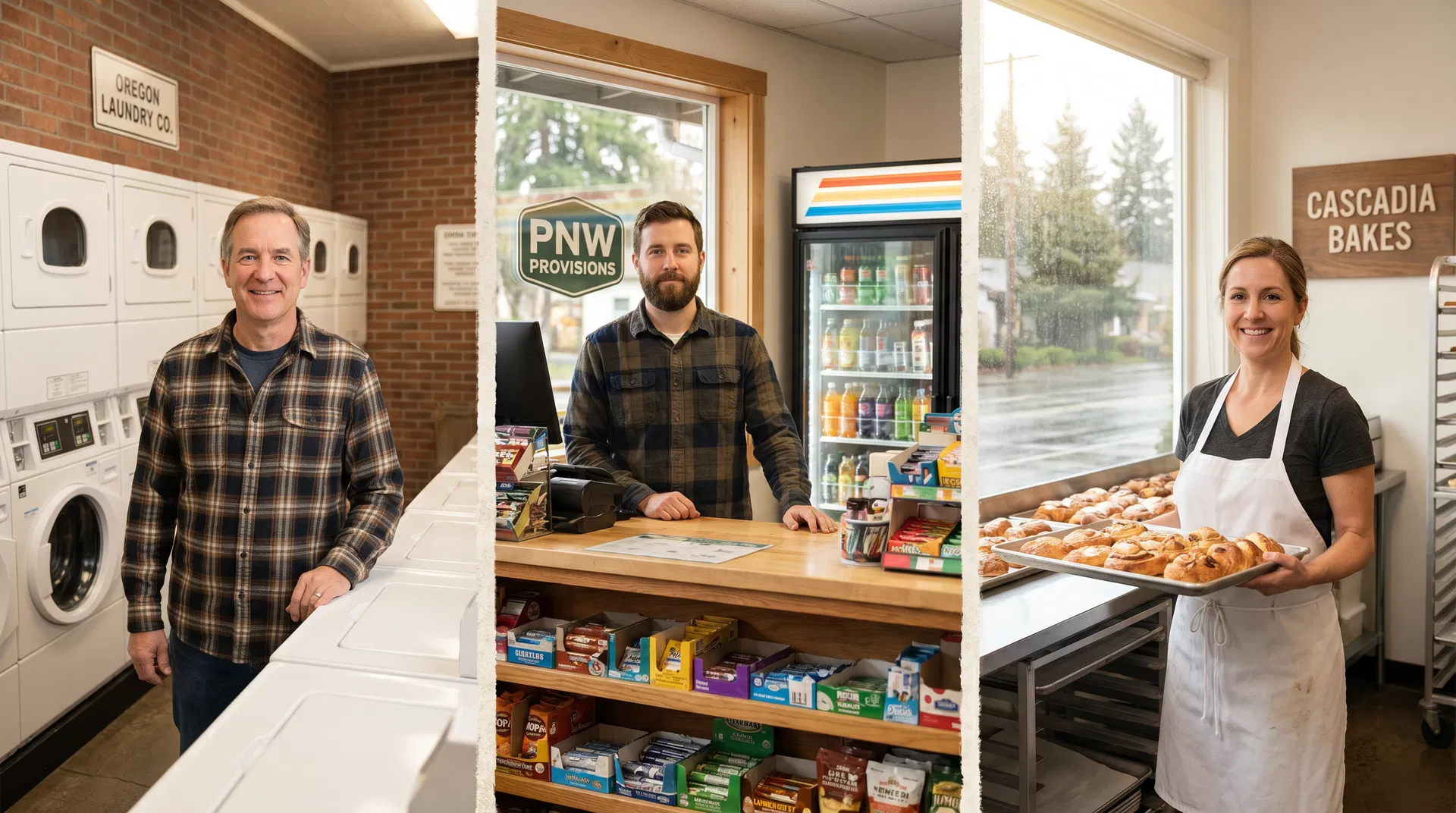
Running a small business in Central Oregon is rewarding — and demanding. Whether you own a coin laundry in Prineville, a convenience store on the highway outside Bend, or an artisan bakery in Redmond, your business faces risks that a standard homeowner's policy will never cover. Equipment failures, customer injuries, product liability claims, employee incidents, and Oregon-specific legal requirements all create exposures that must be addressed with the right commercial insurance program.
At Prineville Insurance, we've been protecting Central Oregon small businesses since 1935. We work with 50+ carriers to find coverage that fits your operation — whether you're a solo operator running a self-service laundry or a growing bakery with a full staff. This guide breaks down the insurance needs of three common Oregon small business types: laundromats, convenience stores, and bakeries.
For a broader overview, see our guide to commercial business insurance in Oregon. If you're also researching workers' compensation, general liability, or commercial property insurance, we cover each in depth on their own pages.
Get a Free Commercial Insurance Quote
Prineville Insurance has been protecting Central Oregon small businesses since 1935. We shop 50+ carriers to find the right coverage at the right price for your laundromat, convenience store, or bakery.
1. Laundromat Insurance in Oregon
Laundromats are often considered low-risk businesses, but the reality is more complex. High customer foot traffic means frequent slip-and-fall exposure — wet floors are an inherent hazard in any coin laundry. Commercial washers and dryers are expensive to repair or replace, and a standard commercial property policy won't cover mechanical breakdown. An overflowing machine can cause water damage to your building and neighboring units. And if you operate unattended, there's no staff to address incidents in real time.
Equipment breakdown coverage is the most commonly overlooked — and most important — coverage for laundromat owners. Commercial washers and dryers are expensive to repair, and multiple simultaneous failures can create a significant unplanned expense that threatens your cash flow. Equipment breakdown coverage fills the gap that standard property insurance leaves open, covering mechanical and electrical failures that property policies specifically exclude.
Business interruption insurance is equally important. If a fire, flood, or major equipment failure forces you to close for two weeks, you're still paying rent, utilities, and loan payments — but your revenue has stopped. Business interruption coverage replaces that lost income and keeps your business financially stable while you recover. For laundromats that serve as the only laundry option in a rural community, even a short closure can have lasting effects on customer loyalty and revenue.
For coin-operated laundromats that handle significant cash, crime coverage protects against robbery and employee theft. Many laundromat owners are surprised to learn how frequently their businesses are targeted — especially those operating late hours with minimal staffing. Crime coverage can also protect against counterfeit currency and check fraud.
Oregon law requires workers' compensation insurance for any business with one or more employees, including part-time workers. Even if your laundromat is largely self-service, any attendant or maintenance worker you employ triggers this requirement. Failure to carry workers' comp in Oregon can result in fines, stop-work orders, and personal liability for employee injury claims.
Central Oregon's wildfire risk also affects laundromat owners. Smoke damage to equipment and interiors, evacuation-related closures, and utility disruptions are all real possibilities for businesses in Crook, Jefferson, and Deschutes counties. See our guide to wildfire insurance in Oregon for more on how to protect your business from fire-related losses. For a full breakdown of laundromat-specific coverages, visit our Laundromat Insurance page.
Key Coverages for Oregon Laundromats
General Liability
Covers slip-and-fall injuries, property damage to customers' belongings, and other third-party bodily injury claims. High foot traffic and wet floors make this essential.
Commercial Property
Protects your building, machines, fixtures, and improvements from fire, theft, vandalism, and weather damage.
Equipment Breakdown
Covers repair or replacement of commercial washers, dryers, and other mechanical equipment when they fail — not covered by standard property policies.
Business Interruption
Replaces lost revenue and covers fixed expenses if your laundromat must close temporarily due to a covered loss such as fire, water damage, or equipment failure.
Crime / Theft Coverage
Protects against robbery, burglary, and employee theft. Especially important for coin-operated or cash-heavy laundromats operating with minimal staffing.
Workers' Compensation
Required by Oregon law for any business with employees. Covers medical bills and lost wages for workers injured on the job.
2. Convenience Store Insurance in Oregon
Convenience stores combine several high-risk business activities under one roof: high foot traffic, cash handling, alcohol sales, perishable inventory, and — in many cases — fuel sales. Each of these creates distinct insurance exposures that must be addressed in your policy. A standard general liability policy alone is not sufficient for most Oregon c-stores.
Oregon's dram shop law (ORS 471.565) is one of the most important legal considerations for any convenience store that sells alcohol. Under Oregon law, a retailer can be held liable for damages caused by a customer who was sold alcohol while visibly intoxicated or who was under 21. This means that if a customer buys beer at your store and then causes a car accident, your business could face a lawsuit. Liquor liability insurance is essential for any Oregon business that sells alcohol — and it is typically not included in a standard general liability or BOP policy.
Convenience stores are also among the most frequently targeted businesses for robbery in Oregon, particularly those operating late at night or in rural areas. Crime coverage protects against robbery, burglary, employee theft, and counterfeit currency. Many operators are surprised to discover that their commercial property policy does not cover employee dishonesty — a separate crime endorsement or standalone crime policy is needed.
Spoilage coverage is another often-overlooked protection. If your refrigeration system fails overnight, you could lose a significant amount of perishable inventory. Spoilage coverage reimburses you for perishable goods lost due to equipment failure or power outages — a risk that is particularly relevant in rural Central Oregon, where power outages can last for extended periods.
If your convenience store includes a fuel operation, you'll also need to address underground storage tank (UST) liability, which covers cleanup costs and third-party claims arising from fuel leaks or spills. This is a specialized coverage that requires a carrier experienced in petroleum operations — not something a standard BOP will address.
For a full breakdown of convenience store coverages, visit our Convenience Store Insurance page. If you also sell prepared food, see our guide to restaurant and food service insurance in Oregon for additional coverage considerations.
Key Coverages for Oregon Convenience Stores
General Liability
Covers customer slip-and-falls, property damage, and other third-party injury claims. High foot traffic makes this the foundation of any c-store policy.
Commercial Property
Protects your building, inventory, refrigeration equipment, fuel infrastructure, and fixtures from fire, theft, and weather damage.
Liquor Liability
Required if you sell alcohol. Oregon's dram shop law holds retailers liable for damages caused by customers sold alcohol while visibly intoxicated or underage.
Crime Coverage
Covers robbery, burglary, employee theft, and counterfeit currency. Convenience stores are among the most frequently targeted businesses for robbery in Oregon.
Spoilage Coverage
Covers loss of perishable inventory — dairy, deli items, beverages — due to refrigeration failure or power outage.
Workers' Compensation
Mandatory in Oregon for any business with employees. Covers on-the-job injuries including slips, cuts, and robbery-related trauma.
Not Sure What Coverages You Need?
Our licensed agents will review your operation, identify your exposures, and build a customized insurance program — at no cost and no obligation. We've been doing this for Central Oregon businesses since 1935.
3. Bakery Insurance in Oregon
Bakeries face a unique combination of risks: food safety liability, equipment-dependent operations, fire hazards from commercial ovens, and the physical demands placed on employees who lift heavy loads and work around high-heat equipment. Whether you operate a small artisan bakery in Sisters, a wholesale operation in Redmond, or a café-bakery hybrid in Bend, your insurance needs go well beyond a basic general liability policy.
Product liability is the most critical coverage for any food business. A customer who suffers an allergic reaction, foodborne illness, or injury from a foreign object in your baked goods can file a claim against your business — even if you followed every food safety protocol. Product liability covers the legal defense costs and any settlement or judgment, protecting your business from claims that could otherwise be financially devastating. This coverage is typically included in a general liability policy but should be confirmed with your agent, as limits may be insufficient for a high-volume operation.
Equipment breakdown coverage is essential for bakeries. Commercial ovens, deck ovens, proofers, mixers, and refrigeration units are all expensive to repair and impossible to operate without. A mechanical failure that takes your main oven offline for a week doesn't just cost you the repair bill — it costs you every sale you couldn't make during that time. Equipment breakdown coverage addresses both the repair cost and the resulting business interruption loss.
Fire risk is elevated in any commercial kitchen environment. Commercial ovens, fryers, and open flames create ignition hazards that don't exist in most other businesses. Make sure your commercial property insurance includes adequate coverage for your building, equipment, and inventory — and that your business interruption coverage would sustain you through a significant rebuild period.
Bakeries with employees face significant workers' compensation exposure. Burns, cuts, repetitive motion injuries from mixing and kneading, and musculoskeletal injuries from lifting heavy bags of flour and sugar are all common in bakery environments. Oregon's workers' comp system requires coverage for all employees, and the classification codes for bakery workers reflect the elevated risk.
If your bakery delivers to restaurants, cafés, or retail stores, you'll also need to address commercial auto insurance for your delivery vehicles. Personal auto policies typically exclude business use, meaning a delivery driver involved in an accident while on the job would not be covered under their personal policy.
For a full breakdown of bakery-specific coverages, visit our Bakery Insurance page. If you also operate a café or serve prepared food, see our guide to restaurant and food service insurance in Oregon.
Key Coverages for Oregon Bakeries
General Liability
Covers customer injuries on your premises, property damage, and advertising injury claims. Essential for any bakery with a retail storefront.
Product Liability
Covers claims from customers who suffer foodborne illness, allergic reactions, or injuries from your baked goods. Critical for any food manufacturer or seller.
Commercial Property
Protects your building, ovens, mixers, display cases, and inventory from fire, theft, and weather damage.
Equipment Breakdown
Covers repair or replacement of commercial ovens, mixers, proofers, and refrigeration when they fail mechanically — not covered by standard property insurance.
Business Interruption
Replaces lost revenue if your bakery must close due to fire, equipment failure, or other covered loss. Covers rent, utilities, and payroll while you rebuild.
Workers' Compensation
Required by Oregon law. Bakery workers face real risks — burns, cuts, repetitive motion injuries, and heavy lifting — all covered under workers' comp.
4. Should You Use a Business Owner's Policy (BOP)?
A Business Owner's Policy (BOP) bundles general liability and commercial property insurance into a single, cost-effective package designed for small and mid-sized businesses. Most laundromats, convenience stores, and bakeries qualify for a BOP, and it's typically less expensive than purchasing each coverage separately.
However, a BOP is a starting point — not a complete insurance program. Most BOPs do not include workers' compensation, commercial auto, liquor liability, equipment breakdown, crime coverage, or product liability. These must be added as endorsements or purchased as separate policies. A knowledgeable independent agent will review your operation and identify the gaps that a standard BOP leaves open.
Prineville Insurance is an independent agency, which means we're not tied to any single carrier. We can compare BOP options from multiple insurers and build a program that covers your actual exposures — not just the standard package. Learn more about what it means to work with an independent insurance agent in Oregon.
If your business has grown beyond the typical BOP threshold — higher revenues, more employees, or more complex operations — a commercial umbrella policy can provide an additional layer of liability protection above your primary coverages.
Frequently Asked Questions
Related Insurance Resources
Protect Your Central Oregon Small Business
Whether you run a laundromat, convenience store, or bakery, Prineville Insurance has the expertise and carrier relationships to find you comprehensive coverage at a competitive price. We've been serving Central Oregon businesses since 1935 — and we know the risks your business faces because we live and work here too.



