What Is Commercial Auto Insurance — and Why Does It Exist?
Commercial auto insurance is a policy designed to cover vehicles used for business purposes. It differs from personal auto insurance in several important ways: it typically carries higher liability limits, it can cover multiple drivers under a single policy, it can extend to vehicles your business doesn't own (such as employee-owned cars used for work), and it's structured to protect both the business entity and the individuals driving on its behalf.
The reason commercial auto insurance exists as a separate product is that business use creates fundamentally different risk than personal use. A contractor driving a loaded pickup to a job site, a delivery driver making 40 stops a day, or a landscaper hauling equipment on rural roads all present risks that personal auto actuaries never priced for. When insurers discovered how often business-use claims were being submitted under personal policies — and how large those claims were — they created a separate product with appropriate pricing and coverage terms.
Today, virtually every personal auto policy contains a business-use exclusion. The exact language varies by carrier, but the effect is the same: if your vehicle was being used for work at the time of an accident, your personal policy can deny the claim entirely. This applies not just to company-owned vehicles, but to your own personal car if you're using it for business purposes without the right coverage.
Who Needs Commercial Auto Insurance in Oregon?
The answer is broader than most business owners expect. You need commercial auto insurance if any of the following apply to your business:
Contractors & Tradespeople
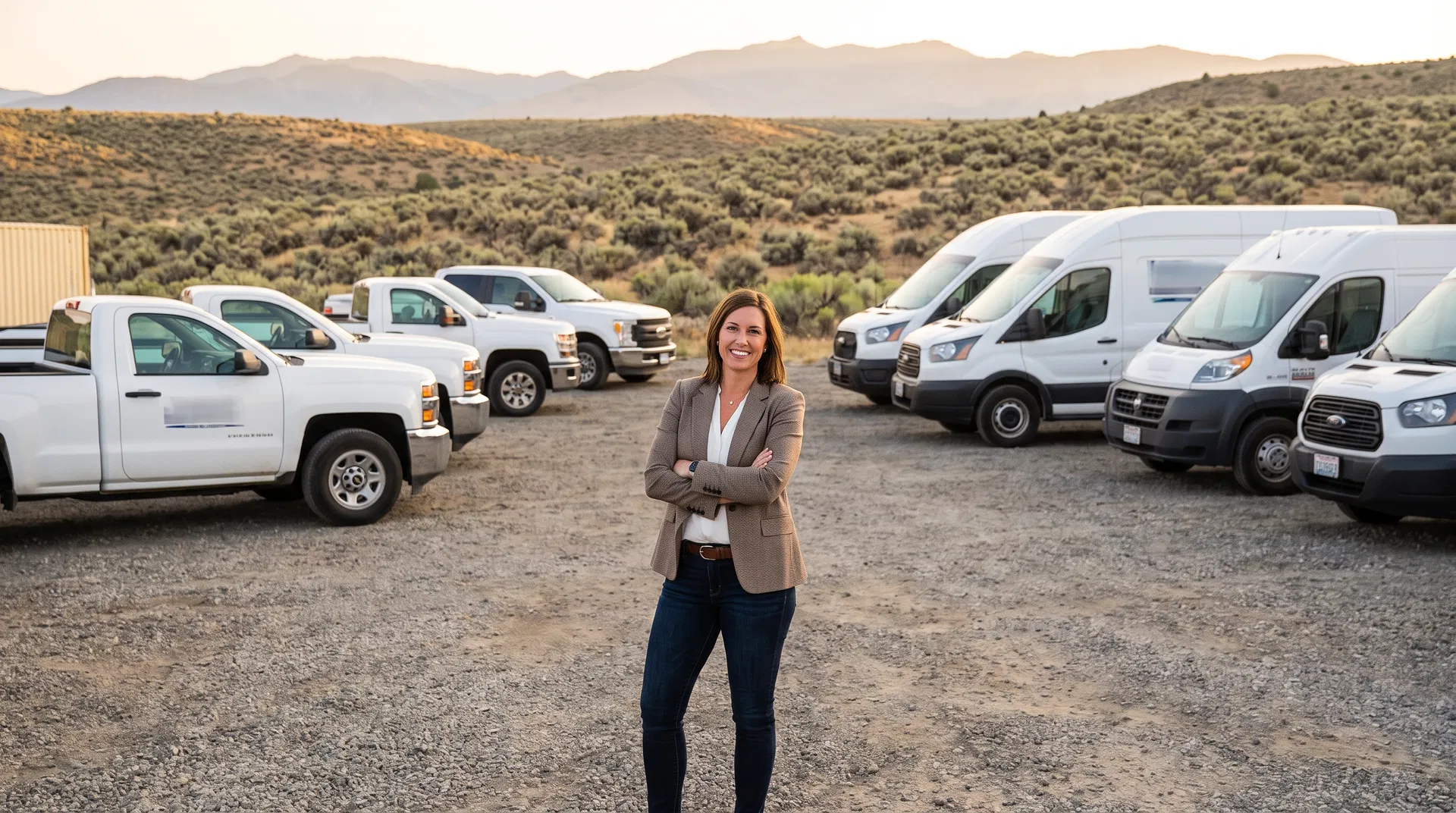
Plumbers, electricians, HVAC technicians, painters, landscapers — if you drive to job sites, haul tools and equipment, or carry materials in a work vehicle, you need commercial auto. Work trucks and vans typically cost $1,200–$2,500 per vehicle per year to insure commercially.
Delivery & Service Businesses
Any business making deliveries — food, packages, supplies, products — needs commercial auto. Personal policies explicitly exclude delivery use. This includes restaurant delivery, courier services, and mobile service providers.
Real Estate & Professional Services
If you drive clients to properties, visit job sites, or regularly use your personal vehicle for client meetings and business errands, your personal auto policy may not cover you. Hired and non-owned auto coverage is the solution for many professionals.
Farms & Ranches with Road Vehicles
Farm trucks and pickups used on public roads for business purposes — hauling livestock, delivering product, transporting equipment — need commercial auto coverage. Your farm policy likely covers on-property use but not road use.
Businesses with Multiple Vehicles
Any business operating two or more vehicles qualifies for fleet pricing, which reduces the per-vehicle premium significantly. Fleet policies also simplify management — one policy, one renewal date, one agent.
Businesses Whose Employees Drive
If your employees drive company vehicles, or if they use their own vehicles for work tasks, you need commercial auto or hired and non-owned auto (HNOA) coverage. Without it, your business is exposed to liability for accidents that occur during work-related driving.
Oregon's Commercial Auto Insurance Requirements
Oregon's minimum auto insurance requirements apply to all vehicles on public roads — commercial and personal alike. The state minimums are:
- Bodily injury liability: $25,000 per person / $50,000 per accident
- Property damage liability: $20,000 per accident
- Uninsured motorist coverage: $25,000 per person / $50,000 per accident
- Personal injury protection (PIP): $15,000
These minimums are the legal floor — not a recommendation. For a business vehicle, the state minimums are dangerously low. A single serious accident involving a commercial vehicle can easily exceed $500,000 in medical costs, lost wages, and legal fees. Most commercial insurance professionals recommend at least $1,000,000 in combined single limit (CSL) liability for business vehicles, with a commercial umbrella policy providing additional protection above that.
For vehicles subject to USDOT or FMCSA regulations — semi-trucks, vehicles over 10,000 lbs GVWR used in interstate commerce, and certain hazmat carriers — federal minimum liability requirements apply and are significantly higher than Oregon's state minimums. If your business operates vehicles in this category, consult a commercial trucking insurance specialist.
What Commercial Auto Insurance Actually Covers
A commercial auto policy is built from several coverage components, some mandatory and some optional. Understanding what each one does — and what it doesn't — is essential for building a policy that actually protects your business.
| Coverage | What It Covers | Required? |
|---|
| Bodily Injury Liability | Medical costs, lost wages, and legal fees if your vehicle injures someone | Yes (state minimum) |
| Property Damage Liability | Repair or replacement costs if your vehicle damages someone else's property | Yes (state minimum) |
| Uninsured/Underinsured Motorist | Protects you if the at-fault driver has no insurance or insufficient coverage | Yes (state minimum) |
| Personal Injury Protection (PIP) | Medical expenses for you and passengers regardless of fault | Yes (Oregon) |
| Collision Coverage | Repairs or replaces your vehicle after a collision, regardless of fault | Optional (recommended) |
| Comprehensive Coverage | Covers theft, vandalism, fire, hail, flood, and non-collision damage | Optional (recommended) |
| Hired & Non-Owned Auto (HNOA) | Covers employee-owned or rented vehicles used for business | Optional (critical for many businesses) |
| Cargo Coverage | Covers goods or equipment being transported | Optional (required for some industries) |
| Towing & Roadside Assistance | Covers roadside assistance for commercial vehicles | Optional |
The Hired and Non-Owned Auto Gap: The Coverage Most Businesses Don't Know They're Missing
One of the most common — and most costly — commercial auto coverage gaps is the failure to carry hired and non-owned auto (HNOA) insurance. This coverage protects your business when vehicles it doesn't own are used for business purposes. That includes:
- Employees using their personal vehicles to run business errands, make deliveries, or travel between job sites
- Rented vehicles used for business travel or temporary fleet needs
- Vehicles leased by the business but not owned outright
Here's the scenario that plays out more often than it should: an employee drives their personal car to pick up supplies for your business, gets into an accident, and the other driver sues your company. The employee's personal auto policy covers their personal liability — but your business has no protection without HNOA coverage. The lawsuit names your company, and without coverage, you're paying out of pocket.
HNOA coverage is relatively inexpensive — often $200–$500 per year for a small business — and can be added as an endorsement to your commercial business insurance policy or as a standalone policy. For businesses where employees regularly use personal vehicles for work tasks, it's not optional — it's essential.
How Much Does Commercial Auto Insurance Cost in Oregon?
Commercial auto insurance in Oregon typically ranges from $500 to $5,000+ per vehicle per year, depending on several factors. The average for a small business with one or two vehicles runs approximately $184 per month ($2,212 annually) based on industry data, but this varies significantly by business type and vehicle use.
Factors That Affect Your Commercial Auto Premium
▸Vehicle type and value: Heavy trucks, specialty vehicles, and high-value equipment cost more to insure
▸Primary use: Delivery and hauling use costs more than occasional business travel
▸Number of vehicles: Fleet policies (2+ vehicles) often reduce the per-vehicle premium
▸Driver records: Clean MVRs across all drivers reduce premiums significantly
▸Annual mileage: Higher mileage = higher exposure = higher premium
▸Coverage limits and deductibles: Higher limits cost more; higher deductibles reduce premiums
▸Claims history: Prior commercial auto claims raise rates for 3–5 years
▸Business location: Rural Central Oregon routes vs. urban Portland routes carry different risk profiles
Fleet Insurance: When You Have Two or More Business Vehicles
If your business operates two or more vehicles, you qualify for fleet pricing — and you should be taking advantage of it. Fleet policies consolidate all your business vehicles under a single policy with one renewal date, one premium, and one agent to call when something happens. Beyond the administrative simplicity, fleet pricing typically reduces the per-vehicle premium by 10–25% compared to insuring each vehicle individually.
Fleet policies also make it easier to add and remove vehicles as your business grows or changes. Rather than issuing a new policy every time you add a truck, you simply notify your agent and the vehicle is added to the existing fleet schedule. This is particularly valuable for Central Oregon contractors and service businesses that regularly buy, sell, or lease vehicles as their operations evolve.
For larger fleets, some carriers offer usage-based or telematics programs that monitor driving behavior and reward safe driving with premium reductions. If your drivers maintain clean records and you can document safe driving practices, these programs can produce meaningful savings over time.
Commercial Auto and Your Overall Business Insurance Program
Commercial auto doesn't exist in isolation — it's one component of a complete commercial insurance program. For most Central Oregon businesses, a well-structured program includes commercial auto alongside general liability, commercial property, and workers' compensation. Understanding how these coverages interact is important, because gaps between policies can leave you exposed.
For example, if an employee is injured while driving a company vehicle, the claim may fall under workers' compensation rather than commercial auto — or it may involve both, depending on the circumstances. If cargo is damaged in a vehicle accident, the claim may involve commercial auto, inland marine, or cargo coverage depending on your policy structure. An experienced independent insurance agent who understands your entire business operation can structure your coverage so these interactions work in your favor rather than against you.
For businesses with significant vehicle exposure — contractors, trucking operations, delivery businesses — a commercial umbrella policy is also worth serious consideration. Commercial umbrella provides an additional layer of liability protection above your commercial auto, general liability, and employer's liability limits — typically in increments of $1 million — and is one of the most cost-effective ways to protect a business from catastrophic loss.
Common Commercial Auto Mistakes Central Oregon Business Owners Make
After working with businesses across Crook, Deschutes, and Jefferson counties, the same commercial auto mistakes appear again and again. Here are the most common — and most avoidable — ones:
⚠ The Most Expensive Commercial Auto Mistakes
- Using a personal policy for a business vehicle. The claim will be denied. No exceptions.
- Not listing all drivers. If an unlisted driver causes an accident, your carrier may deny the claim or cancel your policy.
- Skipping HNOA coverage. If employees use personal vehicles for work, you're exposed without it.
- Carrying state-minimum liability limits. $25,000/$50,000 is exhausted by a single serious accident. Carry at least $500,000 CSL.
- Not updating your policy when you add vehicles. A vehicle not listed on your commercial policy may not be covered — even if you own it.
- Assuming your farm policy covers road use. Farm policies typically cover on-property use only. Road use requires commercial auto.
The Bottom Line for Central Oregon Business Owners
Commercial auto insurance is not optional if your business uses vehicles — it's a legal requirement and a financial necessity. The gap between a personal auto policy and a commercial one is not a technicality; it's the difference between a covered claim and a six-figure out-of-pocket loss that can end a business.
The good news is that commercial auto insurance is more affordable than most business owners expect, especially when structured correctly with fleet pricing, appropriate deductibles, and the right combination of coverages. As an independent agency working with 50+ carriers, Prineville Insurance can compare the market and find coverage that fits your operation and your budget — whether you have one work truck or a fleet of twenty.
If you're not sure whether your current coverage is adequate, or if you're starting a business and setting up your insurance program for the first time, the best next step is a conversation with a local agent who understands Central Oregon businesses and the specific risks of operating in the high desert. We've been doing exactly that since 1935. Get a no-obligation commercial auto review and find out where you stand.